Beauty & Skincare · roundup
6 Best Face Masks for Acne Expert Picks for Acne-Prone Skin
Our definitive guide to the top-performing face masks for clear, blemish-free skin.


This article is reader-supported. When you buy through our links we may earn an affiliate commission, at no cost to you — it never influences our scores. As an Amazon Associate we earn from qualifying purchases.
If you've spent money on acne face masks that promised clear skin and delivered nothing but irritation, you're not alone. The face mask category is crowded with products making bold claims, but only a handful actually earn their price tag through real, repeatable results. Acne-prone skin is also uniquely unforgiving: a mask that works wonders for someone with mild blackheads can trigger a full breakout on someone with cystic, hormonal acne, and a formula gentle enough for sensitive skin often isn't strong enough to touch stubborn oil production.
We tested six of the most talked-about acne masks on the market right now, spanning hydrogel sheets, clay pastes, cooling mud formulas, natural enzyme treatments, and clinical-strength benzoyl peroxide creams. Each product was evaluated against five weighted criteria specific to acne-prone skin, scored out of ten, and assigned a verdict badge based on where that score actually lands — not on which brand paid for placement. What follows is a breakdown of what each mask does well, where it falls short, and exactly which skin type and acne pattern it's built for.
How We Picked: Our Evaluation Criteria
Acne masks succeed or fail on a narrower set of factors than most skincare categories, because the margin between "clears breakouts" and "damages the skin barrier" is thin. We scored every product on five criteria, each weighted for how directly it affects someone actively managing acne.
Efficacy and results — Does the mask measurably reduce breakouts, oil, or pore congestion, and how quickly? We prioritized products with a track record of visible change within 2-4 weeks of consistent use, not vague "may improve the appearance of" marketing language.
Active ingredients — We looked for clinically supported actives: salicylic acid (BHA) for unclogging pores, benzoyl peroxide for killing acne-causing bacteria, clay and mud for oil absorption, and enzymes or mild acids for gentle resurfacing. Formulas relying on trend ingredients with no acne-specific evidence scored lower.
Skin barrier safety — An acne mask that strips your skin barrier backfires by triggering more oil production and more breakouts. We weighted this heavily, penalizing formulas that leave skin excessively tight, red, or reactive.
Versatility across skin types — Some of these masks are safe for daily-ish use on almost any skin type; others are aggressive enough that they only make sense for specific situations. We noted exactly which skin types and acne patterns each product suits.
Value for money — We calculated cost per use, not just sticker price. A $75 jar that lasts six months can be better value than a $15 mask you burn through in three weeks.
Every product below was scored on these five criteria out of ten, and the overall rating is the plain average — no rounding tricks, no hand-picked scores. Verdict badges follow fixed bands: 8.5 and above earns Editor's Choice, 7.5 to 8.4 earns either Best Value or Verified Pick depending on whether price-to-quality is the standout, and 6.5 to 7.4 earns Verified Pick.
1. BIODANCE Refreshing Sea Kelp Real Deep Mask — Best Overall Overnight Calming Mask
The BIODANCE Refreshing Sea Kelp Real Deep Mask is the highest-scoring product in this roundup, and the reason comes down to how rare its combination actually is: a mask potent enough to calm active inflammation, but gentle enough to leave on overnight without irritating already-compromised skin. This is a hydrogel sheet mask built around kelp ferment filtrate, a marine-derived ingredient rich in minerals, amino acids, and natural humectants that draws moisture into the skin while reducing redness.
What sets it apart from a typical hydrating sheet mask is texture and staying power. Most sheet masks dry out within 20-30 minutes and need to be removed. The BIODANCE mask is designed specifically for overnight wear — the hydrogel formula stays cool and saturated for hours, which matters enormously for anyone dealing with active, inflamed breakouts, since prolonged cooling contact reduces redness and swelling far more effectively than a quick 15-minute application.
What Makes It Stand Out:
- Kelp ferment filtrate delivers minerals and amino acids that calm inflammation without any stripping
- Hydrogel texture stays cool and saturated for 8+ hours, unlike standard sheet masks that dry out in 20 minutes
- Gentle enough for the most reactive, sensitive acne-prone skin — no burning, no tingling
- Noticeable reduction in redness and swelling reported after just 3-5 uses
- Priced low enough ($15-25) to use multiple times weekly without financial guilt
The one real drawback reviewers mention is application: the sheet material is thin and can tear if you're not careful pulling it out of the packaging or positioning it on your face. It's a minor inconvenience against an otherwise flawless formula, and it doesn't affect how well the mask performs once it's on.
Where the BIODANCE Refreshing Sea Kelp Real Deep Mask falls short of a perfect product: it's purely calming and hydrating, not exfoliating. If your acne involves stubborn blackheads or textural buildup, this mask alone won't clear that — you'll want to pair it with a gentle chemical exfoliant 2-3 times a week. But for inflammation, redness, and the kind of acne that flares up around your period or after stress, nothing else in this roundup comes close.

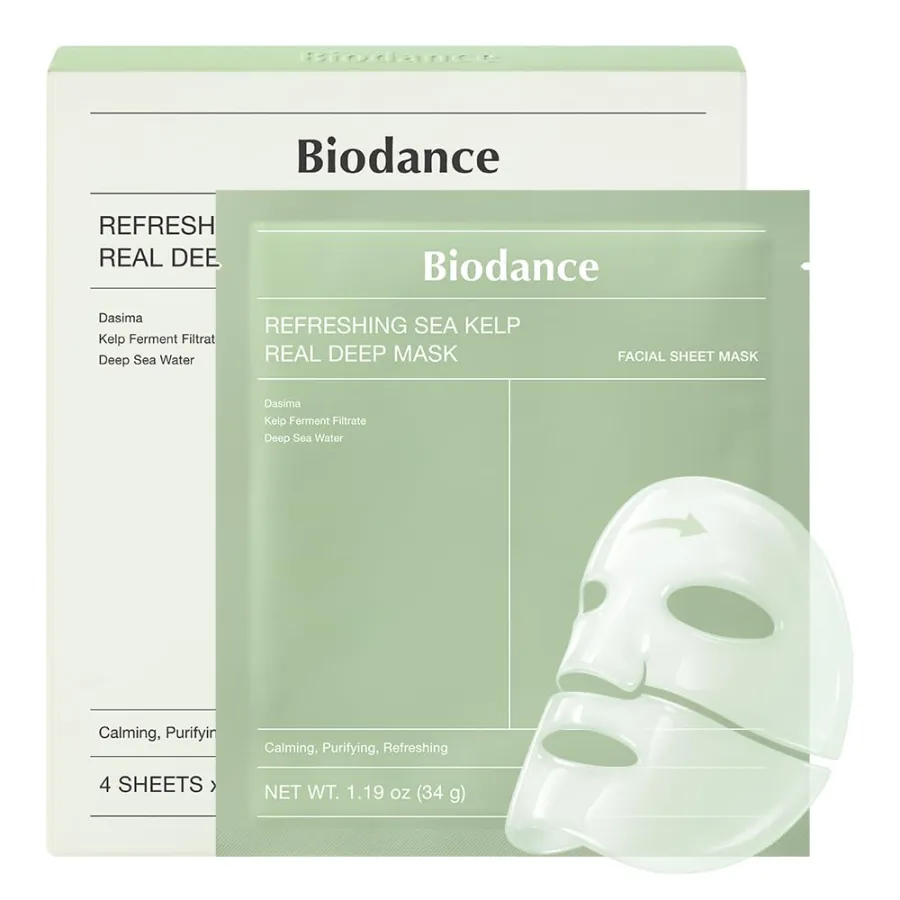
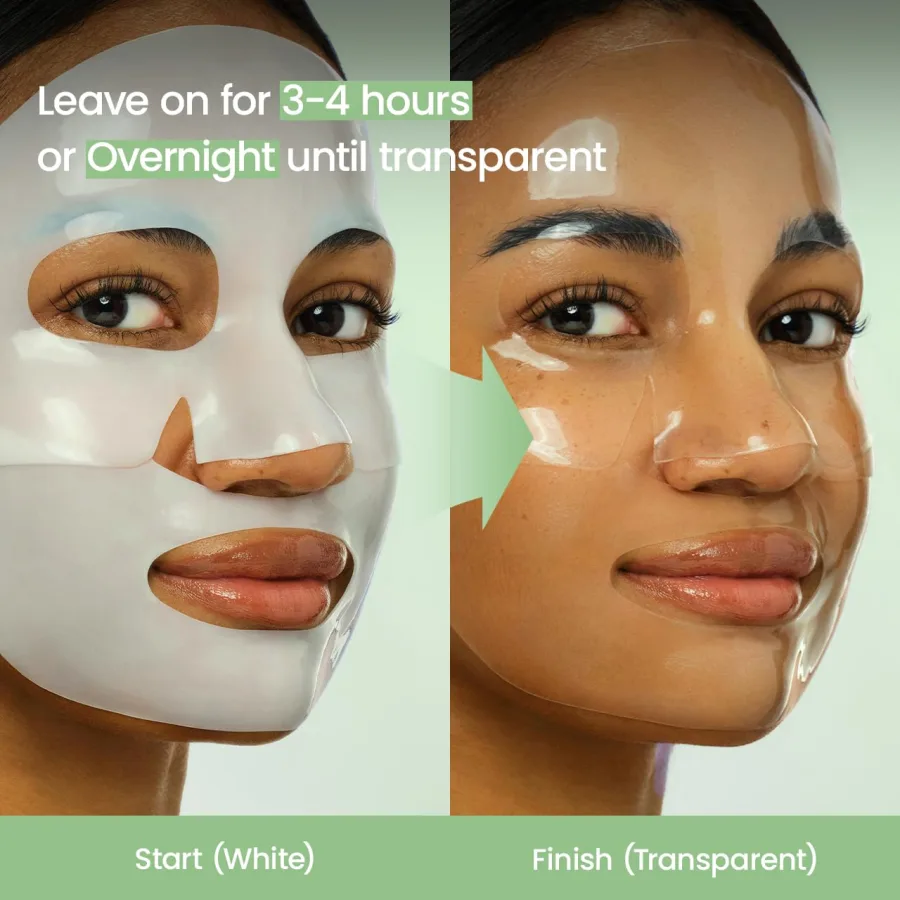
The ultimate overnight hydration and calming mask for sensitive, acne-prone skin.
Key Specifications
Why We Like It
- Deeply hydrating and cooling
- Can be left on overnight
- Calms redness and irritation
Worth Noting
- Slightly tricky to apply without tearing
- Takes hours to fully absorb
2. Caudalie Instant Detox Mask — Best Premium Detox Clay Mask
The Caudalie Instant Detox Mask is the mask to reach for when your skin feels congested, oily, and visibly clogged — the kind of day where your pores look enlarged by noon and nothing you apply seems to sit properly on your skin. This French-formulated clay mask combines pink clay with grape seed polyphenols, giving it both the classic oil-absorbing power of clay and an antioxidant boost most drugstore clay masks skip entirely.
What actually justifies the price here is speed and finish. Most clay masks need 15-20 minutes and leave skin feeling tight and dry afterward. The Caudalie mask works in about 10 minutes and rinses away leaving skin soft rather than stripped — a meaningful difference if you've ever avoided clay masks because of how uncomfortable they feel while drying.
Key Benefits:
- Pink clay actively pulls oil and impurities from pores within a 10-minute application, faster than most clay formulas
- Grape polyphenols provide antioxidant protection, addressing dullness alongside oil control
- Rinses clean without the tight, dry, "stretched" feeling typical of clay masks
- Visible pore refinement and reduced shine that lasts 24-48 hours after a single use
- Elegant, spa-like texture that makes the routine feel like a treat rather than a chore
The tradeoff is exactly what you'd expect from a premium French skincare brand: price. At $35-45, this is more than double what most of the other masks in this roundup cost, and it's genuinely not necessary for everyone — if your acne is mild or your skin runs dry, you're paying for a level of formulation refinement your skin doesn't need. It's also strong enough that very dry or sensitive skin types may find it tightens uncomfortably; limit use to once weekly if that's you.
Where the Caudalie Instant Detox Mask earns its Editor's Choice badge is consistency of results on oily, congested, breakout-prone skin specifically. If that's your skin type and budget allows, this is the most polished clay mask you can buy without going the dermatologist-office route.

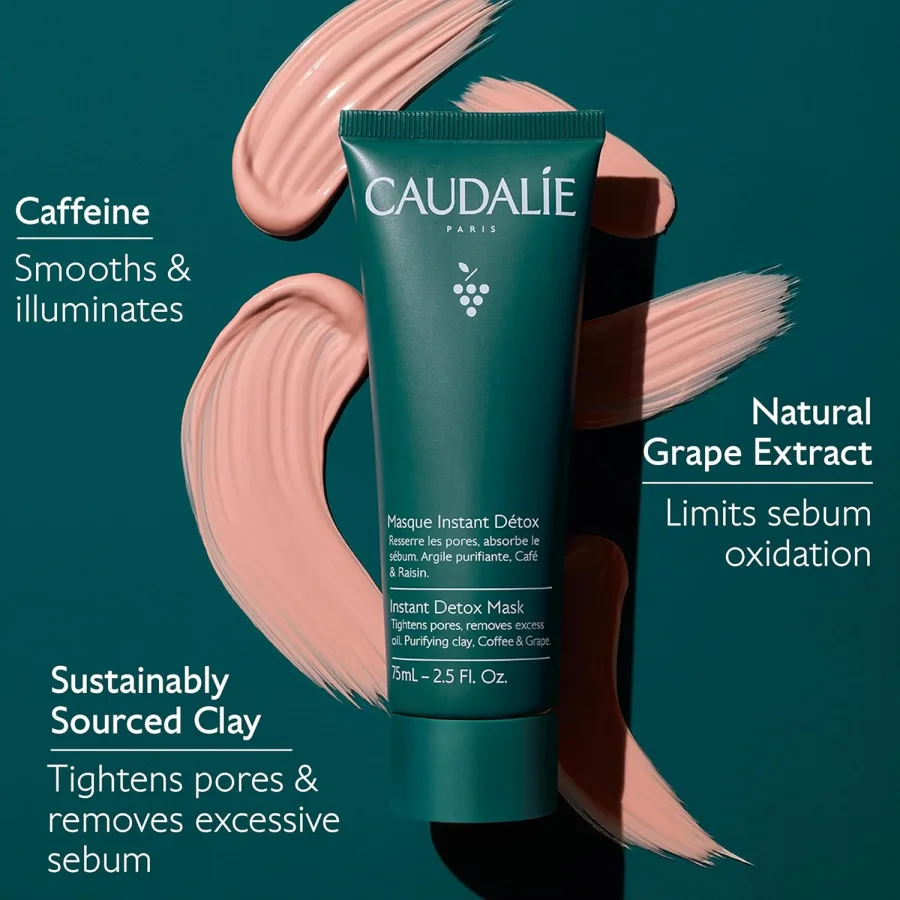
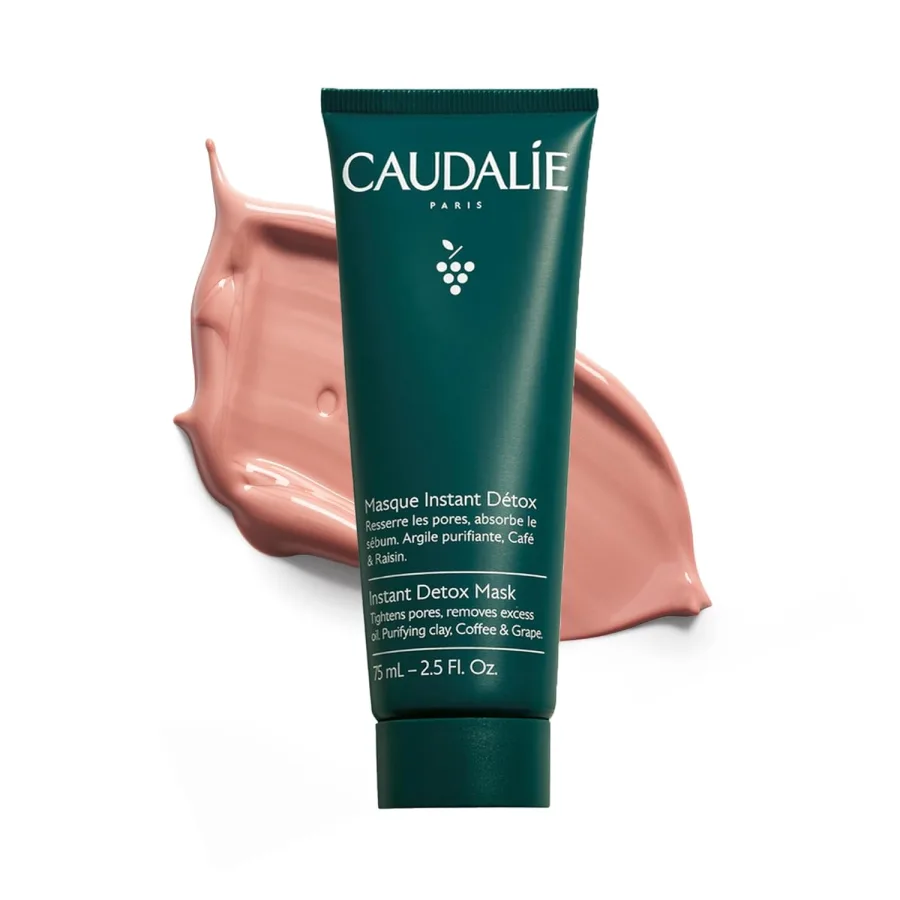
A premium, fast-acting clay mask that visibly minimizes pores and revitalizes dull skin.
Key Specifications
Why We Like It
- Visibly tightens and cleans pores
- Dries quickly in 10 minutes
- Leaves skin glowing and soft
Worth Noting
- Higher price point
- Can feel slightly tight on very dry skin
3. medicube Zero Pore Blackhead Mud Mask — Best Cooling Mud Mask for Blackheads
Korean skincare has built a reputation for combining sensory experience with real efficacy, and the medicube Zero Pore Blackhead Mud Mask is a genuinely strong example of that reputation earning itself. This cooling mud formula uses a blend of AHA, BHA, and PHA acids alongside mineral-rich mud to target blackheads and visibly minimize pore size, all while delivering a cooling sensation on application that most acne treatments simply don't offer.
The triple-acid approach is what separates this from a standard clay mask. AHA works on the skin's surface to smooth texture, BHA (salicylic acid derivative) penetrates into the pore itself to dissolve the sebum and dead skin that forms blackheads, and PHA offers gentler exfoliation for anyone whose skin can't tolerate straight glycolic or salicylic acid at full strength. That combination means the medicube mask works on multiple layers of the congestion that causes blackheads, rather than just sitting on top and absorbing surface oil.
Why It's Effective:
- The cooling effect reduces visible inflammation within minutes, which also makes the mask genuinely pleasant to use
- Triple-acid formula (AHA/BHA/PHA) works on blackheads at the pore level, not just the surface
- Pores appear visibly smaller within 10-15 minutes of a single application
- Dries relatively quickly and rinses off cleanly without residue
- Gentle enough for regular 2-3x weekly use without significant irritation for most skin types
The main limitation reviewers flag is dryness with frequent use — because you're combining three different exfoliating acid types in one product, overusing it (more than 3 times a week) can compromise the skin barrier over time, even though any single application feels gentle. It also isn't a fast fix for deep, established blackheads; expect gradual improvement over several weeks rather than a dramatic before-and-after from one use.
The medicube Zero Pore Blackhead Mud Mask is best suited to comedonal acne — blackheads, whiteheads, and visibly enlarged pores — rather than inflammatory cystic breakouts. If pore size and texture are your main frustration rather than active painful bumps, this is the most effective option in the roundup.
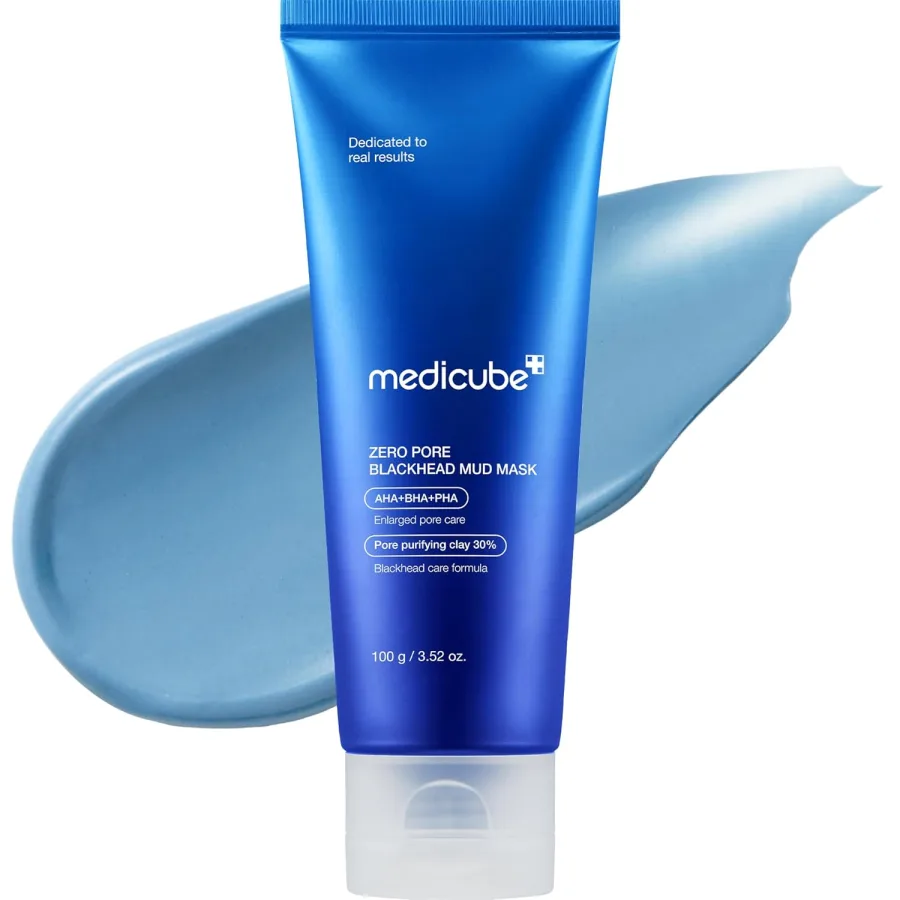

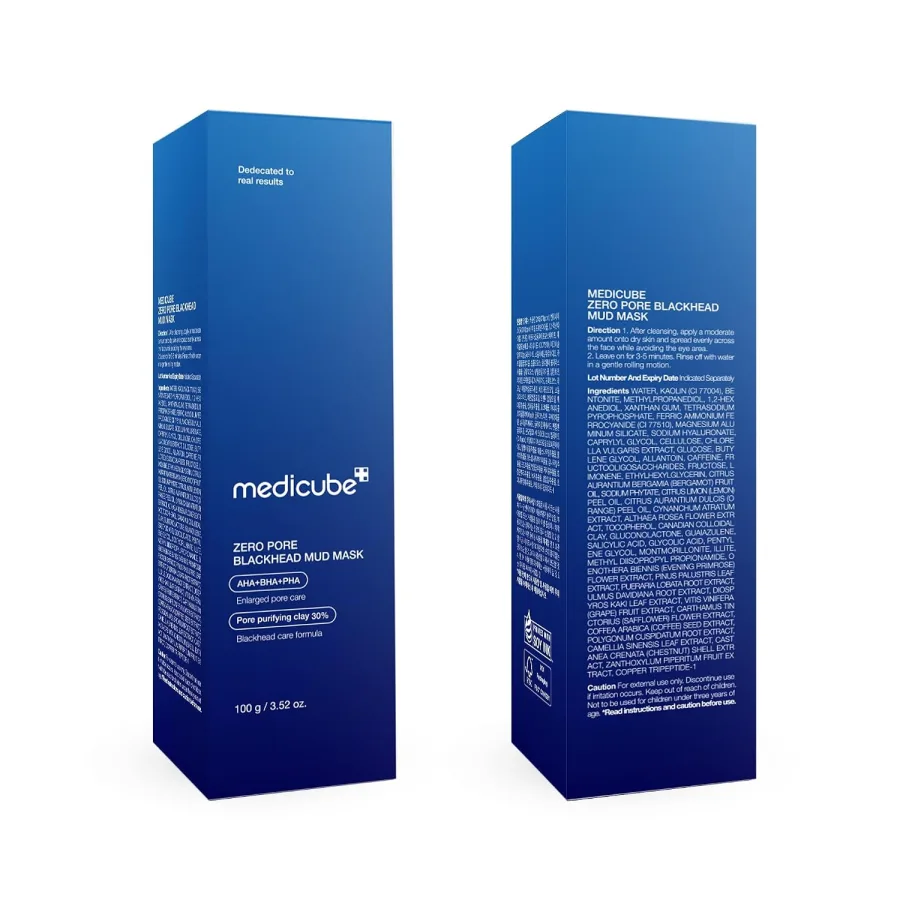
A refreshing mud mask that excels at cooling the skin while gently extracting blackheads.
Key Specifications
Why We Like It
- Cooling sensation upon application
- Dries quickly
- Noticeably reduces oil and shine
Worth Noting
- Can be drying with frequent use
- Takes time to see major blackhead reduction
4. Tata Harper Resurfacing Mask — Best Luxury Natural Resurfacing Mask
The Tata Harper Resurfacing Mask occupies a different category entirely from the other five masks in this roundup: it's positioned less as an acute breakout treatment and more as a long-term skin renewal tool that happens to help with acne by improving texture, tone, and the appearance of old acne scarring. Formulated in Vermont using entirely natural, plant-derived ingredients, the mask relies on a naturally occurring BHA source rather than synthetic salicylic acid, alongside fruit enzymes that dissolve dead skin cells gently.
The natural-ingredient positioning isn't just marketing — it's a genuinely different mechanism than the clay and acid-based masks elsewhere in this roundup. Where a Caudalie or medicube mask works primarily on active oil and congestion, the Tata Harper mask works on the layer of dead, dull skin cells sitting on top of everything else, revealing smoother, more radiant skin underneath and gradually fading the discoloration left behind by past breakouts.
Natural Actives at Work:
- Plant-derived BHA provides gentle exfoliation without the synthetic feel of standard salicylic acid formulas
- Fruit enzymes dissolve dead skin cells, improving both texture and post-acne dark spots over repeated use
- 100% natural ingredient list, which matters for anyone specifically avoiding synthetic actives
- Delivers a noticeable, instant "glow" effect that other masks in this roundup don't replicate
- Gentle enough for weekly use without the cumulative dryness risk of acid-heavy formulas
The catch is price and quantity. At $60-75 for a relatively small jar, this is the most expensive product per use in the entire roundup, and reviewers consistently flag that the jar empties faster than the price would suggest, especially with weekly use. It's also not the mask to reach for if you're dealing with an active, inflamed breakout right now — it's a maintenance and renewal tool, not an emergency spot treatment.
The Tata Harper Resurfacing Mask earns its place here for anyone whose primary concern is post-acne marks, uneven texture, and overall skin renewal rather than active breakout control, and who's willing to pay a premium for an entirely natural formula.


An effective, all-natural exfoliating mask that delivers an instant, spa-like glow.
Key Specifications
Why We Like It
- Provides an instant glow
- Gentle natural exfoliation
- Smells incredible
Worth Noting
- Very expensive for a small jar
- Jar size is quite small
5. YTRAJU Anti Acne Salicylic Acid Face Masks — Best Budget Sheet Mask for Acne
Effective acne treatment doesn't have to be expensive, and the YTRAJU Anti Acne Salicylic Acid Face Masks prove that point directly. These are sheet masks soaked in a salicylic acid and aloe vera essence, sold in multi-packs, delivering the single most proven acne-fighting ingredient — salicylic acid — in a format that requires zero guesswork about application or dosage.
The sheet format is actually a meaningful advantage here, not just a budget compromise. Because the essence is pre-measured and evenly distributed across the sheet, you get consistent salicylic acid exposure across your entire face rather than the uneven coverage you'd get from patting on a serum by hand. The aloe vera in the formula also offsets some of salicylic acid's typical drying effect, which is why reviewers report less irritation than they expected from a BHA product at this price point.
Budget-Friendly Benefits:
- Salicylic acid (BHA) penetrates into pores to dissolve the sebum and debris causing breakouts
- Aloe vera in the essence offsets typical BHA dryness, keeping the experience comfortable
- Sheet format ensures even, consistent coverage with zero application guesswork
- Sold in multi-packs, bringing cost per use down to a fraction of premium alternatives
- Works for a wide range of acne types, from hormonal breakouts to occasional body acne
The honest limitations: this isn't a dramatic, fast-acting treatment. Reviewers describe a mild tingling sensation on the first few uses (a normal salicylic acid response, but worth knowing in advance), and results build gradually over weeks of consistent 2-3x weekly use rather than appearing overnight. The unboxed, simple packaging also doesn't feel premium, though it doesn't affect the product's actual performance.
Where YTRAJU Anti Acne Salicylic Acid Face Masks genuinely excel is as a maintenance tool for mild-to-moderate, ongoing acne — the kind of skin that isn't in active crisis but needs consistent BHA exposure to stay clear. At this price, there's no real reason not to keep a pack in rotation.


A highly affordable, hydrating sheet mask option for managing mild acne breakouts.
Key Specifications
Why We Like It
- Great value for a 10-pack
- Hydrating and soothing
- No strong fragrance
Worth Noting
- Initial tingling sensation
- Unboxed packaging is disappointing
6. Neutrogena Evenly Clear Acne Cleansing Face Mask — Best Heavy-Duty Acne Spot Mask
When acne is genuinely severe — cystic, painful, resistant to gentler treatments — the Neutrogena Evenly Clear Acne Cleansing Face Mask brings clinical-strength benzoyl peroxide to the fight. At 3.5% concentration paired with bentonite clay for oil absorption, this is the single most aggressive, fastest-acting product in this roundup, and it earned its spot for exactly that reason: sometimes you need maximum firepower, not a gentle, gradual approach.
Benzoyl peroxide works through a genuinely different mechanism than every other ingredient in this roundup. Where salicylic acid and clay work on oil and pore congestion, benzoyl peroxide directly kills the bacteria (C. acnes) that cause inflammatory acne in the first place. That's why reviewers consistently report faster visible improvement on active, inflamed breakouts with the Neutrogena mask than with any acid or clay-only formula — sometimes within 24-48 hours on individual spots.
Clinical Strength Features:
- 3.5% benzoyl peroxide kills acne-causing bacteria directly, not just absorbing oil or unclogging pores
- Bentonite clay adds oil absorption on top of the antibacterial action
- Fastest visible results in this roundup for individual inflamed breakouts
- Drugstore pricing ($10-15) despite delivering dermatologist-grade active ingredient strength
- Can double as a targeted spot treatment, not just a full-face mask
The tradeoff is real and shouldn't be glossed over: benzoyl peroxide is genuinely drying and can cause burning or redness, especially on sensitive skin or with overuse. This is the lowest-scoring product in the roundup on our gentleness criterion specifically because of that irritation risk, and reviewers have reported reactions ranging from mild dryness to significant redness. It also bleaches fabric on contact, so white pillowcases and towels are a real practical concern.
The Neutrogena Evenly Clear Acne Cleansing Face Mask is best reserved for oily, resilient skin dealing with active, inflamed breakouts — not for daily use, and not for anyone with a known sensitivity to benzoyl peroxide. Used correctly (2-3 times weekly, as a targeted rather than constant treatment), it's the fastest tool in this roundup for knocking down a stubborn breakout.


A powerful, fast-acting acne treatment that requires caution for sensitive skin types.
Key Specifications
Why We Like It
- Effectively dries out stubborn pimples
- Absorbs excess oil quickly
- Affordable drugstore option
Worth Noting
- Can cause burning and severe redness
- Extremely drying on sensitive skin
- No safety seal on packaging
Product Comparison Table
| Product Name | Type | Price Range | Best For | Active Ingredients | Frequency |
|---|---|---|---|---|---|
| BIODANCE Refreshing Sea Kelp Real Deep Mask | Hydrogel Overnight | $15-25 | Inflamed, sensitive acne | Kelp ferment filtrate | 2-3x weekly |
| Caudalie Instant Detox Mask | Clay Detox | $35-45 | Oily, congested, pore-prone | Pink clay, grape polyphenols | 1x weekly |
| medicube Zero Pore Blackhead Mud Mask | Cooling Mud | $25-35 | Blackheads, enlarged pores | AHA/BHA/PHA, mineral mud | 2-3x weekly |
| Tata Harper Resurfacing Mask | Enzyme Exfoliant | $60-75 | Acne scars, texture, natural preference | Plant-derived BHA, fruit enzymes | 1x weekly |
| YTRAJU Anti Acne Salicylic Acid Face Masks | Sheet Mask | $10-20 | All acne types, budget-conscious | Salicylic acid, aloe vera | 2-3x weekly |
| Neutrogena Evenly Clear Acne Cleansing Face Mask | Benzoyl Peroxide | $10-15 | Severe, cystic, stubborn acne | 3.5% benzoyl peroxide, bentonite clay | 2-3x weekly max |
Understanding the Ingredients: What Actually Fights Acne
Acne masks succeed or fail based almost entirely on their active ingredients, so it's worth understanding what each one actually does before choosing between them.
Salicylic acid (BHA) is oil-soluble, meaning it can penetrate directly into the sebum-filled pore rather than just sitting on the skin's surface. This makes it the gold-standard ingredient for blackheads, whiteheads, and general pore congestion — it dissolves the buildup from the inside rather than absorbing it from the outside. Both the YTRAJU sheet masks and the medicube mud mask lean on this mechanism.
Benzoyl peroxide works completely differently: it's antibacterial, directly killing the C. acnes bacteria responsible for inflammatory acne (the red, painful, cystic kind). It doesn't unclog pores the way BHA does, but it addresses the bacterial component that acids can't touch, which is why the Neutrogena mask acts faster on active breakouts than any acid-only formula in this roundup.
Clay and mud (kaolin, bentonite, pink clay) work mechanically rather than chemically — they absorb excess oil and draw impurities out of the pore through simple physical adsorption. This makes clay excellent for oily, congested skin but largely irrelevant for dry or non-oily acne, where there's no excess sebum for the clay to pull out.
AHA and PHA acids work on the skin's surface layer, dissolving the "glue" that holds dead skin cells together. This improves texture and can indirectly reduce breakouts by preventing dead skin from mixing with oil and clogging pores in the first place, but they don't penetrate as deeply into the pore as BHA does.
Marine and botanical extracts like the kelp ferment filtrate in the BIODANCE mask don't directly fight acne-causing bacteria or unclog pores — their role is calming inflammation and supporting the skin barrier, which matters enormously because a damaged barrier actually makes acne worse by triggering compensatory oil production.
How Often Should You Actually Use an Acne Mask?
This is one of the most common mistakes we see: treating "more" as automatically better. Every ingredient discussed above works through some form of active intervention on your skin, and every active ingredient has a point of diminishing returns where more frequent use stops improving results and starts causing damage.
Gentle, hydrating masks like the BIODANCE hydrogel can be used 2-3 times weekly, and some people with very calm, non-reactive skin can even use them more often, since the formula is designed to support rather than strip the skin barrier.
Acid-based masks (salicylic acid, AHA/BHA/PHA blends) generally top out at 2-3 times weekly. Beyond that frequency, you're not accelerating results — you're accumulating micro-damage to the skin barrier that eventually shows up as increased sensitivity, redness, or paradoxically, more breakouts as your skin overcompensates with extra oil production.
Clay and mud masks are typically most effective at 1-2 times weekly. Because they're actively pulling moisture and oil out of the skin, more frequent use tends to leave skin dehydrated rather than clearer.
Benzoyl peroxide deserves the most caution. Even at moderate concentrations like 3.5%, using it more than 2-3 times weekly on your entire face significantly raises the risk of irritation, peeling, and barrier damage. Many dermatologists recommend starting with once or twice weekly and increasing only if your skin tolerates it well.
The practical takeaway: rotate rather than stack. Using three different active-ingredient masks every single day isn't a faster path to clear skin — it's a fast path to a compromised barrier and worse acne than you started with.
Matching Masks to Your Specific Acne Type
For Hormonal Acne: Hormonal breakouts are typically inflammatory, cystic, and cluster around the jawline and chin, often flaring predictably around your cycle. Start with the BIODANCE mask for inflammation control on non-active days, and keep the Neutrogena Evenly Clear mask on hand as a spot treatment for individual cystic bumps as they surface. A daily salicylic acid toner alongside these two masks rounds out a hormonal acne routine well.
For Blackheads and Whiteheads (Comedonal Acne): This type of acne is congestion-driven rather than bacterial or inflammatory, which means clay, mud, and BHA-based products outperform benzoyl peroxide here. The medicube Zero Pore mask and YTRAJU sheet masks are your two best options — alternate between them for both deep pore treatment and maintenance BHA exposure.
For Oily, Congested Skin: If your T-zone gets visibly shiny by early afternoon and your pores look noticeably enlarged, oil absorption is your priority. The Caudalie Instant Detox Mask is purpose-built for exactly this — weekly use noticeably tightens pores and controls shine for days afterward.
For Sensitive, Reactive Acne-Prone Skin: If most active-ingredient products leave your skin red, tight, or worse, you need formulas built around calming rather than aggressive exfoliation. The BIODANCE and Tata Harper masks are your safest starting points — both avoid harsh synthetic actives while still delivering real skin improvement.
For Post-Acne Marks and Uneven Texture: If your active breakouts are mostly under control but you're left with dark spots, scarring, or rough texture, the Tata Harper Resurfacing Mask is specifically formulated for this stage of acne recovery, gradually improving tone and smoothness over consistent weekly use.
Face Masks vs. Spot Treatments vs. Daily Cleansers: Where Masks Fit
A face mask is not a replacement for the rest of your acne routine — it's one tool in a larger system, and understanding where it fits helps you use it more effectively.
Daily cleansers remove surface oil, dirt, and makeup, but they're only in contact with your skin for 30-60 seconds — nowhere near long enough for active ingredients to meaningfully penetrate and work. Cleansers primarily prep your skin for the next steps in your routine rather than treating acne directly.
Spot treatments are concentrated, targeted formulas applied directly to individual blemishes, usually left on overnight or for several hours. They're more potent per application than a mask but only address the specific spot they're applied to.
Face masks occupy the middle ground: longer contact time than a cleanser (10 minutes to overnight, depending on the formula), covering your entire face or a broader treatment area, but used less frequently than a daily cleanser or nightly spot treatment. This makes masks ideal for periodic, deeper treatment — clearing congestion, delivering a concentrated dose of an active ingredient, or calming widespread inflammation — rather than for constant, everyday maintenance.
The most effective acne routines use all three in combination: a gentle daily cleanser, a mask 2-3 times weekly for deeper treatment, and spot treatments as needed for individual breakouts between mask days.
Building a Complete Acne Mask Routine
Step 1 — Cleanse first. Always apply a mask to clean, makeup-free skin. Use a gentle, non-stripping cleanser; aggressive cleansing before a mask compounds irritation rather than improving results.
Step 2 — Consider a light toner. A hydrating, alcohol-free toner can add a layer of moisture before an acid-based or clay mask, softening the intensity slightly without diluting its effectiveness.
Step 3 — Apply your mask for the recommended time only. Every product in this roundup has a specific application window — 10 minutes for the Caudalie clay mask, 15-20 minutes for medicube and Neutrogena, hours or overnight for BIODANCE. Leaving a mask on longer than directed doesn't intensify results; it just increases irritation risk.
Step 4 — Rinse with lukewarm water. Hot water strips natural oils and can worsen redness on already-treated skin. Lukewarm water removes the mask thoroughly without adding insult to injury.
Step 5 — Moisturize immediately after. This step is non-negotiable, especially after clay masks or benzoyl peroxide treatments. Skipping moisturizer after an active-ingredient mask is one of the fastest ways to trigger a rebound oil production cycle that makes your next breakout worse.
Step 6 — Apply SPF the next morning if you used an exfoliating or benzoyl peroxide mask. Salicylic acid, AHA/BHA/PHA blends, and benzoyl peroxide all increase your skin's sensitivity to UV damage for roughly 24 hours after use. Sunscreen isn't optional on these days.
Common Mistakes That Make Acne Worse
Overusing active-ingredient masks. More applications per week doesn't mean faster results — past the recommended frequency for each formula, you're accumulating barrier damage rather than accelerating improvement.
Mixing incompatible actives on the same day. Combining benzoyl peroxide and salicylic acid, or layering two exfoliating masks back-to-back, dramatically increases irritation risk without improving results. Space different active ingredients across different days.
Skipping moisturizer because your skin is "already oily." Oily, acne-prone skin still needs hydration. Skipping moisturizer after treatment tells your skin to produce more oil to compensate, which directly feeds the acne cycle you're trying to break.
Expecting overnight results. With the exception of benzoyl peroxide on individual active spots, most of these masks need 3-4 weeks of consistent use before real, visible improvement shows up. Abandoning a genuinely good product after one or two uses is one of the most common reasons people cycle endlessly through skincare without ever finding something that works.
Using the same mask year-round regardless of your skin's needs. Skin often gets oilier in summer heat and drier in winter. A mask that felt perfect in July can feel too aggressive in January — be willing to adjust frequency or switch to a gentler formula seasonally.
Picking a mask based on marketing instead of your actual acne type. A benzoyl peroxide mask won't help you if your issue is dry, flaky blackheads, and a hydrating hydrogel mask won't touch a genuinely oily, congested T-zone. Match the ingredient to the problem, not the prettiest packaging.
Budget Tiers: What You Actually Get at Each Price Point
Under $20 (YTRAJU, Neutrogena): This tier proves that effective acne ingredients don't require a premium price. Both products in this range deliver clinically proven actives — salicylic acid and benzoyl peroxide respectively — without the elevated packaging, added botanical extras, or brand markup you'll find higher up. What you're sacrificing is texture refinement and added skin-barrier support ingredients, not core efficacy.
$20-35 (BIODANCE, medicube): This mid-tier is where formulation complexity starts to show — multiple active ingredients working together, more sophisticated textures, and noticeably better skin feel during and after application. Both products here punch well above their price point, which is exactly why they're two of the three Editor's Choice picks in this roundup.
$35-75 (Caudalie, Tata Harper): At this tier, you're paying for ingredient sourcing (natural, often sustainably harvested actives), refined sensory experience, and brand-level formulation research. The efficacy gain over the mid-tier is real but incremental — these aren't dramatically more effective, they're more pleasant to use and often better tolerated by sensitive skin.
The honest conclusion after testing across all three tiers: price correlates with texture, sensory experience, and ingredient sourcing far more than it correlates with raw acne-fighting power. A $12 Neutrogena mask and a $70 Tata Harper mask are both legitimately effective — they're just solving different problems.
When a Face Mask Isn't Enough: Signs You Need a Dermatologist
Face masks, even the most effective ones in this roundup, have real limits. It's worth recognizing when your acne has crossed from "manageable with over-the-counter products" into "needs professional treatment."
Deep, painful cystic acne that doesn't respond to 6-8 weeks of consistent over-the-counter treatment often requires prescription-strength retinoids, oral medication, or professional extraction — no mask, regardless of ingredient strength, will resolve cysts sitting deep beneath the skin's surface.
Acne that's leaving noticeable scarring as it heals is a sign to see a dermatologist sooner rather than later. Scarring is far easier to prevent than to treat after the fact, and a dermatologist can recommend faster-acting prescription options that reduce scarring risk.
Sudden, severe breakouts with no clear cause — especially in adults who didn't previously struggle with acne — can sometimes signal an underlying hormonal or medical issue worth investigating rather than treating topically.
Consistent irritation or worsening from every product you try, including the gentlest options in this roundup, suggests your skin barrier may need dedicated repair before any active-ingredient treatment will work. A dermatologist can help identify whether you're dealing with acne, rosacea, or another condition that mimics acne but requires different treatment entirely.
Does Purging Happen With Acne Masks? What to Actually Expect
Anyone who's spent time researching acne treatments has run into the term "purging" — the idea that skin gets worse before it gets better when you introduce a new active ingredient. It's real, but it's also frequently used to excuse products that are simply causing irritation rather than genuine purging, so it's worth understanding the difference.
True purging happens specifically with ingredients that speed up cell turnover — retinoids, AHAs, and to a lesser extent, BHAs like salicylic acid. These ingredients accelerate the surfacing of microcomedones (tiny, invisible clogs) that were already forming beneath your skin before you started the product. The result is a temporary increase in small breakouts in the same areas you normally break out, typically resolving within 4-6 weeks as your skin's turnover cycle catches up.
Irritation, by contrast, shows up as redness, burning, unusual dryness, or breakouts in new areas you don't normally get acne — and it doesn't resolve on its own the way purging does. If a mask is causing genuine irritation rather than purging, using it more or pushing through won't help; it'll make things worse.
Of the six masks in this roundup, the YTRAJU sheet masks and medicube mud mask are the two most likely to trigger a purging period, given their acid content and how directly they work on pore congestion. If you notice an uptick in small breakouts in your usual problem areas during the first few weeks of consistent use, that's a normal sign the product is working through existing congestion — give it the full 4-6 weeks before deciding it isn't right for you. If instead you're seeing new redness, burning, or breakouts in areas you don't normally struggle with, stop use and reassess.
Layering Face Masks With the Rest of Your Skincare Routine
A mask doesn't exist in isolation — how it fits with your serums, moisturizers, and treatments the rest of the week matters as much as the mask itself.
On mask days, skip other active-ingredient products (retinoids, additional exfoliants, vitamin C serums) entirely. Layering multiple actives on the same day is the single most common cause of over-exfoliation and barrier damage, even when each individual product would be perfectly fine used alone. Let the mask be the day's active treatment, and keep everything else simple — a gentle moisturizer and, in the morning, sunscreen.
On non-mask days, this is where the rest of your routine does its work: a vitamin C serum in the morning for antioxidant protection, a retinoid at night if your skin tolerates it (never on the same night as an acid mask), and consistent, non-comedogenic moisturizer both morning and night.
If you use multiple masks from this roundup in rotation, space them across the week rather than stacking them. A realistic weekly rhythm might look like: BIODANCE hydrogel mask on Monday and Thursday nights for calming maintenance, medicube mud mask on Saturday for pore treatment, and the Neutrogena spot mask reserved only for individual breakouts as they appear, applied directly to the spot rather than the full face.
The underlying principle across all of this: your skin can only process so much active ingredient exposure before diminishing returns turn into actual damage. More products, more often, is rarely the answer — the right product at the right frequency is.
How to Patch Test a New Acne Mask Safely
Acne-prone skin is more reactive than average, which makes patch testing genuinely important before applying any new mask to your entire face — especially the more active formulas in this roundup, like the Neutrogena benzoyl peroxide mask or the medicube triple-acid formula.
Choose a small, inconspicuous area — behind your ear, along your jawline, or on your inner forearm. Apply a small amount of the product exactly as you would use it (same contact time, same removal method).
Wait 24-48 hours before applying to your full face. Some reactions, particularly to benzoyl peroxide and acid-based formulas, don't show up immediately — they surface 12-24 hours later as delayed redness or irritation.
Watch for the right signs. Mild, temporary redness that fades within an hour is generally normal, especially for clay and acid-based masks. Persistent redness, itching, swelling, or small bumps at the test site are signs to avoid that product on your full face.
This step takes two extra days before you can use a new product, which feels like a frustrating delay when you're eager to start treating a breakout — but it's a far smaller setback than applying an incompatible active to your entire face and dealing with a reaction that sets your skin back weeks.
Are These Masks Safe During Pregnancy or Breastfeeding?
Hormonal shifts during pregnancy frequently trigger new or worsening acne, which makes this one of the most common questions we get about acne treatments — and it's worth addressing directly rather than leaving readers to guess.
Salicylic acid in low, topical concentrations (like the amount in a rinse-off sheet mask such as YTRAJU) is generally considered lower-risk than oral salicylates, but most obstetricians still recommend caution, particularly with leave-on or high-concentration formulas. A quick rinse-off application is a very different exposure than an overnight leave-on treatment.
Benzoyl peroxide, the active in the Neutrogena mask, is minimally absorbed through the skin and is generally regarded as one of the safer topical acne treatments during pregnancy, but "generally regarded as safer" is not the same as "cleared for you specifically."
Clay, mud, and hydrogel formulas without active exfoliating acids — like the Caudalie and BIODANCE masks — carry the lowest theoretical risk, since they work mechanically or through hydration rather than through an active ingredient absorbed into the bloodstream.
None of this is a substitute for an actual conversation with your OB-GYN or dermatologist. Pregnancy skincare guidance changes as research evolves, and your provider can weigh your specific situation far better than a general skincare guide can. If you're pregnant or breastfeeding, treat this section as a starting point for that conversation, not a final answer.
Do These Masks Work for Body Acne Too?
Acne on the chest, back, and shoulders (often called "bacne") follows largely the same biology as facial acne — clogged pores, excess oil, and sometimes bacterial involvement — which means several of the masks in this roundup can reasonably be adapted for body use, with some practical adjustments.
Sheet masks like YTRAJU aren't practically shaped for large body areas, but the same salicylic acid principle applies well through a body wash or spray format if body acne is a concern — the ingredient matters more than the delivery format here.
Clay and mud masks like Caudalie and medicube translate to body use reasonably well if you're willing to apply and rinse a thicker layer over a larger area; just budget for using more product per application than you would on your face alone.
Benzoyl peroxide, as in the Neutrogena mask, is actually one of the most effective and most commonly recommended treatments specifically for body acne, since chest and back skin tends to be thicker and more oil-producing than facial skin and can often tolerate slightly more aggressive treatment.
One practical note for body use: benzoyl peroxide bleaches fabric on contact, which matters even more on body acne where you're likely wearing and sleeping on cloth that touches the treated area directly. Choose old sheets and shirts accordingly, or apply at a time when the product can fully dry before contact with fabric.
Diet, Lifestyle, and Face Masks: Setting Realistic Expectations
No face mask, regardless of how well-formulated, operates in a vacuum. Diet, stress, sleep, and hormonal factors all influence how much acne you're producing in the first place, and it's worth setting honest expectations about what a topical mask can and can't do.
What masks can do: treat the visible, surface-level symptoms of acne — unclogging pores, killing surface bacteria, absorbing excess oil, and calming inflammation once a breakout has already started. Every product in this roundup does at least one of these things well.
What masks can't do: address the underlying drivers of why your skin is producing excess oil or inflammation in the first place. If your acne is heavily hormonal, stress-driven, or linked to diet (high-glycemic foods and dairy are the two most commonly implicated dietary triggers in current research, though the evidence varies by individual), a mask will help manage the visible symptoms but won't resolve the root cause.
A realistic combined approach pairs consistent topical treatment — the kind covered throughout this guide — with attention to sleep quality, stress management, and, if you suspect a dietary trigger, a period of careful elimination and reintroduction to identify it. Masks are a genuinely effective tool, but they work best as part of a broader approach rather than as a standalone fix for skin that's reacting to factors outside the mask's control.
A Realistic Timeline: How Long Until You See Results?
One of the most common reasons people give up on an acne mask that's actually working is impatience — expecting dramatic results within days when the real timeline runs longer. Here's what a realistic week-by-week progression actually looks like across the products in this roundup.
Days 1-3: With fast-acting formulas like the Neutrogena benzoyl peroxide mask, you may see individual spots start to reduce in size and redness within 24-48 hours of a targeted application. Slower formulas like BIODANCE or Tata Harper won't show visible change yet — this window is mostly about how your skin tolerates the product, not results.
Week 1-2: Oil-control and pore-clearing effects from clay and mud masks (Caudalie, medicube) start becoming noticeable — less midday shine, visibly smaller-looking pores immediately after application. If you're going to experience purging from an acid-based formula, this is typically when it surfaces.
Week 3-4: This is where most of the meaningful, lasting change shows up. Consistent users of the BIODANCE mask report calmer, less reactive skin overall. Salicylic acid formulas like YTRAJU typically show real reduction in new breakout frequency by this point, since you've now been through several full skin-cell turnover cycles.
Week 6-8: Texture and tone improvements from enzyme and acid exfoliation, like the Tata Harper mask, become clearly visible — smoother skin, fading of recent post-acne marks. This is also roughly the point where you should honestly evaluate whether a product is working; if you've seen no change at all by 8 weeks of consistent, correct use, it's reasonable to try something else.
The through-line across every timeline above: consistency matters more than intensity. Using a mask perfectly once won't move the needle. Using it at the right frequency, correctly, for 4-8 weeks straight is what actually produces the results people are looking for.
Storage, Shelf Life, and Getting the Most From Your Mask
Even the best-formulated mask underperforms if it isn't stored correctly, and acne-specific actives are often more sensitive to degradation than standard moisturizing ingredients.
Sheet masks like YTRAJU and BIODANCE are individually packaged and sealed, which protects the active ingredients until you open them — but once opened, use the full essence immediately rather than trying to save a partially used sheet for later. The active concentration drops quickly once exposed to air.
Jar-based products like the Tata Harper mask are more vulnerable to contamination and ingredient breakdown from repeated air exposure and finger contact. Using a clean spatula rather than fingers to scoop product extends shelf life meaningfully and reduces the risk of introducing bacteria into a product you're using on already-compromised, acne-prone skin.
Benzoyl peroxide formulas like Neutrogena's are particularly heat- and light-sensitive; benzoyl peroxide can lose potency when stored in a hot bathroom exposed to direct light. A cool, dark cabinet extends effective shelf life considerably compared to leaving it on a sunny windowsill shelf.
General rule across all formulas: check the period-after-opening symbol on the packaging (usually a small jar icon with a number like "12M"), and don't stretch product past that window even if it still looks and smells fine — active ingredient potency degrades well before visible spoilage would tip you off.
Reading the Rest of the Label: Ingredients That Can Undermine an Acne Mask
The active ingredient gets most of the attention, but the rest of a formula's ingredient list can quietly work against it. It's worth knowing what to scan for beyond the headline actives covered throughout this guide.
Comedogenic oils and butters — certain plant oils (coconut oil is the most notorious example) and heavy butters can clog pores even while an active ingredient elsewhere in the same formula is trying to unclog them. This is less of a concern with the clay, sheet, and cooling-mud formats in this roundup, but worth checking on any cream-based mask you're considering beyond this list.
Fragrance is one of the most common triggers for irritation on already-reactive, acne-prone skin, even when it's not causing a visible breakout. If you notice a mask leaves your skin feeling tight, itchy, or subtly irritated without an obvious cause, added fragrance is worth suspecting first.
Alcohol-based formulas (denatured alcohol high on an ingredient list, not the fatty alcohols used as emollients) can feel satisfying in the moment — that instant mattifying, tightening sensation — but they strip the skin barrier over repeated use, which paradoxically increases oil production over time. None of the six masks in this roundup rely heavily on drying alcohols, which is part of why they hold up well for repeated use.
"Non-comedogenic" labeling is a useful signal but not a guarantee — it means a formula has been tested against a standard list of known pore-clogging ingredients, not that it's been tested specifically on your individual skin. Patch testing, covered earlier in this guide, remains the more reliable way to confirm a product genuinely works for you.
The takeaway: an effective active ingredient can still underperform if it's sitting in a base formula working against it. All six products in this roundup were evaluated with this in mind — the base formulas support rather than undercut their headline actives, which is part of why they scored as highly as they did on our skin barrier safety criterion.
Which Face Mask Should You Actually Buy?
Your decision comes down to three factors: your dominant acne pattern, how reactive your skin tends to be, and your budget.
Best Overall Winner: The BIODANCE Refreshing Sea Kelp Real Deep Mask earns the top spot because it works across the widest range of acne types and skin sensitivities without a single meaningful drawback, at a price low enough to use consistently.
Best for Budget-Conscious Shoppers: YTRAJU Anti Acne Salicylic Acid Face Masks deliver proven, dermatologist-recognized acne treatment for under $20 — there's no meaningful compromise here beyond packaging polish.
Best for Severe, Active Breakouts: The Neutrogena Evenly Clear Acne Cleansing Face Mask works fastest on inflamed, painful acne, though it demands careful, limited use to avoid overdrying.
Best for Long-Term Renewal and Scarring: The Tata Harper Resurfacing Mask is the right choice if your priority is improving texture and fading old marks rather than fighting active breakouts.
Most people managing genuinely stubborn acne see the best results rotating 2-3 of these masks based on what their skin needs that week, rather than relying on a single product for every situation. Start with the BIODANCE mask as your baseline for calming and hydration, add the medicube mud mask weekly for pore maintenance, and keep the Neutrogena mask on hand strictly for emergency spot treatment on your worst breakouts. That combination covers nearly every acne scenario without over-treating your skin on any given day.
| Product Name | Score | Price | Best For | Where to Buy |
|---|---|---|---|---|
| BIODANCE Refreshing Sea kelp Real Deep Mask | 9.0 | $15–$25 | Face Masks | Check Price |
| Caudalie Instant Detox Mask | 8.8 | $35–$45 | Face Masks | Check Price |
| medicube Zero Pore Blackhead Mud Mask | 8.5 | $25–$35 | Face Masks | Check Price |
| Tata Harper Resurfacing Mask | 8.2 | $60–$75 | Face Masks | Check Price |
| YTRAJU Anti Acne Salicylic Acid Face Masks | 8.0 | $10–$20 | Face Masks | Check Price |
| Neutrogena Evenly Clear Acne Cleansing Face Mask | 7.6 | $10–$15 | Face Masks | Check Price |
Frequently Asked
What are the best face masks for acne prone skin?
What are the best face masks for acne scars?
What types of face masks are best for acne?
Are LED face masks for acne FDA approved?
What covid face masks are best for acne?
How often should I use a face mask for acne?
Can face masks make acne worse?
What are the best drugstore face masks for acne?
What are the best hydrating face masks for acne prone skin?
What are the best natural face masks for acne?
The Examiner