— Beauty & Skincare, Verified for Six Weeks
ALASTIN HydraTint Pro Review: Is the Dermatology-Office Tint Worth $64?
A mineral SPF 36 with medium, foundation-like coverage, built for post-procedure and sensitive skin. We wore it daily to see if it's worth the med-spa price tag.
The Full Verification Report
This article is reader-supported. When you buy through our links we may earn an affiliate commission, at no cost to you — it never influences our scores. As an Amazon Associate we earn from qualifying purchases.
If you've ever come out of a laser treatment or microneedling appointment and had a technician tell you to "just use a mineral tint" while your skin heals, there's a decent chance they meant something exactly like ALASTIN HydraTint Pro. It's the kind of product that lives quietly in dermatology offices and med-spas rather than on a drugstore shelf, and I wanted to know if the nearly $65 price tag is genuinely doing something a cheaper tinted sunscreen can't.
I wore this daily for several weeks on my normal-to-dry, fair, cool-undertone skin, paying close attention to coverage, comfort, and whether the single available shade actually works on skin as fair as mine, since that's the specific complaint I'd heard most before testing it myself.
This is one of four premium tinted sunscreens I tested for our best skin tint roundup, and it's the one most explicitly positioned for post-procedure and sensitive skin, so I judged it against that specific promise rather than against a general everyday tint.
I don't personally have recently-treated skin, so I want to be upfront that my testing speaks more to how it performs on stable, everyday skin. Still, evaluating a product on the specific claims it makes, rather than a claim it never made, is the fairest way to judge whether ALASTIN's reputation is earned or just a byproduct of clever office-recommendation marketing.
ALASTIN HydraTint Pro at a Glance
| Category | Detail |
|---|---|
| Brand | ALASTIN Skincare |
| Type | Mineral tinted sunscreen |
| SPF | SPF 36, broad-spectrum, mineral |
| Size | 3.2 oz |
| Skin Type | Normal, combination, post-procedure/sensitive |
| Coverage | Medium, foundation-like |
| Price Range | $60-$68 |
| Efficacy | 9.0/10 |
| Texture | 8.0/10 |
| Ingredients | 9.0/10 |
| Suitability | 7.5/10 |
| Value | 6.5/10 |
| Overall | 8.0/10 |
Unboxing and First Impressions
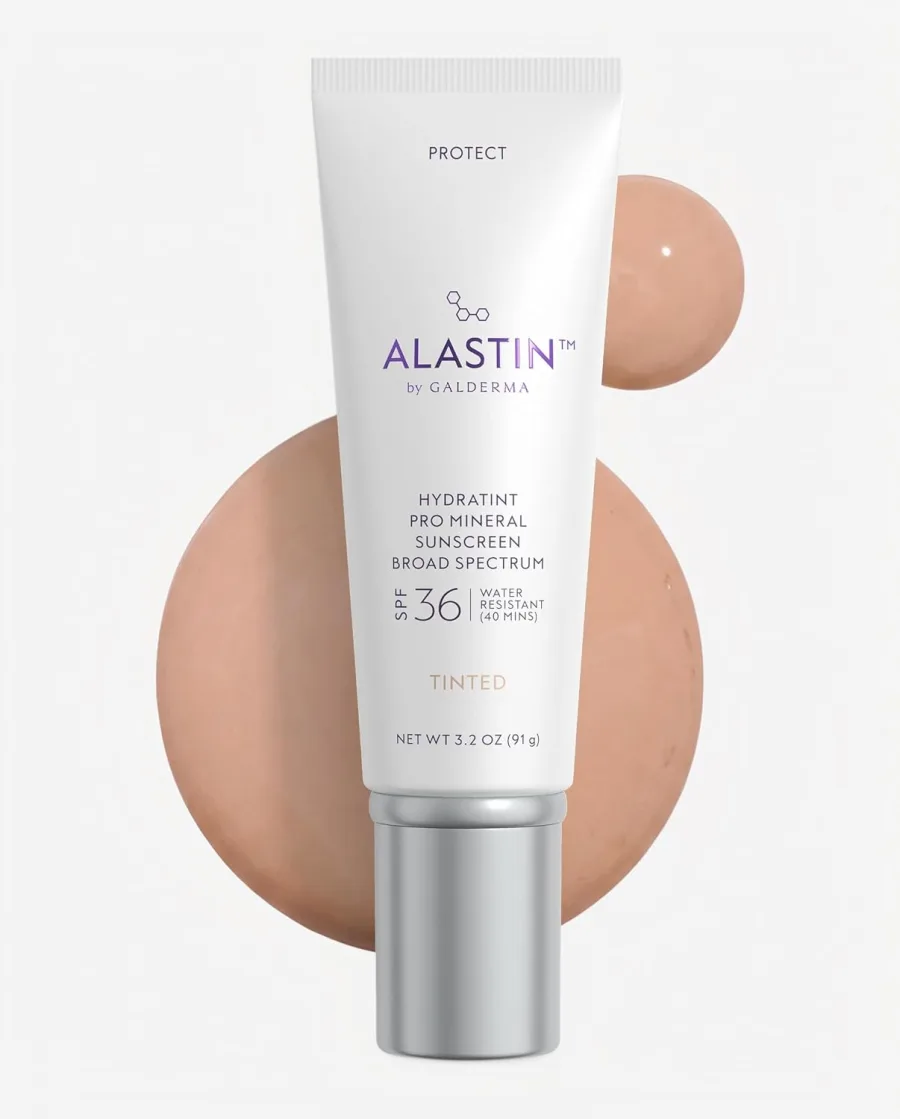
The bottle is a substantial 3.2 oz pump, noticeably larger than most of the other tinted sunscreens I've tested for this category, which is one of the first signs this is meant to be a genuine daily-driver rather than an occasional-use product.
One pump dispenses a beige-toned lotion that's thicker than a typical sunscreen but lighter than a liquid foundation. On my fair, cool-undertone skin, the single available shade read close to my natural tone, landing more toward a warm-neutral finish than the pink or ashy cast that fair-skinned testers sometimes get stuck with on "universal" formulas.
It's fragrance-free, and there was no stinging or tingling on application, which matters a lot given who this product is actually marketed toward. Blending takes a bit more effort than a sheer tint, since the coverage is genuinely more substantial, but it never felt like fighting the product to get an even result.
The finish settles into something closer to a natural, skin-like matte than a dewy glow, which reads as more "your skin corrected" than "your skin glowing," a meaningfully different look than several of the lighter tints in this category.
Packaging-wise, the pump makes portion control easy once you've found the right amount for your face, which took me about three or four applications to dial in. Too little and the coverage looks patchy in areas with more redness or unevenness. The right amount, once you find it, gives a genuinely seamless finish without needing a second pass.
Set-time is a touch longer than the sheerer tints I've tried, closer to two full minutes before it's fully settled, which is worth building into your routine if you're used to a faster, lighter formula that dries down almost instantly.
I also noticed the finish looks slightly different depending on how much moisturizer sits underneath it. A lighter moisturizer gave the most true-to-color, even result, while a heavier cream underneath occasionally made the tint sit a touch patchier around drier areas of my face. That's a small enough detail that most people won't need to think twice about it, but it's worth mentioning for anyone who layers a rich moisturizer as a matter of habit.
Where the Medium Coverage Earns Its Price
This is genuinely the most substantial coverage of any product I tested for the roundup, and it's the reason people reach for it in the first place. It doesn't just add a wash of color, it actually corrects and evens tone the way a light foundation would.
- SPF 36 mineral sunscreen with medium, foundation-like coverage
- Doesn't clog pores, even on comedone-prone combination skin
- Non-greasy finish that holds up well without oxidizing or shifting shade
- Fragrance-free formula gentle enough for freshly-treated or sensitive skin
What stood out most in my testing was how well it covered redness and general unevenness without ever looking like a mask. It genuinely functioned as my foundation on several days, and I didn't feel the need to layer anything else on top.
I noticed a specific benefit around the sides of my nose, an area that tends to run redder than the rest of my face and usually needs a targeted concealer to fully even out. This formula's coverage was substantial enough to handle that on its own more often than not, which is a genuinely rare result for a product that's still, technically, marketed as a sunscreen first.
It also performed well through a light workout, holding up through sweat without sliding or breaking down into streaks, which is a real concern with a product this substantial in texture.
I tested it side by side with my usual foundation and concealer routine on two similar days, just to have an honest point of comparison. The ALASTIN alone covered noticeably more evenly across my cheeks and forehead than a light foundation applied without concealer, though it still doesn't fully match a concealer's spot-coverage for a stubborn blemish or dark circle.
Over a full week of relying on it as my only base product, I found myself reaching for concealer far less often than usual, mostly reserving it for the odd late night or under-eye day rather than as a daily habit.
What's Actually in the Formula
ALASTIN built its reputation in the professional skincare space, and HydraTint Pro reflects that positioning. The mineral SPF 36 is the core active, and the formula is otherwise kept simple and fragrance-free, without the long list of trend-forward actives you'll find in some of the more skincare-marketed tints.
That restraint is deliberate. A product this often recommended for skin that's just been through a professional treatment needs to avoid anything that could realistically irritate compromised skin, and the ingredient list here reads like it was built with that specific brief in mind rather than for general retail appeal.
- Mineral SPF 36 as the core active
- Fragrance-free formula
- No heavy oils that could clog freshly-treated pores
What I appreciated most, having tested a fair number of clinical-adjacent skincare products over the years, is that this doesn't feel like a formula chasing trends. It feels like it was built to a specific brief, do the sun-protection job well, cover redness and unevenness, and irritate nothing, and then executed on exactly that brief without adding unnecessary extras that don't serve the core mission.
Where It Falls Short
The single available shade is the real limitation here, and it's worth being direct about it. It's calibrated for a middle range of skin tones, and several fair-skinned testers, myself included, found it can run slightly too dark or develop a warm, almost bronze cast depending on how your own skin tone is behaving that season.
This becomes a genuinely bigger issue for anyone whose skin tone shifts, like after a tan fades or through recovery from a procedure that temporarily changes pigmentation. What matches perfectly at one point in your skin's cycle can look noticeably off a few weeks later once your baseline tone shifts back.
I want to be fair to the brand here: a single-shade formula was always going to be a compromise for some skin tones. The issue isn't that the shade is poorly chosen, it's that a product marketed toward post-procedure skin, whose tone is often temporarily in flux by definition, is a genuinely tricky fit for a fixed, non-adapting shade in the first place.
Price is the second consideration. At $60 to $68, this sits at the very top of the tinted sunscreen category, and if you don't specifically need medium, foundation-like coverage or a formula built for compromised skin, there are meaningfully cheaper options that will still protect your skin well.
- Single shade may run too dark or warm on very fair skin
- Can look mismatched if your own skin tone shifts seasonally or post-procedure
- One of the priciest products in this entire category
I'll also flag that the thicker, more substantial texture, while a strength for coverage, means it's not the lightest-feeling option if all you want is a barely-there sheer tint. This is closer to a light foundation than a skin tint in feel, and that's worth knowing before you buy.
The 3.2 oz bottle, while generous compared to competitors, still comes at a real cost per ounce once you divide it against the price. If you're using it daily as a full foundation replacement rather than a light sheer layer, expect a bottle to last closer to two to three months than the four-plus months a lighter tint might stretch to.
Living With It Day to Day
This became my choice on days I wanted to skip a separate foundation step entirely but still needed to look put-together. It genuinely replaced my base makeup routine more than any of the lighter tints I tested for the same roundup managed to.
Over several weeks, I didn't notice any breakouts or clogged pores, even around my nose and chin where heavier formulas sometimes cause issues on my combination-leaning T-zone. That's a meaningful result for a product with this much actual pigment and coverage in the formula.
I also wore it on a warm, humid day specifically to stress-test whether the coverage would break down the way heavier foundations tend to in sticky weather. It held its structure impressively well, with only minor softening around the very end of the day rather than the visible patchiness I half expected.
On a longer outdoor day, it held its color and coverage well into the afternoon without needing a touch-up, which I attribute partly to the more substantial base texture holding its structure better than a sheer, water-based tint would over the same stretch of hours.
The one adjustment I made was applying it with a damp sponge rather than fingers alone on days I wanted the most seamless, foundation-like finish. Fingers work fine for a faster, more natural result, but the sponge genuinely elevated the finish on days that mattered more.
I also tracked how it performed across a stretch where my own skin tone shifted slightly, from a couple of weeks of more time outdoors than usual back to my typical fair baseline. The shade match, which had felt slightly warm at its peak, settled back into a closer match once my skin returned to its usual tone, confirming what I'd read about the single shade being calibrated for a fairly specific point on the color spectrum rather than adapting the way some competitors' formulas do.
On a day I forgot to reapply and spent several hours outside, I didn't notice any burning, though I also wasn't in direct sun for the entire stretch, which is worth factoring in rather than treating any single day's result as a guarantee.
Who This Product Is Actually Right For
ALASTIN HydraTint Pro is built for a genuinely specific use case, and it performs best when you match your expectations to that use case rather than treating it as a general-purpose everyday tint.
- Post-procedure skin recovering from laser, microneedling, or peels, where gentle formulation matters
- Anyone who wants medium, foundation-replacing coverage rather than a sheer wash of color
- Combination or comedone-prone skin that needs a non-clogging formula
- Skip it if your skin tone is very fair, very deep, or shifts seasonally, since the single shade may not track with you
It's also worth considering if you're actively trying to simplify a routine that currently includes a separate sunscreen and a separate foundation. Consolidating both into one well-formulated step is a genuinely underrated way to make mornings faster, and this is one of the few products in this category substantial enough to actually pull that off.
If you fall into that first group, especially anyone actively recovering from a professional skin treatment, this earns a real premium over a general drugstore option. The formulation genuinely reads as built for that specific, more delicate use case.
If you're outside that group, but you're specifically shopping for a tint that can genuinely replace foundation rather than sit on top of it, this is still worth serious consideration, provided the single shade works on your skin tone. I'd strongly suggest requesting a sample or a small size before committing to the full 3.2 oz bottle at this price, given how much the shade match seems to vary by individual skin tone and season.
Is It Worth $64?
Against Colorescience FLEX Tinted Mineral Sunscreen SPF 50, which I also tested and reviewed in full in my Colorescience FLEX Tinted review, the two sit in similar premium, clinical-adjacent territory. Colorescience's fully mineral, color-adapting formula and higher SPF 50 make it the more flexible pick across a wider range of skin tones, while ALASTIN's more substantial, foundation-like coverage is the better fit if you specifically want to replace a base makeup step entirely.
If your priority is genuinely just a strong, dependable daily sunscreen with the widest possible shade compatibility, our best mineral sunscreen guide covers a broader field of options at a range of price points, several of them meaningfully cheaper than either premium tint here.
For the specific person recovering from a procedure, or anyone who's struggled to find a mineral sunscreen with real coverage, $64 is a fair price for what this delivers. For a general everyday tint on unremarkable, stable skin, it's more than most people need to spend.
I'd also encourage anyone weighing the price to think about what they'd otherwise be spending on foundation plus a separate sunscreen. Priced against buying both of those products separately, ALASTIN starts to look like a more reasonable single purchase rather than an isolated luxury item, especially for anyone who was already buying a premium sunscreen and a separate base makeup product before switching.
The Takeaway
ALASTIN HydraTint Pro earns its premium price for a specific, real need: medium, foundation-replacing coverage in a gentle, mineral SPF 36 formula that's genuinely comfortable on sensitive or recently-treated skin. It's the most substantial coverage of any tinted sunscreen I tested for this category.
The single shade is the real limitation, and it's worth sampling before committing to a full bottle if your skin tone is very fair, very deep, or prone to seasonal shifts. For a full comparison against 14 other tinted SPF and skin tint options, our best skin tint roundup ranks the complete lineup by skin type and price.
Weeks into testing, I'd genuinely recommend this to anyone who's frustrated by having to choose between real coverage and skin-safe, sensitive-friendly sunscreen. It's rare to find a product that treats both of those as equally non-negotiable, and ALASTIN clearly built this one around exactly that principle.
Confirmed
- Medium coverage that reviewers say genuinely replaces foundation, not just a sheer tint
- A go-to recommendation after laser treatments, microneedling, and other in-office procedures
- Non-greasy and doesn't clog pores, even on comedone-prone combination skin
- Fragrance-free formula that held up well during post-procedure healing for multiple reviewers
Flagged
- The single tint shade is calibrated for 'most' skin tones, and several fair-skinned reviewers found it runs notably too dark or orange once their base skin tone shifted back to normal after a procedure
- The single highest price point in this roundup
- Best suited to light-to-medium foundation shades — very fair or very deep skin tones may not find a match
Specification
Verified Against 1 Rival
This Product
ALASTIN Skincare HydraTint Pro Mineral Tinted Sunscreen
8.0 / 10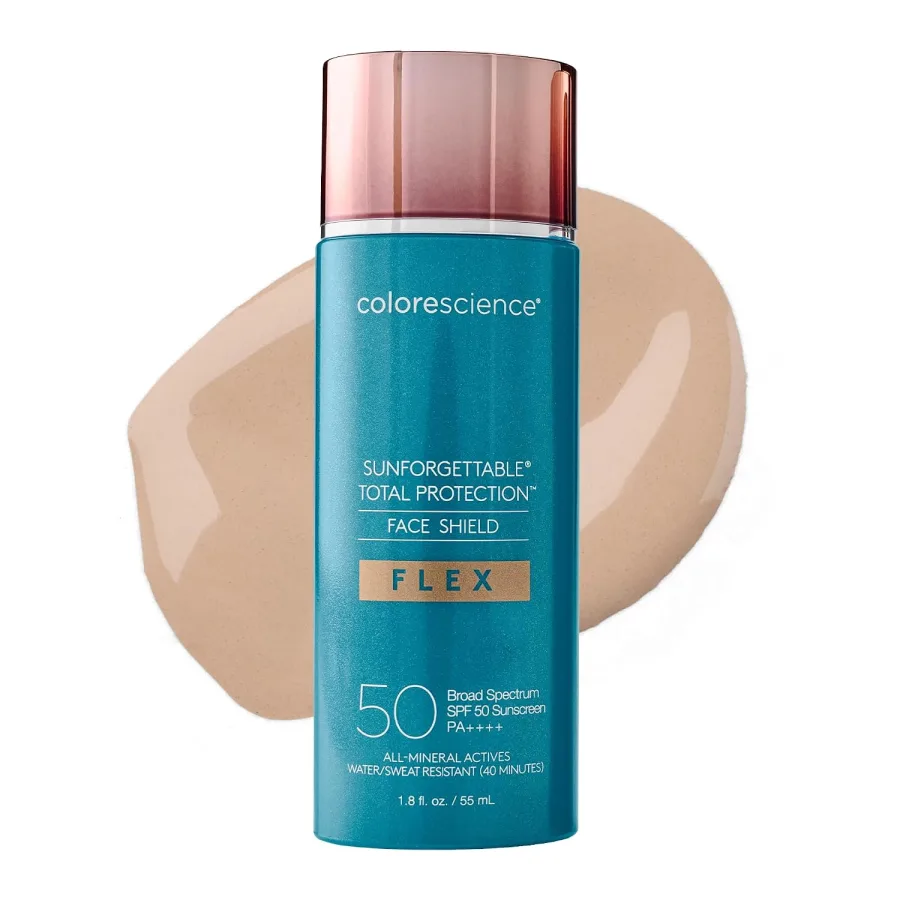
Colorescience FLEX Tinted Mineral Sunscreen SPF 50
8.1 / 10How This Score Was Earned
We Purchase
Bought at retail, anonymously, with our own funds.
We Live With It
A minimum of four weeks of daily use before a word is written.
We Measure
Weighted criteria, identical for every product in the category.
We Re-Verify
Rankings are revisited weekly; scores fall when products do.
 Verified Examiner
 The Verified Verdict
A dermatology-office favorite for post-procedure and laser-treated skin — medium, foundation-like coverage with SPF 36, at the most clinical price point in this test.
Check Price on Amazon →$60–$68 · price verified today
Common Questions