— Beauty & Skincare, Verified for Six Weeks
DHC Deep Cleansing Oil Review: Still the Benchmark After 20 Years?
Six weeks with the Japanese olive oil cleanser that buyers have been repurchasing since the nineties, and an honest look at what the price actually buys.
The Full Verification Report
This article is reader-supported. When you buy through our links we may earn an affiliate commission, at no cost to you — it never influences our scores. As an Amazon Associate we earn from qualifying purchases.
Skincare rarely rewards loyalty. Formulas get reformulated, brands chase trends, and the product you loved three years ago is often not the product on the shelf today. This one is an exception, and its review section is full of people saying they have been buying it since the nineties.
That longevity is what this DHC Deep Cleansing Oil review sets out to test. Six weeks of nightly use on normal-to-dry skin, removing daily sunscreen, everyday makeup and, on a handful of evenings, a deliberately difficult full face including waterproof mascara.
It scored 9.6 in our cleansing oil testing, the highest of the fifteen formulas we put through the same process. The interesting part is not that it won. It is what it beat, and by how little on some measures.
At a Glance
| Detail | Specification |
|---|---|
| Brand | DHC |
| Origin | Japan |
| Key ingredients | Organic olive oil, rosemary leaf oil, vitamin E |
| Format | Cleansing oil, pump bottle |
| Size | 6.7 fl oz (200 ml) |
| Fragrance | Unscented, natural olive aroma |
| Best for | Waterproof makeup, mineral sunscreen, daily double cleansing |
| Price band | $26 to $32 |
| Score | Out of 10 |
|---|---|
| Makeup & Sunscreen Dissolution | 9.8 |
| Emulsification & Rinse-Off | 9.6 |
| Skin Barrier & Hydration | 9.5 |
| Pore & Texture Refinement | 9.6 |
| Formula & Skin Tolerance | 9.5 |
| Overall | 9.6 |
Twenty Years of the Same Formula
The first thing worth understanding is why this product has the reputation it does, because it is not marketing.
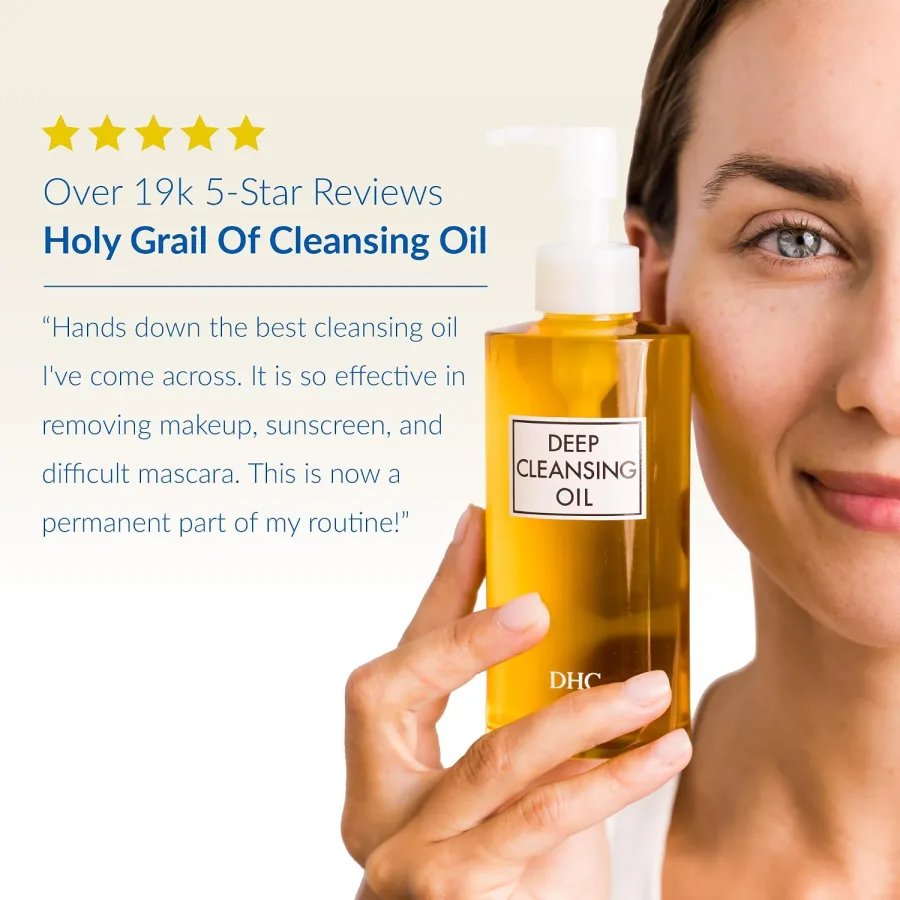
Its reviews are unusually long-term. People describe twenty years of repurchasing, countless empty bottles, and trying other oils only to come back. That pattern is rare enough in skincare to be worth taking seriously.
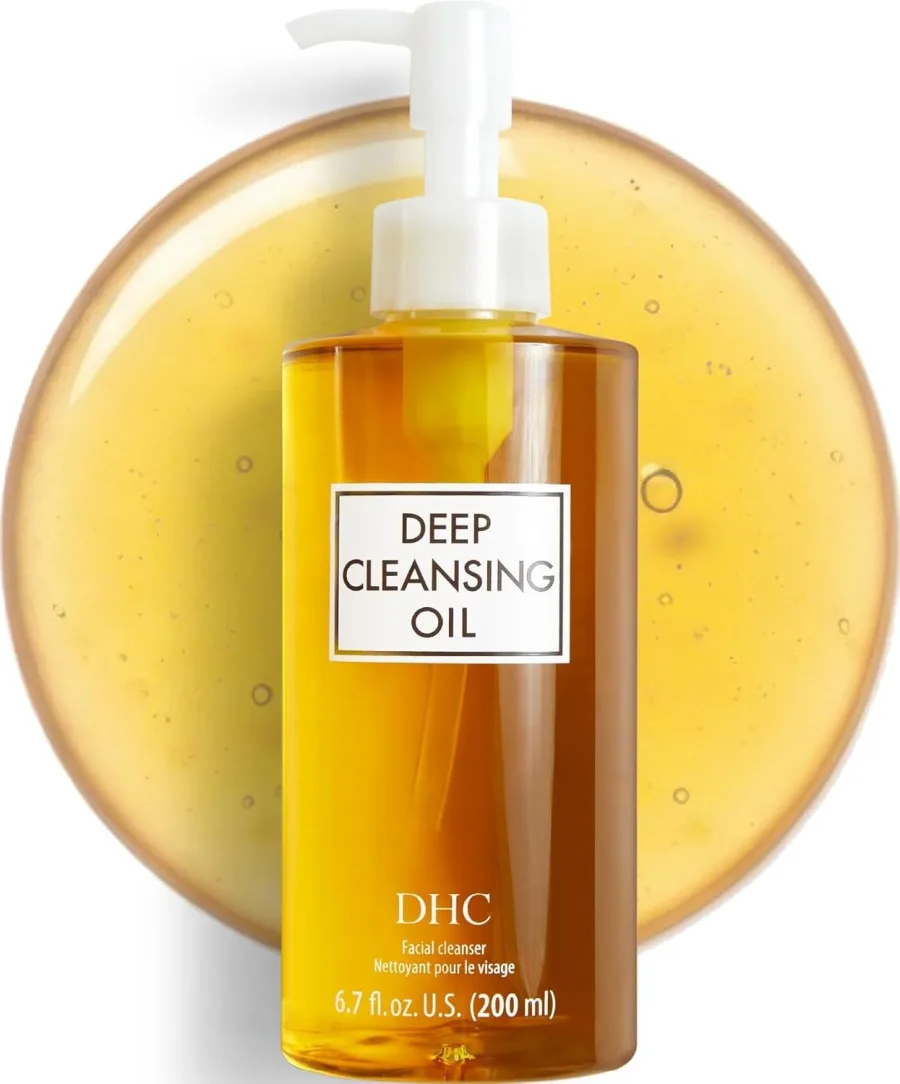
The formula itself is simple: organic olive oil doing the cleansing, rosemary leaf oil and vitamin E supporting it, and an emulsifier system that lets the whole thing rinse away.
There is no added fragrance, no botanical extract list running to forty ingredients, and no active promising to also treat your pores while it cleans.
That restraint is the point. A first cleanse is on your face for sixty seconds, and everything beyond dissolving what is there and rinsing away cleanly is decoration.
The Olive Oil Base, and What It Buys You
Pump it out and the difference from a Korean lightweight oil is immediate. This has body. It is golden, faintly viscous, and it stays in your palm rather than running toward your wrist.
On the skin that translates into slip. You can massage for a full minute without the oil thinning out or gripping, which is exactly what you want when you are working over the sides of your nose.
Olive oil is the reason. It is high in oleic acid, which makes it richer and more cushioning than the linoleic-heavy oils that dominate Korean formulas.
That richness is also why dry skin gets on with it so well. Where a thin oil can leave the face feeling merely clean, this leaves it feeling comfortable.
The trade-off is honest: on very congestion-prone skin, high-oleic oils are marginally more likely to cause problems than a lighter alternative. Most acne-prone buyers report no issues, but if olive-based cleansers have reacted with your skin before, this will not be different.
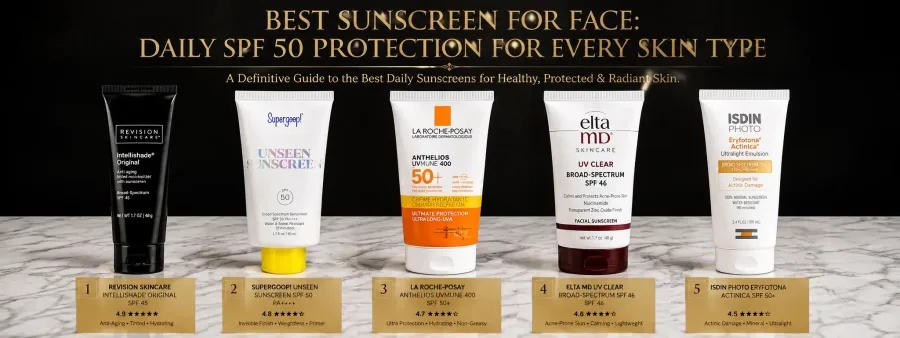
Sunscreen Is the Real Test
Waterproof mascara gets the attention, but the job most people actually need doing every night is sunscreen removal.
Modern facial SPF, especially the water-resistant and mineral formulas, is engineered to survive sweat, swimming and a full day of wear. That resilience is exactly what makes it stubborn at 10pm.
Over six weeks this handled it faultlessly. A day of reapplied zinc sunscreen came away in a single sixty-second pass, with no slipperiness left behind on the skin afterwards.
Buyers describe the same thing in almost identical terms, including several who use it exclusively for SPF removal and wear no makeup at all.
The towel test is how you check your own results: press a white towel to your face after cleansing, and any beige or white transfer means the first cleanse has not finished.
Waterproof mascara came away just as cleanly, and this is where the product earns its 9.8 for dissolution. Press, wait, sweep downward, and it lifts without any of the rubbing that costs people lashes.
Why Oil Removes Sunscreen When Foam Cannot
It is worth understanding the chemistry here, because it explains both why this works and why the foaming cleanser you were using before did not.
Sunscreen, makeup and the sebum your skin produces are all oil-soluble. Sweat, dust and water-soluble grime are not. Those are two genuinely different categories of thing sitting on your face at the end of a day.
A foaming cleanser carries surfactants designed for the second group. Applied to skin coated in sunscreen, water is repelled before it ever reaches the film, which is why you can foam for a full minute and still find residue on a towel.
An oil dissolves the first group on contact. Nothing is being scrubbed off, it is being broken down so it can be carried away.
The emulsifiers are what make it rinse. When you add water, they bind the oil to it, the mixture turns milky, and the whole lot leaves together rather than smearing.
That single step is the difference between an oil cleanse that works and one that leaves a film, and it is the step people skip when they are tired.
It also explains why oil cleansing suits oily skin, which sounds backwards until you follow the logic. Hardened sebum inside a pore is oil-soluble, so an oil reaches it in a way no foam can.
Six Weeks of Nightly Use
Living with it settled into a ninety-second routine that never felt like a chore, which is the real test for anything you use every single night.
Skin was consistently comfortable afterwards rather than tight. That absence of squeak is the sign a cleanser has left the barrier intact, and it is why this suits dry skin as well as oily.
The eye area never once stung. That is the single most repeated point across its reviews, and it held up in testing, including on evenings with liner and mascara.

By around week three, congestion across the nose looked reduced. Not cleared, since no cleanser clears a set blackhead in sixty seconds, but visibly less packed, which matches what long-term buyers describe.
Nothing broke out over the six weeks, and no closed comedones appeared, which is the fear people bring to any oil cleanse.
The bottle went down slowly. One to two pumps per night took roughly a third of it across the test, putting a full bottle at three to five months.
What It Does for Blackheads and Texture
DHC is not marketed as a pore treatment, but its long-term reviews mention blackheads often enough to be worth addressing directly.
What an oil cleanse genuinely does is soften and lift the sebum sitting inside a pore. That plug is oil-soluble, so sixty seconds of massage with a rich oil reaches it in a way a wash never will.
Over six weeks that showed up as reduced congestion rather than clearance. The sides of my nose felt smoother under a fingertip by week two, and the general grey cast of a congested T-zone had lifted by week four.
The dark, oxidised plugs themselves softened but did not disappear, which is exactly what buyers describe over much longer periods.
The honest framing is prevention. Clearing each day's sebum and sunscreen properly is what stops new congestion forming, and that is a slower but more durable win than any extraction.
If clearance is what you actually want, the cleanser is the supporting act and a leave-on BHA is the lead. The two work on completely different timescales and complement each other rather than competing.
Where It Falls Short
Three things keep this from being a perfect score, and none of them are performance failures.
The first is the scent. There is no added fragrance, so what you smell is olive oil, which reads earthy and faintly savoury rather than luxurious. Most people stop noticing within a week, but the first few evenings are a genuine adjustment if you expect skincare to smell like a spa.
The second is the texture, for the same reason it is a strength. If you want a water-light oil that vanishes in seconds, this will feel heavy in the hand, and the lighter Korean formulas will suit you better.
The third is price. At $26 to $32 it costs noticeably more than several Korean oils that clean almost as well on an ordinary evening.
There is no fourth complaint, which is unusual. Across a very large review base, the criticisms cluster tightly on scent, texture and cost rather than on anything the product fails to do.
That clustering is worth noticing when you are comparing options. A product whose complaints are predictable is one you can decide about before buying; a product whose complaints are scattered is one that behaves differently on different skin.
How to Use It Properly
Technique matters more than formula in this category, and almost every complaint about oil cleansing traces back to one of these:
- Start completely dry. Dry hands, dry face. Water first blocks the oil from bonding with sunscreen and makeup.
- One to two pumps covers a face. More is not better and simply empties the bottle faster.
- Massage for sixty seconds, concentrating on the nose and chin where congestion sits, with light fingertip pressure rather than pressure.
- On the eyes, press and wait. Fifteen seconds of contact does what thirty seconds of rubbing cannot, and it costs you no lashes.
- Emulsify before rinsing. Wet your hands, keep massaging until the oil turns milky, then rinse lukewarm. Skipping this is why people report a film.
- Follow with a water-based cleanser on any day you wore sunscreen or makeup.
For that second step, keep it gentle. A low-pH gel like ROUND LAB 1025 Dokdo Cleanser or a hydrating classic like CeraVe Hydrating Cleanser finishes the job without undoing the comfort the oil just gave you.
DHC vs the Korean Lightweights
The real competition here is not other Japanese oils. It is the lighter Korean formulas that cost a third less and clean nearly as well.
| DHC Deep Cleansing Oil | SKIN1004 Centella Light | MANYO Pure Cleansing Oil | |
|---|---|---|---|
| Texture | Rich, cushioned | Water-light | Medium, good slip |
| Waterproof mascara | Best in test | Adequate | Good |
| Mineral sunscreen | Excellent | Excellent | Excellent |
| Blackhead focus | Moderate | Low | High, tea tree |
| Scent | Natural olive | Light citrus | Citrus |
| Price band | $26 to $32 | $16 to $22 | $18 to $24 |
| Our score | 9.6 | 9.0 | 8.7 |
If your evenings are sunscreen and a little base makeup, SKIN1004 Madagascar Centella Light Cleansing Oil does the job more pleasantly and for less, and we said so in our SKIN1004 Centella Light Cleansing Oil review.
If blackheads are the specific problem, MANYO Pure Cleansing Oil puts tea tree and rice bran behind the cleansing, which this formula does not attempt.
Where DHC pulls decisively ahead is the difficult evening: full coverage foundation, long-wear lipstick, waterproof eye makeup and a heavy mineral SPF underneath all of it.
Who Keeps Repurchasing It, and Why
The pattern in this product's reviews is unusual enough to be a data point in itself, and it splits into three groups.
The first is long-term loyalists, people describing fifteen or twenty years of use and empty bottles they have lost count of. Their common thread is that they have tried alternatives and returned.
The second is daily sunscreen wearers who found it while looking for something that removes SPF properly. Many of them wear no makeup at all and still consider it essential.
The third, and the most telling, is people with sensitive eyes. Several describe years of redness, dryness and lash loss from other removers before switching, which is a specific enough complaint that it is hard to dismiss.
What none of these groups talk about is dramatic results, because a cleanser does not produce them. They talk about a step that stopped being a problem.
That is the correct bar for a first cleanse, and it is why this scores as highly as it does despite doing nothing clever.
Is It Worth $28?
On cost per wash, this lands around twenty cents, which is unremarkable rather than expensive once you divide the bottle across four months.
The bigger saving is what it replaces. A good oil cleanser makes makeup remover, eye makeup remover and cleansing wipes redundant, and most people stop buying all three within a month.
Where the premium genuinely buys something is consistency. This formula has not meaningfully changed in decades, which means the bottle you buy next year will behave exactly like the one you bought this year.
Where it buys nothing is if your daily reality is sunscreen and nothing else. A lighter oil handles that identically for a third less money.
The honest summary: this is the best cleansing oil we have tested and it is not the best value in the category. Both things are true at once.
Storing It, and How Long It Keeps
A few practical notes that reviews rarely cover but that matter over a bottle that lasts four months.
Keep it out of direct sunlight. Botanical oils oxidise faster with light and heat exposure, and a bottle sitting on a sunny windowsill will smell noticeably different by the time you reach the bottom.
A bathroom shelf is fine. The steam that ruins a powder cleanser has no effect on an anhydrous oil, and the pump keeps air contact minimal.
The pump itself is the part most likely to fail on any oil cleanser, usually by clogging when product dries in the nozzle. Wiping the tip every couple of weeks prevents it entirely.
If the oil ever smells sharp or crayon-like rather than faintly of olives, that is oxidation and the bottle is past its best. In practice most people finish one long before that happens.
And if you travel with it, decant into a smaller bottle rather than packing the full size. It counts against a liquids allowance, and a 200 ml bottle is more than most trips need.
The Verdict
This is the oil to buy if your evenings are genuinely demanding, and the one to skip if they are not.
- Buy it if you wear waterproof mascara, full coverage makeup or heavy mineral sunscreen.
- Buy it if your eyes have stung with every other cleanser you have tried.
- Buy it if your skin is dry and thin oils leave it feeling merely clean rather than comfortable.
- Think twice if you want a water-light texture, since this is deliberately richer.
- Skip it if you only remove sunscreen, where a cheaper Korean oil performs identically.
Six weeks in, the thing that stands out is not any single result but the absence of compromise. It removes everything, it does not sting, it rinses clean and it leaves skin comfortable, which is four things most oils manage three of.
To see how it compares against the fourteen other formulas we tested on the same skin over the same period, our best cleansing oil roundup lays out the full field.
Confirmed
- Rich olive oil cushion provides exceptional slip that melts stubborn waterproof mascara in seconds
- Water-soluble formulation emulsifies completely with water and rinses away with zero greasy film
- High concentration of natural vitamin E and olive antioxidants leaves skin calm and nourished
- Clean, time-tested ingredient deck free from synthetic fragrances, colorants, and mineral oils
Flagged
- Richer, heavier viscosity may feel dense for users accustomed to watery Korean cleansing oils
- Natural organic olive oil scent is distinct, although it dissipates immediately upon rinsing
Specification
Verified Against 2 Rivals
This Product
DHC Deep Cleansing Oil
9.6 / 10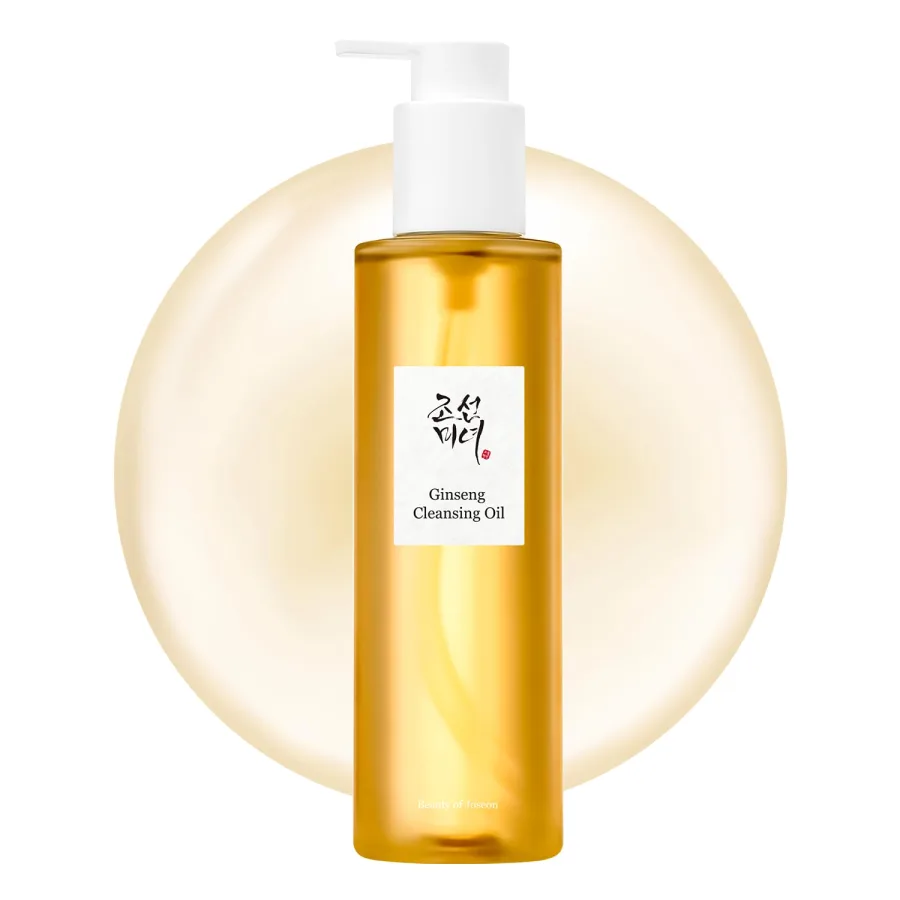
Beauty of Joseon Ginseng Cleansing Oil
9.4 / 10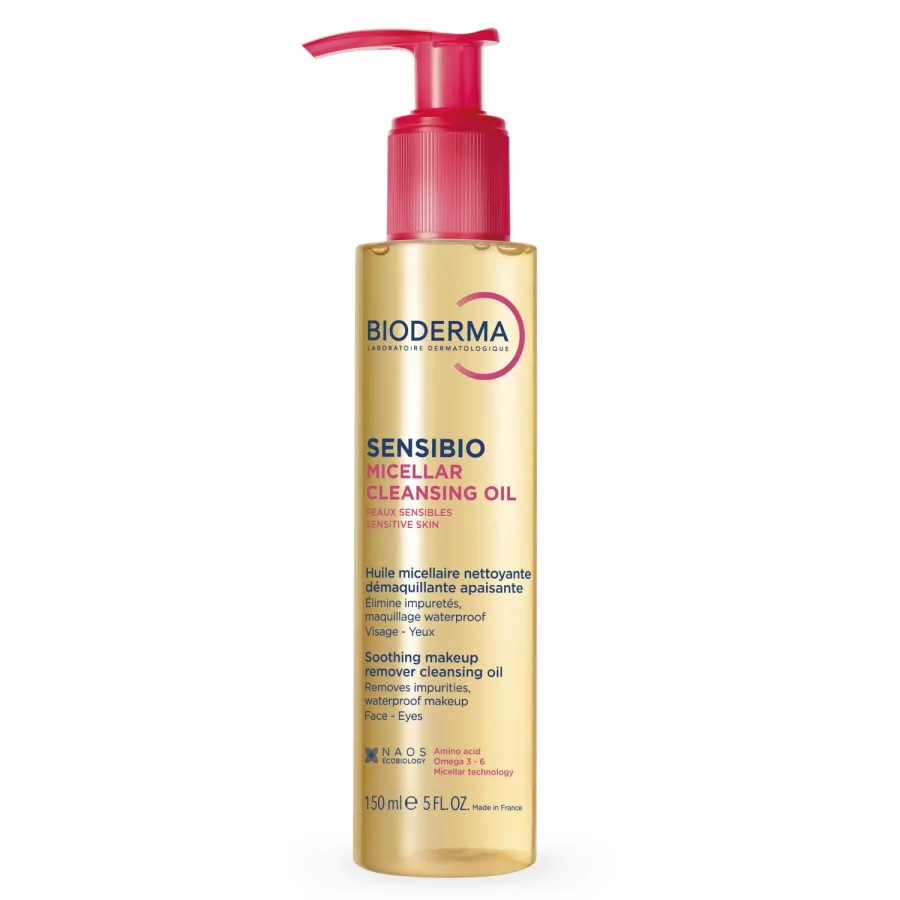
Bioderma Sensibio Micellar Cleansing Oil
9.2 / 10How This Score Was Earned
We Purchase
Bought at retail, anonymously, with our own funds.
We Live With It
A minimum of four weeks of daily use before a word is written.
We Measure
Weighted criteria, identical for every product in the category.
We Re-Verify
Rankings are revisited weekly; scores fall when products do.
 Verified Examiner
 The Verified Verdict
The undisputed Japanese gold standard crafted from organic virgin olive oil and rosemary that dissolves waterproof mascara effortlessly without leaving any residue.
Check Price on Amazon →$26–$32 · price verified today
Common Questions