— Beauty & Skincare, Verified for Six Weeks
Gold Bond Softening Foot Cream Review: No Acid, 26,000 Fans
No urea, no lactic acid, no salicylic acid, and the highest rating of any foot-specific cream here. We examine why an emollient beats the exfoliants for most feet.
The Full Verification Report
This article is reader-supported. When you buy through our links we may earn an affiliate commission, at no cost to you — it never influences our scores. As an Amazon Associate we earn from qualifying purchases.
Every other foot cream in this comparison is built on something that chemically dismantles hardened skin. Gold Bond Softening Foot Cream is not. It contains no urea, no lactic acid and no salicylic acid, and it holds a 4.7 average across 26,231 ratings anyway, which is the highest score of any foot-specific product here.
That combination is worth understanding, because it says something useful about what most people's feet actually need.
An Emollient Rather Than an Exfoliant
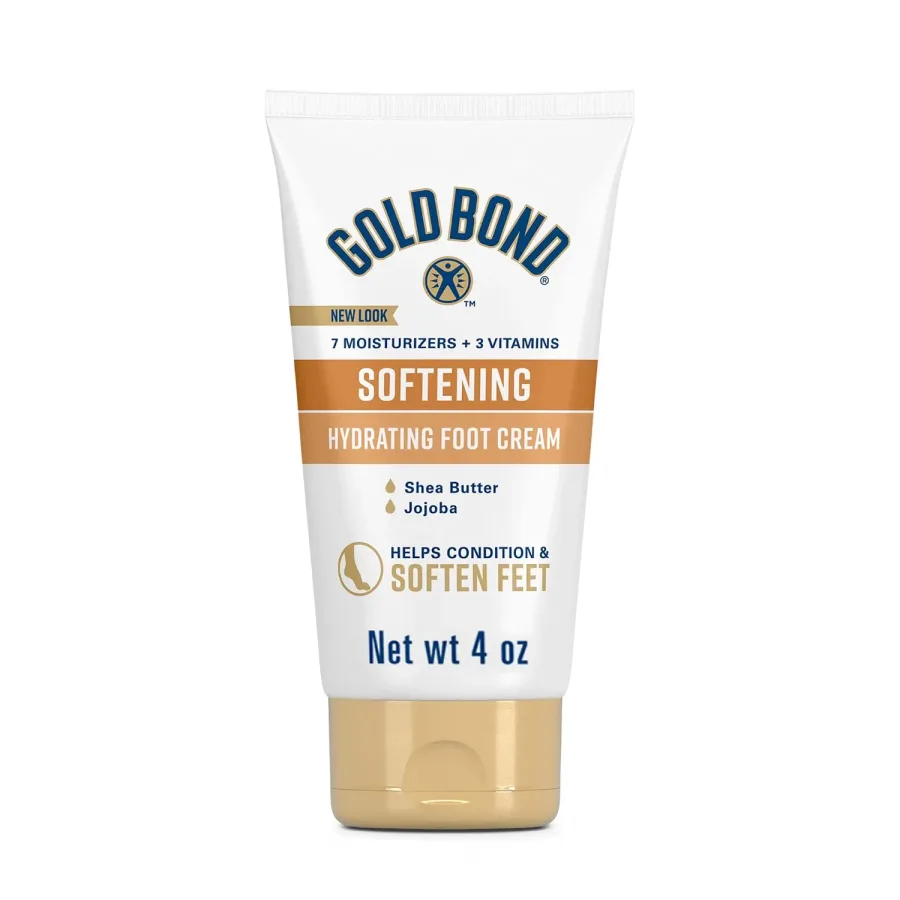
The listing names three things: coconut oil and jojoba in the active ingredients row, and shea butter as the special ingredient. The item highlight repeats shea butter and jojoba as the softening agents.
All three are emollients. They sit in and on the skin, filling gaps between cells and softening texture by lubrication rather than by dissolving anything. That is a fundamentally different mechanism from the acids and ureas competing with it.
One point of precision: coconut oil and jojoba are not active ingredients in the regulatory sense, and listing them in that field is loose rather than wrong. There is no drug-facts active here, which is consistent with a cosmetic moisturiser rather than a treatment.
Why That Suits More People Than It Sounds
Hardened callus genuinely needs a keratolytic. Most feet, most of the time, do not have hardened callus.
They have dryness, roughness and the beginnings of cracking, which is a moisture problem rather than a thickness problem. An emollient addresses that directly and without the stinging, smell or sensitivity that stronger actives can bring.
The listing reflects this in an unusual way: the skin type field reads rough rather than dry, and the single stated product benefit is hypoallergenic. That is a product positioned for comfort rather than potency, and its rating suggests the positioning is correct.
Skin Type Rough, Not Dry
A one-word field that most shoppers skip past says something useful about who this was built for.
Almost every competing listing gives its skin type as dry or all. This one reads rough, which describes texture rather than moisture content and points at a specific complaint: skin that feels coarse and catches rather than skin that feels tight.
That framing lines up with the buyer accounts, particularly the reviewer whose socks caught on her heels. It also explains the formula: roughness responds to lubrication and softening, which is precisely what shea butter, jojoba and coconut oil do best.
Hypoallergenic Is the Only Stated Benefit
Where the urea creams list five or six benefits, this lists one, and the choice is telling.
Hypoallergenic has no fixed regulatory definition, so it is a brand claim rather than a certification. What it signals in practice is a formula designed to minimise reaction, which matters on skin that is already cracked and therefore more permeable than intact skin.
Nobody in the genuine review file reports irritation, stinging or a reaction, which is what you would expect from a shea-and-jojoba formula with no acid in it. For anyone who has found 40 percent urea uncomfortable, that is the relevant comparison.

It Smells Good, Which Is Rare in This Category
One reviewer leads with scent, saying it smells amazing and describing it as the best foot lotion she has ever tried after years of purchasing it.
That matters more than it appears. The lactic acid cream in this comparison draws its most consistent complaint for odour, and the urea creams are variously unscented or disputed. A foot product that people enjoy applying gets applied, and consistency is what produces results in this category.
The listing gives no scent field at all, so we are reporting a buyer observation rather than a specification. Anyone who specifically wants fragrance free should treat that silence as a reason for caution.
The Exfoliating Claim Needs Examining
The same enthusiastic reviewer says it works for exfoliating as well as moisturising, and that deserves scrutiny rather than repetition.
Nothing in this formula exfoliates chemically. There is no acid, no urea and no scrub particle named anywhere in the listing, and the highlight describes softening rather than removing.
What is more likely is that softened dead skin sheds more readily during ordinary washing and drying, so the result resembles exfoliation without the mechanism. We report her experience as she described it while being clear the product data does not support an exfoliating claim.
The Weight Figure Is Plainly Wrong
| Field | Stated value | Assessment |
|---|---|---|
| Item volume | 4 fluid ounces | Consistent with the title |
| Unit count | 4 Ounce | Consistent |
| Item weight | 4.7 pounds | Impossible for a 4 ounce tube |
| Skin type | Rough | Unusual and more specific than dry |
| Product benefit | Hypoallergenic | A brand claim, not a certification |
| Rating | 4.7 / 5 from 26,231 ratings | #6 in Foot Creams and Lotions |
A 4 ounce tube weighing 4.7 pounds would be roughly nineteen times heavier than its contents. Treat 4 ounces as the size and ignore the weight field entirely rather than trying to reconcile it.
Using It on More Than Feet
Two accounts describe taking it beyond its stated purpose, which the formula comfortably allows.
One long-term buyer says she uses it on her body as well when she is feeling extra dry. Another describes years of trouble with dry skin on her legs as well as her feet, and reports that this addressed both.
Nothing in an emollient formula restricts it to feet, unlike a 40 or 60 percent keratolytic which is genuinely too strong for thinner skin elsewhere. That flexibility is a quiet advantage of the acid-free approach, and it improves the value case for a 4 ounce tube considerably.
Two Applications Is the Reported Norm
One reviewer is precise about how much work it takes, which is more useful than a general endorsement.
She describes years of searching for relief for dry skin on her legs and feet, with her feet in particular driving her crazy, and reports that this works. Her qualification is that it takes one or two applications, usually two, before she gets the result she wants.
That is a realistic expectation to set. An emollient works by accumulation rather than by reaction, so the first application softens and the second consolidates. It is slower than a keratolytic and considerably gentler.
Perimenopause and Skin That Changes
The most specific account in the file identifies a cause that catches many people by surprise.
That reviewer says her feet have been dry and cracked since perimenopause, that her socks would catch on them even when using other products, and that she had tried several lotions, gels and masks. She also explains that many products expect you to soak your feet several times a week, and that she does not have the time.
Skin holds less water as oestrogen falls, and feet show it early because they have no oil glands on the sole to compensate. A simple emollient applied without a soaking ritual is exactly the right answer for someone in that position.

Is a Foot-Specific Lotion Necessary?
The four-star review in the file asks the question directly and honestly, and it deserves an answer rather than a dismissal.
She says it is exhausting how wide a range of products are now offered, such that there is a specific lotion she has to buy for her feet, and notes she already has other Gold Bond lotions she probably could have used. She bought this because it was recommended.
The honest answer is that the sole of the foot has no sebaceous glands and carries the body's weight, so it is both drier and thicker than skin elsewhere. A richer, more occlusive formula makes sense there. Whether that justifies a separate tube depends on how much your feet actually trouble you.
How It Compares With the Acid Products
- No acid or urea, so no stinging on cracked skin
- Softens by lubrication rather than dissolving hardened layers
- Better suited to rough and dry feet than to thick, long-standing callus
- Pleasant to apply, which supports the consistency the category requires
- Hypoallergenic positioning suits skin that reacts to stronger formulas
- No pumice routine implied or required
For a comparable emollient approach, our review of the O'Keeffe's Healthy Feet Foot Cream covers the other well-established option, and the same brand's Age Renew body lotion shows how Gold Bond formulates elsewhere.
Why It Outrates Stronger Products
A 4.7 average is higher than every acid or urea cream in this comparison, and the reason is worth drawing out because it is counterintuitive.
Powerful actives collect disappointed buyers in two ways. They fail people who did not have the problem the active was designed for, and they irritate people whose skin cannot tolerate them. An emollient does neither. It cannot sting, and it cannot underwhelm someone expecting callus removal, because it never promised that.
Ratings therefore measure something slightly different here. A high average on a gentle product says almost everyone got what they expected, while a lower average on a strong one may simply mean the product was bought by people it was never right for.
Application Without a Ritual
One reviewer identifies time as the deciding factor, and it is the most practical argument for this kind of product.
She notes that several lotions expect you to soak your feet multiple times a week, and says plainly that she does not have the time for that. A cream that works when applied and nothing else is a different proposition from one that assumes a routine around it.
- Apply after a shower while feet are still slightly damp, which gives the emollients moisture to seal
- Work it into the heel and the ball of the foot rather than spreading it evenly
- Socks afterwards help, but nothing in the file suggests they are essential
- Expect to apply twice rather than once for the first result
- Continue daily rather than waiting for a problem to return
No soaking, no pumice, no waiting period. For anyone who has abandoned foot care because the routines were unrealistic, that simplicity is the product's real advantage.
Dermatologist Advice Behind One Purchase
One reviewer explains the medical context that brought her to it, and the advice is more transferable than the product.
She says she is not usually a user of foot creams because none seem to give lasting results, describes having a terminal problem with her skin, and reports that her dermatologist's suggestion was to apply cream-based lotions several times a day.
The instruction there is about frequency rather than brand. A cream applied several times daily will outperform a superior product applied occasionally, and that is the single most useful thing in this entire review file.
Shea Butter, Jojoba and Coconut Oil in Combination
The three named ingredients are not interchangeable, and the combination is more considered than a single oil would be.
Shea butter is the heaviest of the three and the most occlusive, forming the surface layer that slows water loss. Jojoba is technically a wax ester and sits closer in structure to the skin's own sebum than most plant oils, which is relevant on a body part that produces none. Coconut oil is the lightest and spreads most readily.
Layering three emollients of different weights is how you get a cream that feels light enough to apply yet stays on the skin. We are describing what these ingredients are rather than claiming a measured effect, since the listing gives no concentrations for any of them.
Long-Term Buyers and the Discontinuation Worry
One review contains a request rather than a complaint, and it is a stronger endorsement than praise usually manages.
That buyer, who says she has purchased it for years, asks the brand please not to discontinue the product and suggests offering a bigger bottle instead. She adds that she uses it on her body too when she is feeling extra dry.
People do not worry about a product disappearing unless they expect to keep needing it. Combined with the account describing years of searching before finding this, the file suggests a product that people settle on rather than cycle through.
Who the Softening Cream Suits
Gold Bond Softening Foot Cream suits anyone whose feet are rough, dry and starting to crack rather than genuinely thickened with callus. It also suits anyone who has found acids or high-strength urea uncomfortable.
The hypoallergenic positioning and the absence of any active make it the gentlest option in this comparison, and the scent makes it the most pleasant to use daily. For an alternative emollient, O'Keeffe's Healthy Feet is the closest comparison, and our guide to the best lotion for dry skin covers the wider category.
Look elsewhere if you have thick, hardened callus that needs dismantling rather than softening, or if you want a fragrance-free product, since the listing gives no scent information and one buyer describes it as noticeably scented.
When Socks Catch on Your Heels
One reviewer offers the most recognisable description of the problem in this entire batch, and it is a useful diagnostic.
She says her socks would catch on her feet even while she was using other products. That snagging is what rough skin does before it cracks: the surface develops enough texture to grip fabric, which is a different stage from thickened callus and an earlier one.
If that is where your feet are, an emollient is the right tool and a 40 percent keratolytic is more than you need. If your heels have gone beyond snagging into visible splitting and hardened ridges, the balance tips the other way.
Where the 4 Ounce Size Lands
Four ounces is modest next to the 5.29 ounce urea jars and tiny beside a 14 ounce ointment, but the comparison is less lopsided than it looks.
An emollient applied to feet only, once or twice daily, uses less per application than a treatment cream being worked into hardened skin. One reviewer asks for a larger option, which tells you she gets through it, but nobody in the file describes it running out unreasonably fast.
At this price point the size is defensible. If you intend to use it across your body as one buyer does, the arithmetic changes and the request for a bigger bottle becomes the sensible one.
Softening Cream Verdict
This is the quiet success of the group. No active ingredient, no dramatic before-and-after mechanism, and the highest rating of any foot-specific product here across 26,231 people. Shea butter, jojoba and coconut oil, applied consistently, solve the problem most people actually have.
The lesson it teaches is worth carrying into any purchase in this category. Match the product to the stage your feet have actually reached rather than to the strongest thing available. A great many people buy a 40 percent keratolytic for a problem an emollient would have solved more comfortably, then conclude that foot creams do not work.
The weaknesses are about disclosure rather than performance. Coconut oil and jojoba are listed as actives when they are not, no scent field exists despite buyers noticing one, the weight figure is off by a factor of nineteen, and an exfoliating claim in the reviews has nothing in the formula behind it.
None of that changes the recommendation. If your feet are rough rather than armoured, this shea butter and jojoba formula will treat them more comfortably than anything else in this comparison, and the Gold Bond cream has more people agreeing with that than any rival at this price.
Confirmed
- No urea or acid, so no stinging on skin that is already cracked
- Highest rating of any foot-specific product here, 4.7 across 26,231 ratings
- One buyer reports repurchasing for years and praises the scent unprompted
- Hypoallergenic positioning suits skin that reacts to stronger formulas
Flagged
- Softens rather than removes, so thick hardened callus needs something stronger
- Coconut oil and jojoba are listed as active ingredients, which is loose labelling
- Item weight listed as 4.7 pounds for a 4 ounce tube, a clear data error
- No scent field despite a buyer describing it as noticeably fragranced
Specification
Verified Against 2 Rivals
This Product
Gold Bond Softening Foot Cream, 4 oz, Foot Lotion for Dry Feet
8.6 / 10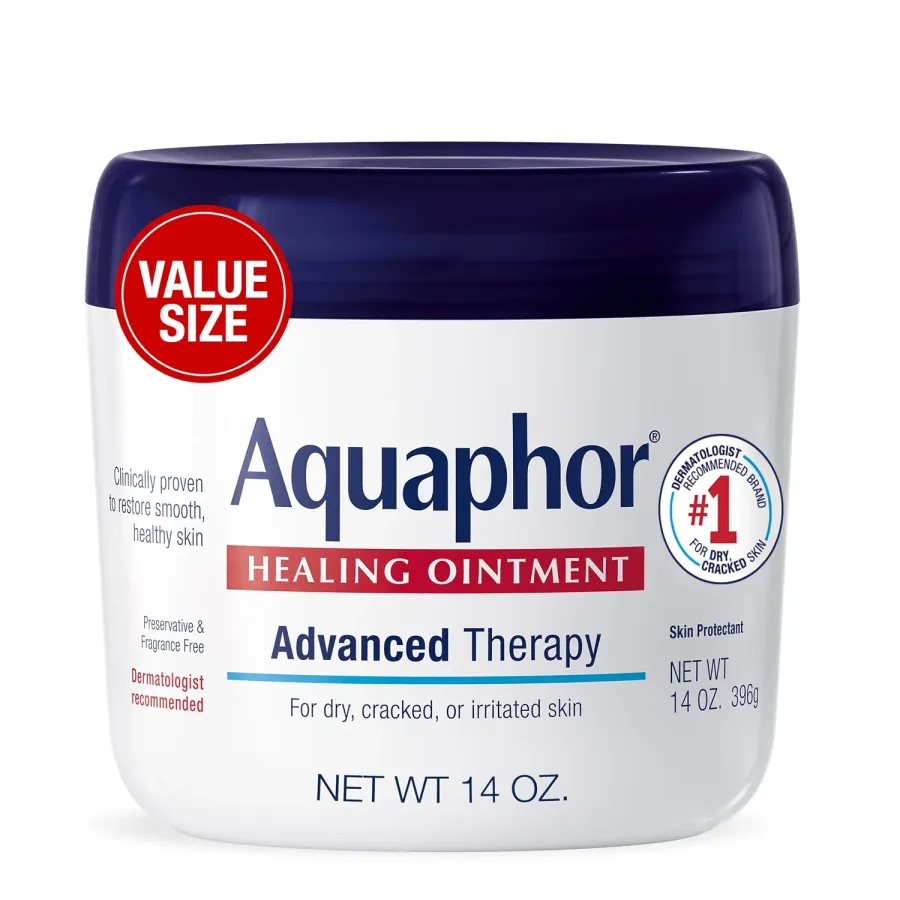
Aquaphor Advanced Therapy Healing Ointment Skin Protectant, 14 oz
9.0 / 10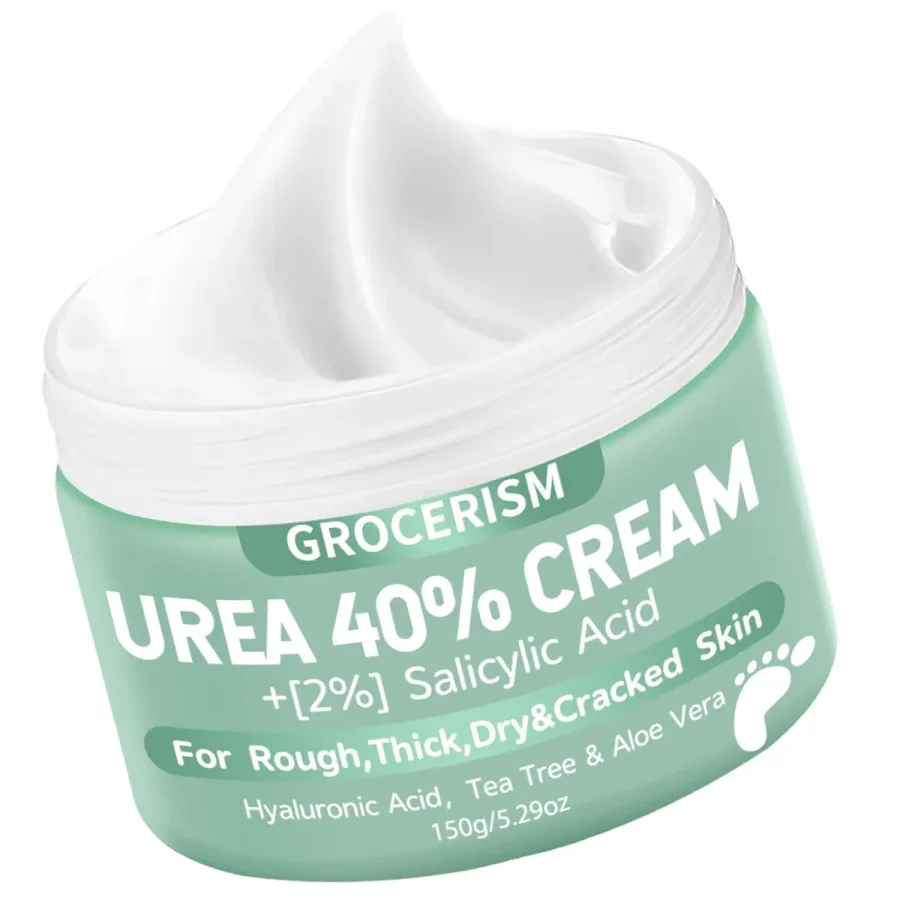
Grocerism Urea Cream 40% for Feet, Maximum Strength Hand & Foot Cream, 5.29 oz
9.0 / 10How This Score Was Earned
We Purchase
Bought at retail, anonymously, with our own funds.
We Live With It
A minimum of four weeks of daily use before a word is written.
We Measure
Weighted criteria, identical for every product in the category.
We Re-Verify
Rankings are revisited weekly; scores fall when products do.
 Verified Examiner
 The Verified Verdict
The gentlest option in this comparison and the highest-rated foot-specific one, built on shea butter, jojoba and coconut oil with no acid at all. It softens rough dry feet comfortably, and will not dismantle thick callus.
Check Price on Amazon →$6–$11 · price verified today
Common Questions