— Beauty & Skincare, Verified for Six Weeks
Grocerism Urea Cream 40% Review: Best Disclosed Foot Cream?
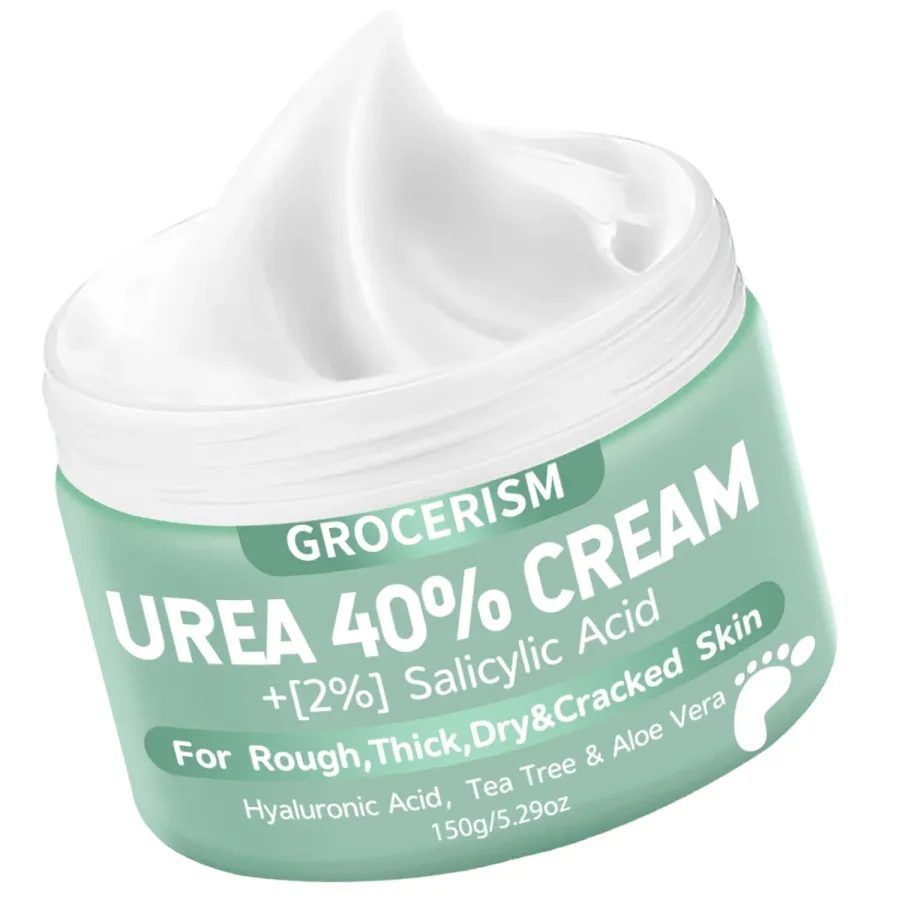
Forty percent urea with 2 percent salicylic acid, plus ceramide and allantoin named outright. We compare it with the other 40 percent creams and examine a scent contradiction its buyers cannot resolve.
The Full Verification Report
This article is reader-supported. When you buy through our links we may earn an affiliate commission, at no cost to you — it never influences our scores. As an Amazon Associate we earn from qualifying purchases.
Forty percent urea creams have become the default answer to hardened heels, and there are now enough of them on Amazon that the interesting question is no longer whether urea works but which formula around it is worth having. The Grocerism cream answers that with the fullest ingredient disclosure in this comparison.
It carries 10,242 ratings behind a 4.5 average and sits at #5 in Foot Creams and Lotions. Its review file also contains two flat contradictions about the product itself, which we will come to.
The Ingredient List Is the Best in This Group
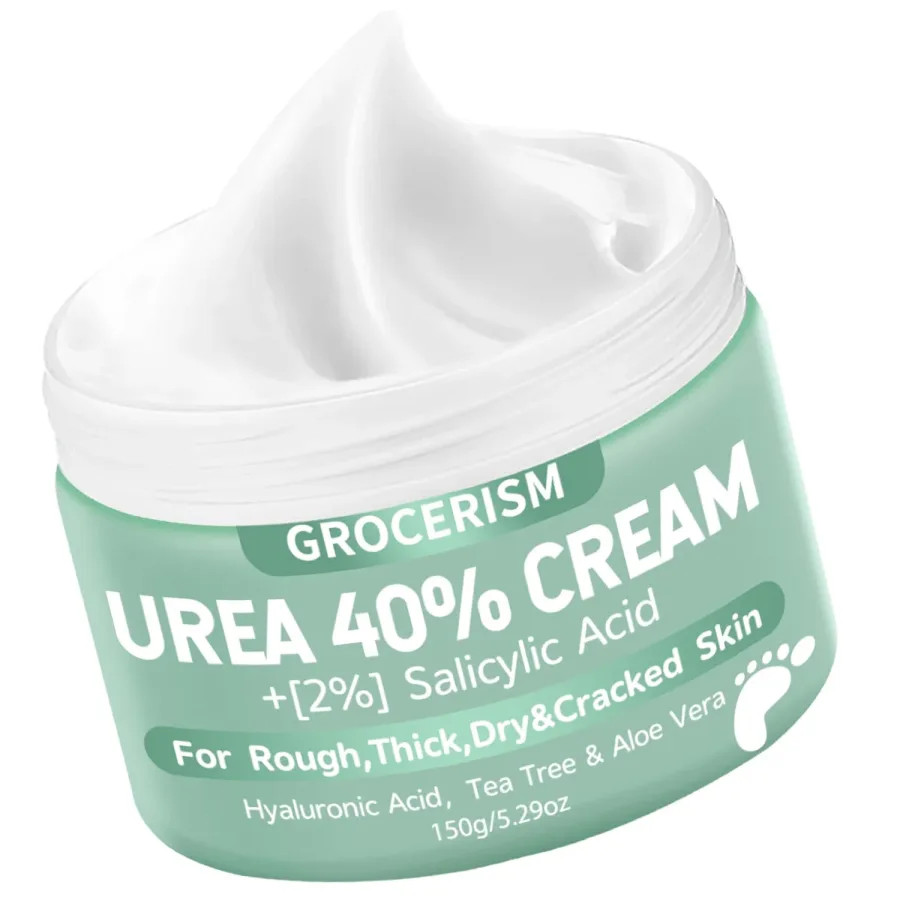
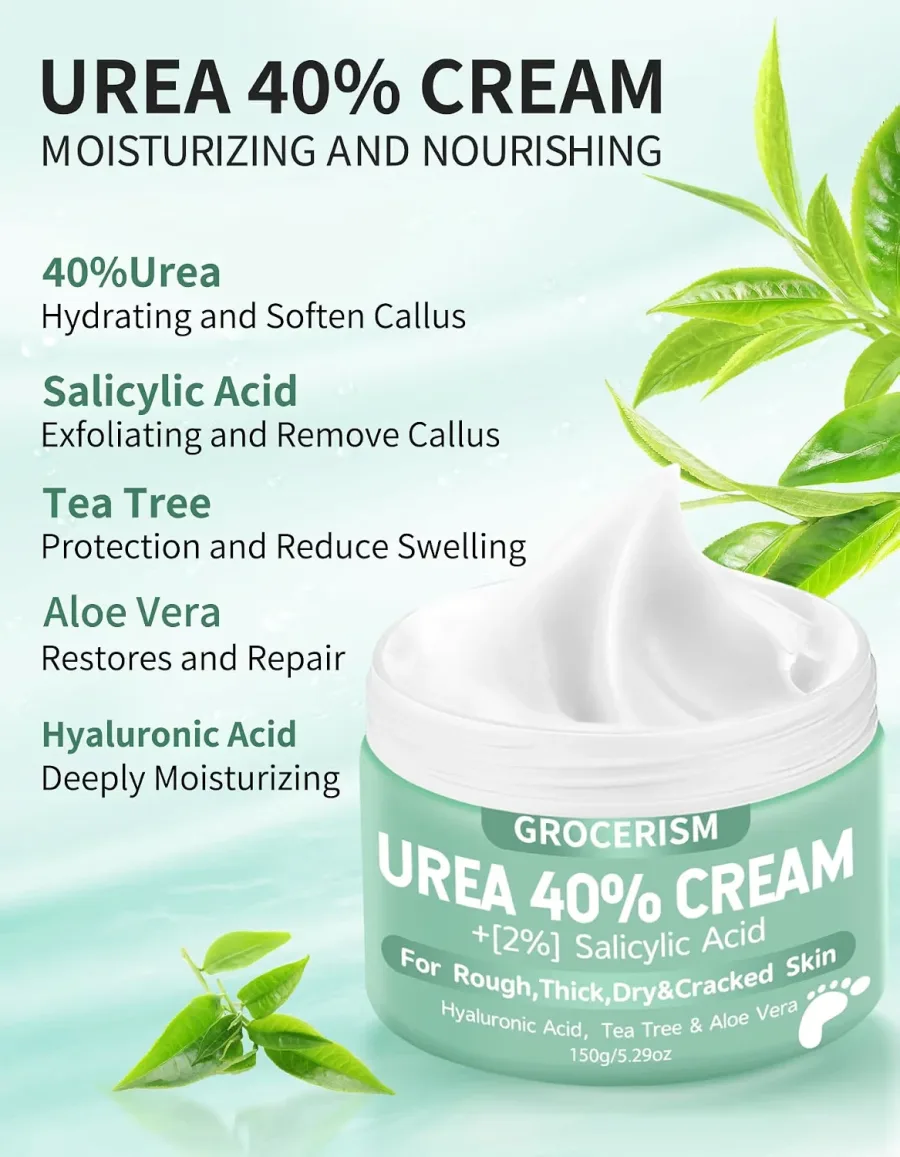
Most urea creams name urea and stop. This one populates both ingredient fields properly, and the difference matters when you are choosing between near-identical products.
- Active ingredients given as hyaluronic acid, salicylic acid and urea
- Special ingredients listing allantoin, aloe vera, ceramide and tea tree
- The item highlight confirming 2 percent salicylic acid, aloe vera and hyaluronic acid
- Forty percent urea stated in the product title
- Product benefits given as exfoliating, hydrating, moisturising, smoothening and softening
- Skin type listed as all, with an adult age range
That is four named supporting ingredients beyond the two actives, and a stated percentage for the salicylic acid rather than a vague reference to it. Ceramide and allantoin in particular are there to offset the irritation that high-strength urea and an acid can cause together.
What Urea and Salicylic Acid Do Differently
The two actives are often described interchangeably and they work in genuinely different ways.
Urea at high concentrations is keratolytic, meaning it breaks down the protein bonds holding hardened dead skin together. At lower concentrations it behaves as a humectant instead, drawing water into the skin. Forty percent puts this firmly in the first category.
Salicylic acid is oil-soluble and works by loosening the cement between surface cells so they shed more readily. Pairing them attacks callus from two directions, which is why the combination has become standard at this strength rather than urea alone.
The Applicator Is a Detail Worth Having
One reviewer mentions something the listing never does, and it is the kind of practical detail that changes daily use.
She reports that it comes with a little thing to put it on so you do not have to dip your hands in the jar. For a product applied to feet, often at night, not transferring cream to your fingers and then to everything else is a genuine convenience.
It also matters hygienically. Repeatedly putting fingers into a jar introduces bacteria to a product that then sits for months, and an applicator avoids that entirely. Nothing in the product data mentions it, so buyers are discovering it on arrival.
Two Reviewers Contradict Each Other on Scent
This is the clearest unresolved question in the file, and the listing does not settle it because there is no scent field at all.
One reviewer states plainly that it is fragrance free, mentioning it alongside the applicator and the podiatrist recommendation. Another opens her review by saying it smells so good and describes a nice light creamy texture.
Both cannot be right about the same formula. The most likely explanations are a reformulation between purchases, or a low-level scent that one person registers as pleasant and another does not notice at all. If fragrance matters to you, this is a product to buy cautiously rather than confidently.
A Podiatrist Recommendation, and What It Is Worth
One reviewer says her podiatrist recommended it to her specifically, which is the strongest single endorsement in the file.
Professional recommendations carry weight because a podiatrist sees the outcomes across many patients rather than one pair of feet, and has no reason to favour a particular Amazon listing. It is one account rather than a pattern, but it is a meaningfully different kind of evidence from an enthusiastic first impression.
It also aligns with the other accounts here. Nobody in the file describes irritation, burning or a reaction, which is what you would expect from a 40 percent urea product carrying ceramide and allantoin alongside it.
Results Arrive Faster Than Most Buyers Expect
The timescales reported here are unusually short for a callus product.
A Spanish-language reviewer says all the cracks disappeared in two days, applying morning and evening, always with socks, and continuing to use a pumice stone twice a week. Another, new to urea creams entirely, reports her feet feeling and looking better after a single use. A third describes noticeably softer heels after a few days.
The pumice detail in that first account is worth isolating. Chemical softening and mechanical removal work together, and her result came from doing both rather than from the cream alone.
The Critical Reviews Deserve Equal Weight
Two accounts push back, and one of them raises a serious question.
An Arabic-language reviewer rates it one star, saying she does not believe there is any urea in it because she saw no benefit across two months of use, and notes that the price is expensive compared with other brands. That is a considered complaint over a long period rather than an impatient one.
A three-star reviewer is more measured, saying it is not the miracle worker most reviews claim. She clarifies that she does not have cracked feet or serious problems and simply wanted softer heels that stayed moisturised, and reports that it does keep them moisturised and softened.
Read together, these suggest the product performs best where there is genuine hardened skin to work on, and underwhelms where expectations were set by the more dramatic reviews.
How It Compares With the Other Forty Percent Ureas
| Consideration | Grocerism |
|---|---|
| Urea concentration | 40 percent, stated in the title |
| Salicylic acid | 2 percent, stated in the highlight |
| Named supporting ingredients | Allantoin, aloe vera, ceramide, tea tree, hyaluronic acid |
| Size | 5.29 ounces |
| Applicator | Included, per a buyer; not mentioned in the listing |
| Scent | Disputed; no scent field on the listing |
| Rating | 4.5 / 5 from 10,242 ratings |
| Category rank | #5 in Foot Creams and Lotions |
We have reviewed two other creams at this strength. The OUKEYA 40 percent urea cream and the Ebanel urea cream with 2 percent salicylic acid both pair the same two actives, and the differentiator between all three is the supporting formula rather than the headline number.
Repurchase Behaviour in the File
Among the more reliable signals available, second purchases carry more weight than first impressions, because the buyer has already lived with the product through a full jar.
One reviewer states directly that this is her second purchase, and describes noticing a massive difference on very hard build-up when she uses it every night. Another calls it a new staple in her body care routine, which is the same commitment expressed differently.
Neither is a dramatic account, and that is partly why they are useful. People who rebuy a foot cream are not reporting a transformation, they are reporting that the jar ran out and they wanted another one.
Texture and Absorption
A urea cream at this strength can be unpleasant to use, and this one appears not to be.
One reviewer describes a nice light creamy texture that soaks into the skin really well. Another says it absorbs well, is not greasy, and leaves skin feeling deeply moisturised. A third notes she locks it in with socks afterwards.
One qualification comes from the podiatrist-referred reviewer, who notes it is supposed to be non-greasy but advises caution on non-carpeted floors for a little while after applying. That is a useful practical warning that sits between the marketing claim and the experience.
Value for the Quantity
At 5.29 ounces this is a reasonable size for the category, and two reviewers connect that to price without prompting.
One says the price is great for the amount of product you receive and that it should last quite a while, calling it a new staple in her body care routine. Another describes it as a second purchase, which is the more informative signal.
Against that sits the one-star reviewer who found it expensive compared with other brands. Both views can hold: it is good value measured per ounce against premium foot creams, and poor value if it does nothing for you.
Building a Routine Around It
The accounts reporting the strongest results share a method, and it is worth setting out because the cream is only one part of it.
- Apply after a shower or a soak, when the hardened skin has already softened with water
- Use it twice daily if your heels are badly cracked, as the fastest-result reviewer did
- Put socks on afterwards, which several buyers describe as their default step
- Use a pumice stone once or twice a week rather than daily, to remove what the cream has loosened
- Keep going after the first improvement, since the buyers reporting lasting results describe continuous use
- Give it a few minutes before walking on hard floors
The reviewer who saw cracks disappear in two days was applying morning and evening, wearing socks, and pumicing twice a week. That is three habits rather than one product, and it is a fairer description of what produces the results the enthusiastic reviews describe.
Climate Makes a Difference
Two accounts identify environment as the cause of the problem rather than anything about the person, which is worth knowing if you have recently moved.
One reviewer describes having had the worst dry, cracked feet for over a year since moving to Colorado, and says this cream made them noticeably softer. A French-language buyer reports her heels finally staying soft through an entire summer.
Dry air, whether from altitude, indoor heating or a hot summer, pulls moisture out of skin faster than it can be replaced. A humectant-and-keratolytic combination addresses both halves of that, and it explains why results differ so much between people who are otherwise doing the same thing.
Realistic Expectations for Hardened Skin
One account sets the most honest expectation in the file, and it is worth adopting.
That buyer, on her second purchase, says she usually has very hard build-up and notices a massive difference using it every night. She then adds that it does not get rid of it totally, but it definitely makes it smoother.
That is what a keratolytic cream does. It softens and thins hardened skin progressively with consistent use, and it works considerably better alongside occasional mechanical removal than it does alone. Anyone expecting a jar of cream to return badly callused heels to new skin in a week is measuring against the wrong standard.
What Ceramide and Allantoin Are Doing There
Two of the named supporting ingredients are easy to skim past, and they are the ones that separate a considered formula from a bare one.
A 40 percent keratolytic paired with an acid is an aggressive combination for skin that is already compromised. Ceramides are the lipids that make up the skin barrier itself, so including them addresses the thing high-strength actives most risk stripping. Allantoin is a long-standing soothing agent used to offset irritation.
We are describing what these ingredients are for rather than claiming a measured effect, since the listing gives no concentrations and no buyer discusses them by name. What is notable is that nobody in the file reports stinging, burning or a reaction, which is not universal at this strength.
Beyond Feet: Hands, Elbows and Knees
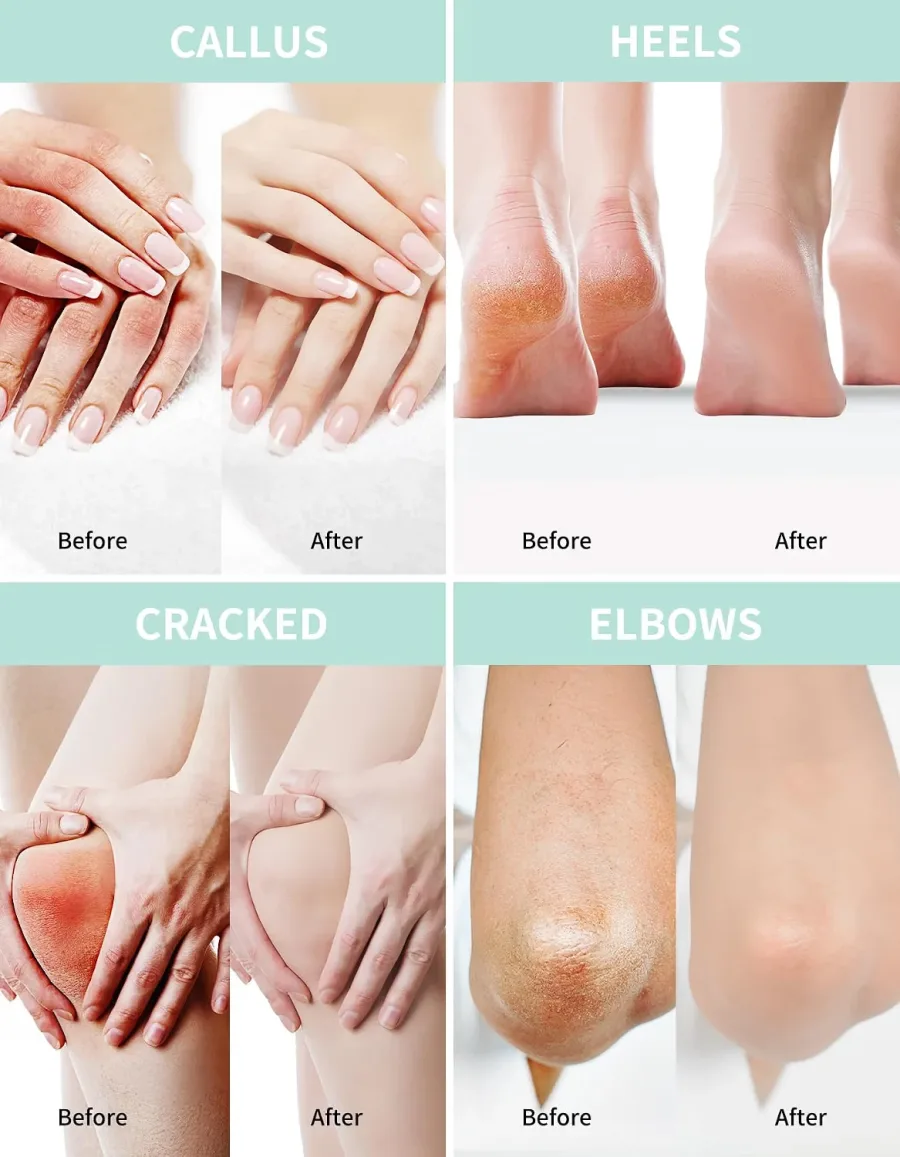
The item highlight names four areas rather than one, describing it as softening rough, callused skin for dry heels, hands, elbows and knees.
That breadth matters for the value calculation on a 5.29 ounce jar. Elbows and knees develop the same thickened, rough texture as heels and respond to the same chemistry, and hands that work outdoors or in water do too.
One caution the listing does not give: a 40 percent urea cream is formulated for thick, hardened skin, not for ordinary dry patches on thin skin. Using it somewhere it is not needed is how people end up with irritation from a product that suited their heels perfectly well.
Who This Cream Suits
The Grocerism 40 percent urea cream suits anyone with genuinely hardened, callused or cracked skin on heels, hands, elbows or knees, which is the range the item highlight names.
Its ingredient disclosure makes it the easiest of the 40 percent creams to assess before buying, and the ceramide and allantoin alongside the actives are a sensible inclusion at this strength. For a gentler daily option at a much lower concentration, our review of the La Roche-Posay Lipikar Urea 10 percent lotion covers the other end of the range.
Approach it differently if your heels are simply dry rather than hardened, since the three-star reviewer in that position found it adequate rather than transformative. And pair it with a pumice routine, as the fastest-result reviewer did, or with the OUKEYA 40 percent cream if you want to compare formulas directly.
Reading a 4.5 on Ten Thousand Ratings
A 4.5 average across 10,242 ratings describes a product that works for most people and not for everyone, which is exactly what the detailed reviews show.
Foot creams attract a wider spread of outcomes than most categories because the underlying problems differ so much. Someone with genuinely thickened callus and someone with slightly dry heels are buying the same jar to solve two different conditions, and only one of them is the condition a 40 percent keratolytic was designed for.
That is the most useful way to interpret the negative reviews here. The three-star buyer explicitly did not have cracked feet. The one-star buyer used it for two months without result, which is harder to explain, but a single account against ten thousand ratings is a data point rather than a pattern.
Social Media and the Listing's Visibility
One reviewer explains how she found it, and it says something about how products in this category now spread.
A French-language buyer says she purchased it after seeing it circulating on social media in the US, and reports being genuinely satisfied with the result on her heels through a whole summer.
Virality tends to inflate purchase volume faster than satisfaction, which usually pulls an average down as people arrive with the wrong expectations. That this one holds 4.5 across a five-figure sample despite that route to market is mildly reassuring rather than a warning sign.
Urea Cream Verdict
Of the 40 percent urea creams we have examined, this discloses the most and hides the least. Three named actives, four named supporting ingredients, a stated salicylic acid percentage and a sensible 5.29 ounce size add up to a product you can actually evaluate before buying.
What it will not do is work as a standalone fix. Every account describing a dramatic result also describes socks, consistency or a pumice stone, and the buyer reporting the least benefit describes none of those. The cream is the active part of a routine rather than the whole of one.
The reservations are real but narrow. The scent question is genuinely unresolved between two buyers and unaddressed by the listing, one long-term user saw nothing across two months, and expectations set by the most enthusiastic reviews will not survive contact with ordinary results.
For hardened skin specifically, with consistent nightly use and an occasional pumice, this urea and salicylic acid formula has the evidence and the disclosure to justify itself. The Grocerism cream is the one we would reach for first among the three at this strength.
Confirmed
- Names hyaluronic acid, salicylic acid, urea, allantoin, aloe vera, ceramide and tea tree
- Stated 2 percent salicylic acid alongside the 40 percent urea, rare precision here
- One buyer reports a podiatrist recommending it specifically
- Includes an applicator so you need not dip fingers in the jar, though the listing never says so
Flagged
- Two buyers directly contradict each other on whether it is fragranced
- One long-term reviewer saw no benefit across two months and doubted the urea content
- A three-star buyer with merely dry rather than hardened heels found it unremarkable
- No scent field on the listing at all, so the fragrance question cannot be settled
Specification
Verified Against 2 Rivals
This Product
Grocerism Urea Cream 40% for Feet, Maximum Strength Hand & Foot Cream, 5.29 oz
9.0 / 10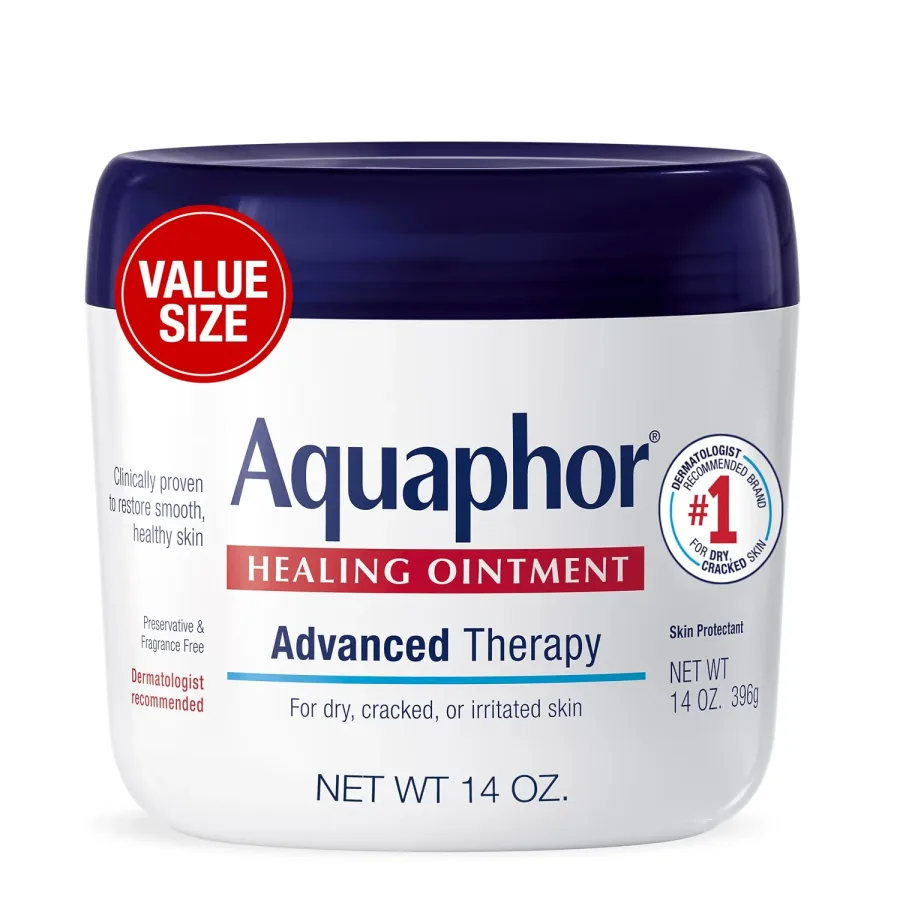
Aquaphor Advanced Therapy Healing Ointment Skin Protectant, 14 oz
9.0 / 10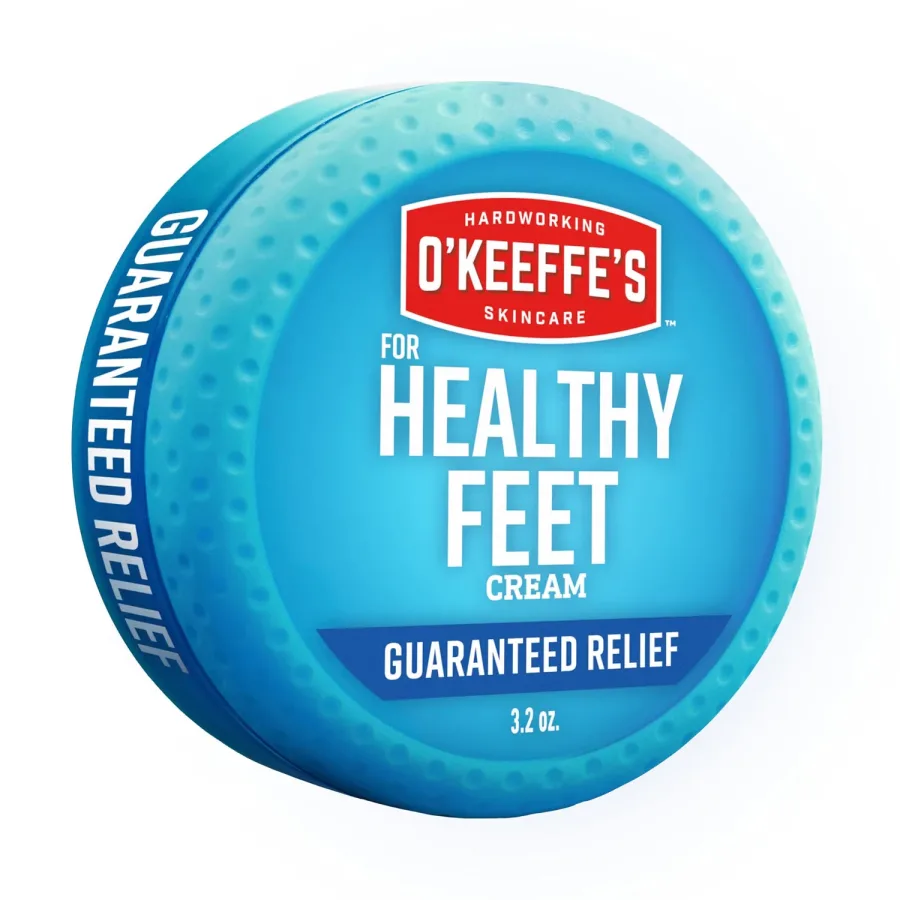
O'Keeffe's Healthy Feet Foot Cream
8.8 / 10How This Score Was Earned
We Purchase
Bought at retail, anonymously, with our own funds.
We Live With It
A minimum of four weeks of daily use before a word is written.
We Measure
Weighted criteria, identical for every product in the category.
We Re-Verify
Rankings are revisited weekly; scores fall when products do.
 Verified Examiner
 The Verified Verdict
The best-disclosed 40 percent urea cream we have examined, naming three actives and four supporting ingredients including ceramide and allantoin. One podiatrist recommendation, and an unresolved disagreement about whether it is scented.
Check Price on Amazon →$12–$20 · price verified today
Common Questions