— Beauty & Skincare, Verified for Six Weeks
MAREE Under Eye Balm Stick Review: Does the Twist-Up Format Work?
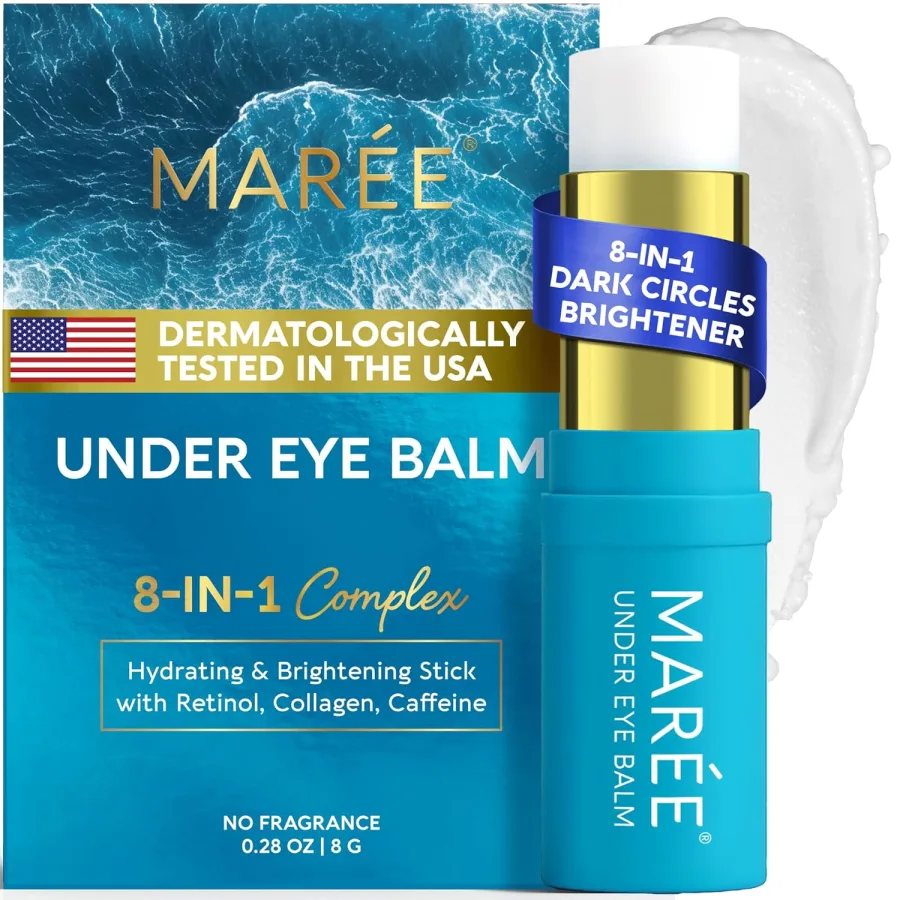
Retinol, caffeine and niacinamide in a twist-up stick you never touch with your fingers. A close look at what that format gains you, and what it costs.
The Full Verification Report
This article is reader-supported. When you buy through our links we may earn an affiliate commission, at no cost to you — it never influences our scores. As an Amazon Associate we earn from qualifying purchases.
Almost every eye product asks you to do the same slightly unhygienic thing: dip a finger into a pot, apply it to the thinnest skin on your face, and repeat that every day for months. A twist-up stick removes that step entirely, and that is the first argument this product makes.
The second is the ingredient list. Retinol, caffeine, niacinamide, hyaluronic acid, pro-collagen and vitamin E is the sort of line-up you would normally assemble from two or three separate products, and here it is in one balm you glide on in five seconds.
This MAREE Under Eye Balm Stick review looks at whether that combination is genuinely useful or simply convenient, because those are not the same thing, and at one trade-off the format creates that nobody mentions on the packaging.
At a Glance
| Detail | Specification |
|---|---|
| Brand | MAREE |
| Key actives | Retinol, caffeine, niacinamide, hyaluronic acid, pro-collagen, vitamin E |
| Format | Twist-up balm stick |
| Fragrance | Fragrance-free |
| Free of | Mineral oil, parabens, phthalates, silicone, sulfates |
| Skin types | All, including dry and sensitive |
| Size | Travel size |
| Price band | $20 to $28 |
| Score | Out of 10 |
|---|---|
| Efficacy | 7.8 |
| Texture & Absorption | 8.4 |
| Ingredient Quality | 8.6 |
| Gentleness | 8.2 |
| Value | 8.0 |
| Overall | 8.2 |
Why a Stick, and What It Actually Changes
The format is not a gimmick, and it solves three real problems that creams and jars have.
The first is contamination. A jar collects whatever is on your fingertips every single day, and you then keep that container for six months. A stick only ever touches the skin it is treating.
The second is dosing. A stick lays down roughly the same amount every time you glide it, which removes the guesswork that leads people to over-apply eye cream and end up with product migrating into their eyes overnight.
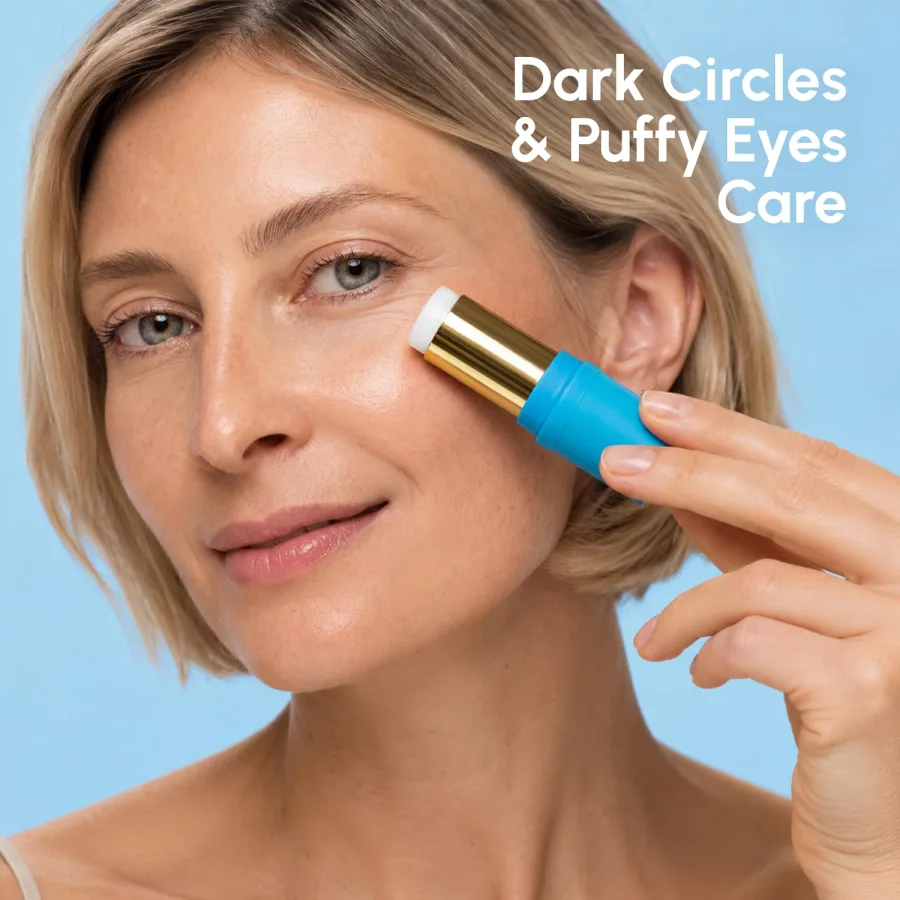
The third is portability. There is nothing to leak, nothing to count against a liquids allowance, and nothing that needs a careful upright position in a bag.
What the format does not change is the formula's effectiveness. A stick is a delivery mechanism, and the actives inside behave exactly as they would in a cream.
It does change how much product reaches your skin, though. Balm sticks apply a slightly thicker, more cushioned layer than a light cream, which matters for how it sits under makeup.
The Active List Is Doing a Lot for One Step
Six ingredients are named on the front of this stick, and unusually, each of them has a distinct job rather than being there to lengthen the list.
- Retinol increases cell turnover and supports collagen production, which is the mechanism behind any genuine improvement in fine lines and crepiness.
- Caffeine constricts blood vessels, which reduces the fluid that makes under-eyes look puffy after a night's sleep.
- Niacinamide supports barrier function, calms irritation, and has real evidence behind it for pigmentation over the long term.
- Hyaluronic acid binds water into the upper layers, which is what makes the area look plumper and less crepey within days rather than months.
- Pro-collagen peptides signal the skin to produce more of its own structural proteins, working slowly in the background.
- Vitamin E is the antioxidant and stabiliser, protecting the other ingredients and cushioning the skin.
That is a well-designed set. Between them they cover texture, fluid, pigment and hydration, which is essentially the full list of things people want an eye product to address.
What is equally notable is what has been left out. No fragrance, no silicone, no mineral oil, no sulfates, which removes the ingredients most likely to irritate eyelid skin.
Retinol in a Stick: The Part That Needs Care
Retinol is the ingredient that makes this more than a hydrating balm, and also the one that requires you to pay attention.
Around the eye, retinoids are less forgiving than anywhere else on the face. The skin is thinner, it dries out faster, and irritation there is more visible and more uncomfortable than it is on a cheek.
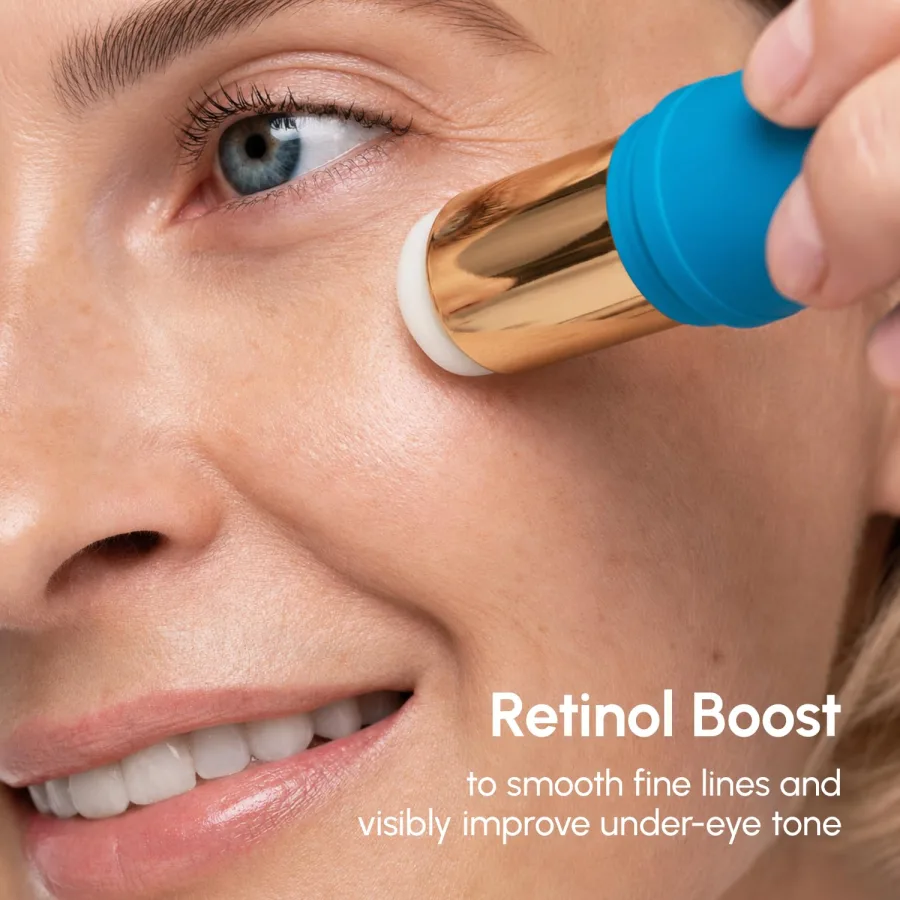
The balm base helps considerably. Delivering retinol in a cushioned, occlusive medium alongside niacinamide and hyaluronic acid is gentler than the same active in a thin, fast-penetrating serum.
Even so, the sensible approach is to build up. Two evenings a week for two weeks, then alternate nights, then daily only if the area stays comfortable.
Two consequences follow from having retinol in the formula at all. Daily sunscreen becomes non-negotiable, and the product is off the table during pregnancy and breastfeeding.
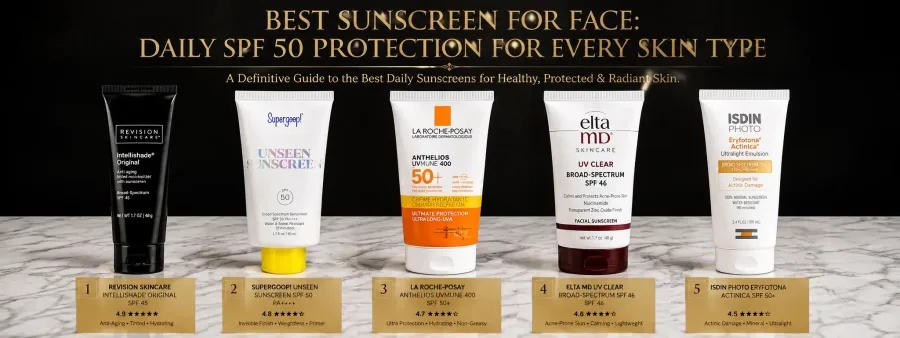
On sunscreen, pick something you will actually take right up to the lash line, because an SPF that stings gets skipped exactly where you need it most. EltaMD UV Clear Face Sunscreen handles that well, and there are several other comfortable options in our best sunscreen for face results.
The Timing Problem Nobody Mentions
Here is the genuine design tension in an all-in-one eye stick, and it is worth thinking about before you buy.
Retinol wants to be applied at night. It degrades in sunlight, it raises UV sensitivity, and skin repair activity peaks while you sleep.
Caffeine wants to be applied in the morning. Its entire value is reducing fluid that has pooled overnight, and its effect wears off within hours as blood vessels return to normal.
Putting both in the same stick means you have to choose which one to use correctly. Apply it at night and the caffeine is largely wasted. Apply it in the morning and the retinol is working against sunlight.
Neither choice is wrong exactly, but it does mean you are paying for two actives and getting the full benefit of one. Evening use is the better compromise, since retinol has the more meaningful long-term effect and puffiness has cheaper, faster solutions.
This is the trade-off that separates convenience products from optimised ones, and it is the main reason the efficacy score here sits at 7.8 rather than higher.
What to Expect, and How Long It Takes
Because this stick carries several actives working on different timescales, it helps to know what should show up when.
Hydration is immediate. Hyaluronic acid and the balm base together make the area look and feel less papery within a day or two, which is the fastest visible change and the one most likely to convince you the product is working.
Puffiness, if you use it in the morning, responds within half an hour of application, because caffeine works mechanically rather than cumulatively.
Texture and fine lines are the slow ones. Retinol needs eight to twelve weeks of consistent use before the change is visible, and pro-collagen peptides work on a similar timeline underneath.
Pigment is slowest of all. Niacinamide has genuine evidence behind it, but two to three months is the realistic window and only for melanin-based darkness rather than shadows or hollows.
The mistake to avoid is judging it at four weeks. At that point you have seen everything the fast ingredients can do and none of what the slow ones are working towards, which is precisely when most people conclude an eye product has failed.
Take a photograph on day one in consistent light. Retinol and peptide changes are too gradual for memory to track fairly, and a comparison shot is the only honest way to assess them.
What a Balm Base Means for Dry Under-Eyes
Balms behave differently from creams, and for a lot of people the difference is the reason to choose one.
A balm is largely oil and wax with little water, which means it sits on the surface longer and slows water loss from the skin underneath rather than evaporating away.
For dry, crepey under-eyes, that is exactly right. Thin serums often leave the area feeling tight within an hour, and a balm does not.
It also means the finish is cushioned rather than matte. In the evening that is comfortable. In the morning under concealer, it needs a thinner application and a few minutes to settle.
For oily or acne-prone skin, the same property is a drawback rather than a benefit, and a lighter gel or serum around the eye would suit better.
The fragrance-free formulation matters here too, since an occlusive layer holds whatever is in it against your skin for hours. A perfumed balm would be a considerably riskier proposition on eyelid skin.
Where the Format Works Against You
Three practical limitations are worth knowing before you commit.
The first is control. With retinol and caffeine fixed in one stick, you cannot lower one and keep the other. If the retinol turns out to be too much for your skin, your only option is using the whole product less often, which reduces everything at once.
The second is quantity. Sticks lay down more product than a fingertip does, and it is easy to do two passes without thinking. Under makeup, that shows.
The third is precision. A stick is a blunt instrument compared with a fingertip, and getting close to the inner corner or working around the outer edge takes a bit of practice.
None of these is disqualifying, and all three are manageable once you know about them. But they explain why a stick is not automatically the better format, only the more convenient one.
How to Use It Properly
Most of the value here comes down to restraint and timing:
- Twist up barely anything. A millimetre of exposed product is plenty for both eyes.
- One pass per eye along the orbital bone, from the inner area outward, stopping at the outer corner.
- Tap to finish. Use your ring finger to blend the edges and warm the balm in, which also stops it sitting in a visible line.
- Keep away from the lash line. Balm migrates as it warms, so leave more clearance than you would with a cream.
- Use it in the evening to get the retinol benefit, and build up frequency slowly over the first month.
- Wear sunscreen every morning, without exception, once retinol is part of your routine.
- Cap it and twist it down after each use so the exposed surface stays minimal.
If puffiness is your main morning complaint and this is your evening product, the gap is easily filled. Twenty minutes with something like the Beauty of Joseon Revive Under Eye Patch does more for a swollen morning than any balm applied twelve hours earlier, and our best under eye patches testing ranks the options worth keeping in the fridge.
How It Compares With a Standard Eye Cream
Set the format aside for a moment and the question becomes whether the contents justify choosing this over a conventional tube.
On ingredients, it compares well. Most eye creams at this price commit to one headline active, usually either a retinoid or caffeine, and fill the rest with hydrating agents. Getting both plus niacinamide and peptides is genuinely more than the category norm.
On concentration, there is no way to know. None of the percentages are disclosed, which is standard practice and mildly frustrating when you are trying to compare like with like.
On texture, it depends entirely on your skin. A balm outperforms a light cream on dry, crepey under-eyes and underperforms it on oily skin or under makeup.
On price, it sits in the middle of the category: more than a drugstore ceramide cream, less than a department-store eye treatment, and roughly level with a good single-active formula.
Where it clearly wins is the number of decisions it removes. One product, one step, no layering order to remember, nothing to leak. For a certain kind of buyer that is worth more than an optimised routine they will not maintain.
Travel, Hygiene and the Practical Case
The everyday arguments for this product are less glamorous than its ingredient list and probably more persuasive.
It travels without any thought at all. No liquids bag, no leaking, no cap that unscrews itself in a suitcase pocket.
It is faster than a cream. Two glides and a tap, with nothing to scoop and no residue on your fingers afterwards.
It is cleaner, which matters more for the eye area than anywhere else, since bacteria introduced to the eyelid margin causes real problems that a bacterial visit to your cheek does not.
And it removes a decision. Consistency is what makes eye products work, and anything that lowers the friction of applying one nightly is doing something genuinely useful, whatever the actives inside are.
That is the strongest case for this format overall: not that it works better, but that you are more likely to keep using it.
Who the Under-Eye Area Actually Needs This For
One thing worth saying plainly: not everyone needs an eye product at all, and the industry has an obvious interest in never mentioning that.
If your under-eyes are comfortable, not dry, not lined, and your circles are the hereditary kind, a good facial moisturizer taken down to the orbital bone does most of what an eye cream does.
Where a dedicated product genuinely earns its place is when the skin there behaves differently from the rest of your face. Dryness that persists when your cheeks are fine, fine lines appearing earlier there than elsewhere, or a face cream that stings when it gets close to the eye.
This stick is aimed squarely at the first two of those. A balm base for skin that dries faster, and retinol with peptides for lines that arrive there first.
The third case, stinging, is where the fragrance-free formulation matters. Most face creams that irritate the eye area do it because of fragrance rather than actives, and removing it is often the entire fix.
So the honest buying question is not whether this is a good product. It is whether your under-eye area is doing something your face cream cannot handle, and for a lot of people over thirty-five the answer becomes yes at some point.
Is It Worth $24?
The comparison to make is not against another eye cream, but against the two-product routine it replaces.
| MAREE Balm Stick | Separate serum plus cream | Hydrogel eye patches | |
|---|---|---|---|
| Steps | One | Two | One, occasional |
| Retinol included | Yes | Depends on the cream | No |
| Timing control | None | Full | Not applicable |
| Travel friendly | Excellent | Poor | Good |
| Hygiene | Excellent | Varies by packaging | Excellent |
| Typical cost | $20 to $28 | $25 to $45 combined | $15 and up per pack |
On price, the stick undercuts the two-product version and covers most of the same ground. On performance, the two-product version wins because each active is applied at the right time of day.
Which of those matters more is a genuine question about how you live rather than about the products. A perfect routine you abandon in three weeks delivers nothing; a compromised one you keep delivers most of the benefit.
Where the value case is weakest is size. This is a travel-format product, and if you use it nightly you will get through it faster than a 15 ml jar of cream.
Who Should Buy It
This is the eye product for people whose routines keep falling apart, and for anyone who has looked at a jar of eye cream and thought about what their fingers have been touching.
- Buy it if you want retinol, caffeine and niacinamide in one step and you value simplicity over optimisation.
- Buy it if your under-eyes are dry and thin serums leave them tight.
- Buy it if you travel often, or you keep your skincare somewhere a jar would be inconvenient.
- Think twice if you already run a retinoid near the eye, since doubling up is unnecessary and irritating.
- Think twice if you wear concealer daily, because a balm needs a lighter hand and more settling time than a serum.
- Skip it if you are pregnant or breastfeeding, or if your skin is oily enough that a balm feels heavy.
At 8.2 it is a well-formulated, thoughtfully packaged product with one real design compromise at its centre. If the convenience of a single step is what keeps you consistent, that compromise is a fair price. If you want each active working at its best, buy two products and accept the extra thirty seconds.
Confirmed
- Stick applicator means no fingers in the product, which matters for the eye area
- Retinol, caffeine, niacinamide and hyaluronic acid together in one step is unusual at this price
- Fragrance-free and free of mineral oil, silicone, parabens, phthalates and sulfates
- Travel-sized and spill-proof, so it survives a handbag or a carry-on
- Balm base suits dry under-eyes that thin serums leave tight
Flagged
- Retinol plus caffeine in one step gives you no way to adjust either independently
- The balm format lays down more product than you may want under concealer
- Retinol content means daily sunscreen is required, and it is not a pregnancy-safe option
Specification
How This Score Was Earned
We Purchase
Bought at retail, anonymously, with our own funds.
We Live With It
A minimum of four weeks of daily use before a word is written.
We Measure
Weighted criteria, identical for every product in the category.
We Re-Verify
Rankings are revisited weekly; scores fall when products do.
 Verified Examiner
 The Verified Verdict
A genuinely well-stocked active list in a stick format that solves the two problems eye creams create: hygiene and portability.
Check Price on Amazon →$20–$28 · price verified today
Common Questions