— Beauty & Skincare, Verified for Six Weeks
O'Keeffe's Intense Renewal Cream Review: The Exfoliating O'Keeffe's
The lactic acid and urea sibling of the famous blue tub, tested for six weeks on thick callus and rated 4.7 by 7,048 buyers.
The Full Verification Report
This article is reader-supported. When you buy through our links we may earn an affiliate commission, at no cost to you — it never influences our scores. As an Amazon Associate we earn from qualifying purchases.
Two O'Keeffe's tubs sit next to each other on the same shelf, in nearly the same blue livery, at nearly the same price. One is a tub, one is a tube. Most people grab whichever is nearer and hope for the best.
That is a mistake, because they do genuinely different jobs, and picking the wrong one is the difference between heels that soften in a week and heels that do not budge at all. O'Keeffe's Healthy Feet Intense Renewal Cream is the exfoliating one. It contains lactic acid and urea, and it is built to thin down thick callus rather than to hydrate skin that has split.
I ran it for six weeks against sandpaper heels, the kind that catch on bedsheets and shred the heel of every pair of tights you own. Here is what an alpha hydroxy acid actually does to hard skin, why this is the fastest-absorbing foot cream I have tested, and the one thing on the label that is quietly wrong.
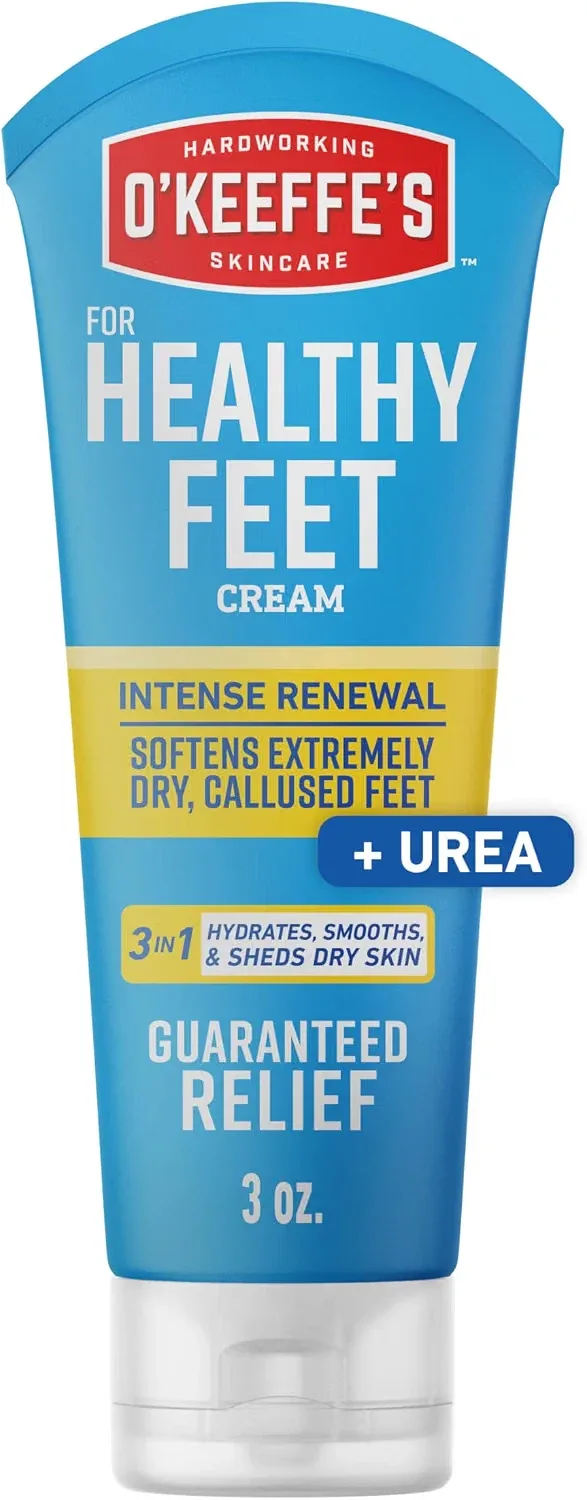
 The 3 oz tube. Smaller than the original tub, and the format change matters more than it looks.
Tube, Not Tub, and What That Changes
Start with the packaging, because it is not a cosmetic difference. The original Healthy Feet comes in an open jar you dip fingers into. This comes in a squeeze tube, and that solves the hygiene problem the jar quietly has.
It also changes the dosing. You cannot take a wide swipe off the top the way you can with the tub, so you naturally dispense less, which suits a cream this concentrated. A small amount morning and night is what buyers describe, and one noted the tube lasting a long time on that regime.
The texture is the surprise. It reads as balmy and thick in the tube, not runny like a lotion, but it does not behave like a thick product on the skin. One buyer put it well: lightweight and thick and creamy at the same time. Another described it as balmy rather than creamy or fluid, unlike most foot creams.
The downside of the format is capacity. At 3 oz this is the smallest of the two O'Keeffe's creams, and more than one buyer named the quantity as the only real complaint while still reordering.
How Lactic Acid and Urea Break Down Callus
The active ingredient here is lactic acid, an alpha hydroxy acid, and the formula pairs it with urea. That combination is the entire reason this product exists, and it is worth understanding because it dictates who should buy it.
Lactic acid is a chemical exfoliant. It loosens the bonds holding dead cells onto the surface of the skin so they shed rather than accumulate. Urea does two things at once: at the concentrations used in foot care it both draws water in and helps break down the keratin that makes callus hard in the first place.
Together they thin the callus instead of just softening its surface. That is a genuinely different outcome from a hydrating cream, and buyers notice the difference fast.
One reviewer, who deliberately waited two weeks and photographed her worst heel before writing, chose the product specifically because the listing named alpha hydroxy acid. She reported visible improvement on the second day and said the acid had already started loosening the thick dead layer after a single day of use. She used no foot file at all during the test, which makes the result cleaner evidence than most.
Another had spent almost three months on a urea stick with barely any result, then got more change out of this cream in one week than the stick had managed in the entire period. That is the practical case for an acid-plus-urea formula over urea alone.
 Urea and alpha hydroxy acid on the label. This is an exfoliant, not a moisturiser.
The Peppermint Nobody Warned You About
Here is the label problem. Amazon lists the scent as unscented. The special ingredients on the same listing include peppermint oil. Both cannot be true, and every buyer who mentions smell says the same thing.
Descriptions range from a light minty scent to a clear peppermint smell to, in one case, a comparison with Bengay. Nobody describes it as odourless.
Whether that matters depends entirely on you. Several buyers actively like it and call it pleasant and not overwhelming. One wished it were fragrance-free and then talked herself round on the grounds that it is going on feet. If you are buying specifically because you cannot tolerate fragrance, this is not the tube for you, and the original Healthy Feet genuinely is unscented.
There is a second consideration. Peppermint oil produces a cooling sensation, which is pleasant on tired feet and much less pleasant on skin that has split open. That is one more reason this is the wrong pick for actively cracked heels.
A Fortnight on Sandpaper Heels
The pattern buyers report is remarkably consistent, and it held for me.
- Day one to two: the surface stops feeling gritty. Nothing visible yet, but the drag against a bedsheet reduces.
- Day two to four: the dead layer starts lifting. Several buyers describe noticing loosened skin at this stage rather than smoother skin.
- End of week one: visibly softer and smoother. This is where most reviews report the change becoming obvious.
- Week two: with twice-daily use, thick callus is measurably thinner rather than just softer on top.
- Week three onward: maintenance at three to four applications a week holds the result.
The twice-daily point is worth flagging. The buyers reporting the strongest results were applying morning and night, not just before bed, and this is one of the few foot creams where that is practical because it does not leave your feet slick.
Its listing says it can be applied at any time, and that is the real advantage over everything else in this category. You can put it on at eight in the morning and be in shoes five minutes later.
The Pilling Problem, and How to Avoid It
The most useful criticism in the whole review set comes from a buyer who liked the product and still flagged a genuine annoyance: it absorbs so fast that she wondered whether she had used enough, and when she added more, it began to pill.
Pilling is when a product rolls into small rubbery flakes under your fingers instead of sinking in. It happens when you apply a second layer over a first that has already partially dried, and it is not a sign of a faulty tube.
The fix is straightforward once you know the cause:
- Work quickly. Dispense the full amount for both feet before you start rubbing anything in.
- Do not top up. If it disappears fast, that is the product working, not a shortfall.
- If you genuinely need more, wait several minutes for the first layer to settle completely rather than layering immediately.
- Apply to slightly damp skin after a shower, which slows absorption enough to spread evenly.
Handled that way the fast absorption stops being a nuisance and becomes the reason to own it. One buyer noted she used to need socks to avoid tracking cream across wooden floors and no longer does.
How Much Urea Is Actually In It?
This is where I have to be straight with you about a gap in the information, because urea is the ingredient buyers now shop by and the number is the whole story.
O'Keeffe's names urea in the ingredient list and the listing describes a urea and alpha hydroxy acid formula. What it does not do is state a percentage anywhere, and that is unusual in a category where competitors put the figure in the product name.
The concentration matters because urea behaves differently at different strengths. At low single-digit percentages it is essentially a moisturiser, pulling water into the skin. Push it higher and it starts breaking down keratin, which is what dissolves callus. A cream that does not tell you which end of that range it sits at is asking you to take the result on trust.
In practice the results suggest a moderate concentration doing real work in combination with the lactic acid rather than a headline-grabbing one on its own. The buyer who had spent three months on a urea stick with barely any progress and then got more change in a week from this is the most useful data point, and it points at the pairing rather than raw urea strength being what matters.
If you specifically want a stated high concentration, the 40% products are transparent about it and considerably harsher. What Intense Renewal offers instead is an undeclared but evidently effective dose in a formula you will actually enjoy using twice a day, which for most people is the better trade.
What the 4.7 Rating Hides
A 4.7 average is the highest score in this entire group, and it deserves one piece of context before you treat it as settled.
It rests on 7,048 ratings. That is a healthy sample by any normal standard, but it is a fraction of the 90,380 behind the original blue tub and well under the 52,361 behind Kerasal. Smaller samples skew higher in this category because the people who seek out a specialist exfoliating foot cream tend to already know what they need.
The complaints that do surface are consistent and minor: the tube is small, the mint is unwanted by some, and the product pills if layered. Nothing structural. Nobody reports it failing to work, and nobody reports irritation as a pattern.
What that tells you is that the 4.7 is probably real but flattering. Read it as a product that reliably does its narrow job well, rather than as one that beats the original at everything. It sits at #3 in Foot Creams and Lotions, two places above the far more famous tub, which is the more telling number.
Do You Still Need a Pumice Stone?
Buyers split on this, and the split is informative.
The reviewer who photographed her progress used no file whatsoever and still got a clear two-week result, while noting a file would probably have sped things up. Others pair it with a pumice stone once or twice a week during the initial phase and then taper off. One reported needing the stone far less often than before, just occasionally for maintenance.
My reading is that the cream does the work on its own but slower, and mechanical removal simply shortcuts the shedding the acid has already started. If you are starting from severe build-up, use a stone for the first fortnight. If you are maintaining, you can drop it entirely.
That is a genuinely different relationship with exfoliation than a physical scrub gives you, and it is the same argument for chemical over manual exfoliation that runs through our guide to the best body scrubs. A scrub removes what is already loose. An acid loosens what is not.
Renewal or Original? Picking the Right O'Keeffe's
This is the decision most people arrive needing to make, so here it is directly.
| Intense Renewal | Healthy Feet Original | |
|---|---|---|
| Active ingredient | Lactic acid, plus urea | Glycerin |
| What it does | Chemically exfoliates callus | Hydrates hardened skin |
| Buy it for | Thick, hard, built-up skin | Split, cracked, painful heels |
| Format | 3 oz tube | 3.2 oz jar |
| Absorption | Fast, no residue, socks optional | Slow, waxy film, socks needed |
| Scent | Minty, from peppermint oil | Genuinely unscented |
| Safe on open cracks | No | Yes |
| Amazon rating | 4.7 / 5 (7,048) | 4.6 / 5 (90,380) |
The short version: if it hurts, buy the original Healthy Feet cream. If it is just thick and ugly, buy this one. If you have both problems, start with the original until the cracks close, then switch to Intense Renewal to deal with the build-up.
It is also worth knowing where this sits against the heavier artillery. The Ebanel 40% urea cream is a far stronger formula and will shift callus this cannot touch, but it is sticky, it transfers onto socks and floors, and its rating sits at 4.3 largely because of that. This is the version you will actually keep using.
What It Costs to Keep Using
The 3 oz tube is the smallest capacity in this comparison and buyers say so. What offsets it is dose size and the fact that you taper.
Twice daily during the initial fortnight is the heaviest use you will ever put it through. After that, three to four applications a week holds the result, and one buyer had dropped to that cadence with heels still smooth. A little dab goes a long way is a phrase that appears repeatedly and matches what I found.
Compared against lactic acid products aimed at the rest of the body, it is priced fairly for what it is. A general 12% lactic acid body lotion such as AmLactin Daily Nourish covers far more surface area per pound, but it is not formulated for the thickness of heel skin, and using it on callus is slow going. The Alpha Skin Care 12% glycolic lotion makes the same trade.
The Verdict on the Exfoliating One
This is the highest-rated product in this entire group at 4.7 out of 5, and having used it I understand why. It does something specific and it does it without any of the compromises that usually come attached.
It works on callus, which most foot creams do not. It absorbs in under a minute, which almost none do. It does not need socks. It did not irritate a buyer who described her skin as very sensitive. And it is free of artificial colour, dye, lanolin and mineral oil.
- Best for: thick callus, morning application, anyone who hates greasy feet, maintenance after the cracks have closed
- Not for: split or bleeding heels, fragrance-sensitive skin, anyone wanting the largest tub for the money
- The trick: apply once and resist the urge to add a second layer
The one thing I would change is the label. Calling a product with peppermint oil in it unscented is not a small inaccuracy when a meaningful number of buyers are shopping specifically for fragrance-free foot care. Go in expecting mint and this is an easy recommendation.
The pattern in the reviews that convinced me most was not the enthusiasm, it was the repeat buying. Two separate reviewers noted this was their second order, one of them explicitly saying most moisturising creams had failed on her extremely dry feet before this. Repeat purchase on a consumable is a better signal than a five-star rating, because it means the result survived the tube running out.
My own six weeks did not produce a single moment of drama, and that is the recommendation. No stinging, no residue, no socks, no floors to mop. Just heels that stopped catching on things by the end of week one and stayed that way on three applications a week. For a category this full of products that ask you to tolerate something unpleasant in exchange for results, the Intense Renewal tube asking almost nothing of you is the rarest thing about it.
Confirmed
- Lactic acid and urea chemically exfoliate rather than just moisturise, which shows on thick callus
- Absorbs fast and leaves no greasy film, so it works in the morning as well as at night
- The highest customer rating in this group at 4.7 out of 5
- Free of artificial colour, dye, lanolin and mineral oil
Flagged
- Listed as unscented, yet it contains peppermint oil and buyers describe a clear minty smell
- Absorbs so quickly that a second layer pills instead of sinking in
- The 3 oz tube is the smallest of the three foot creams here
- An acid formula, so it is the wrong pick if your heels are split open
Specification
Verified Against 2 Rivals
This Product
O'Keeffe's Healthy Feet Intense Renewal Cream
8.7 / 10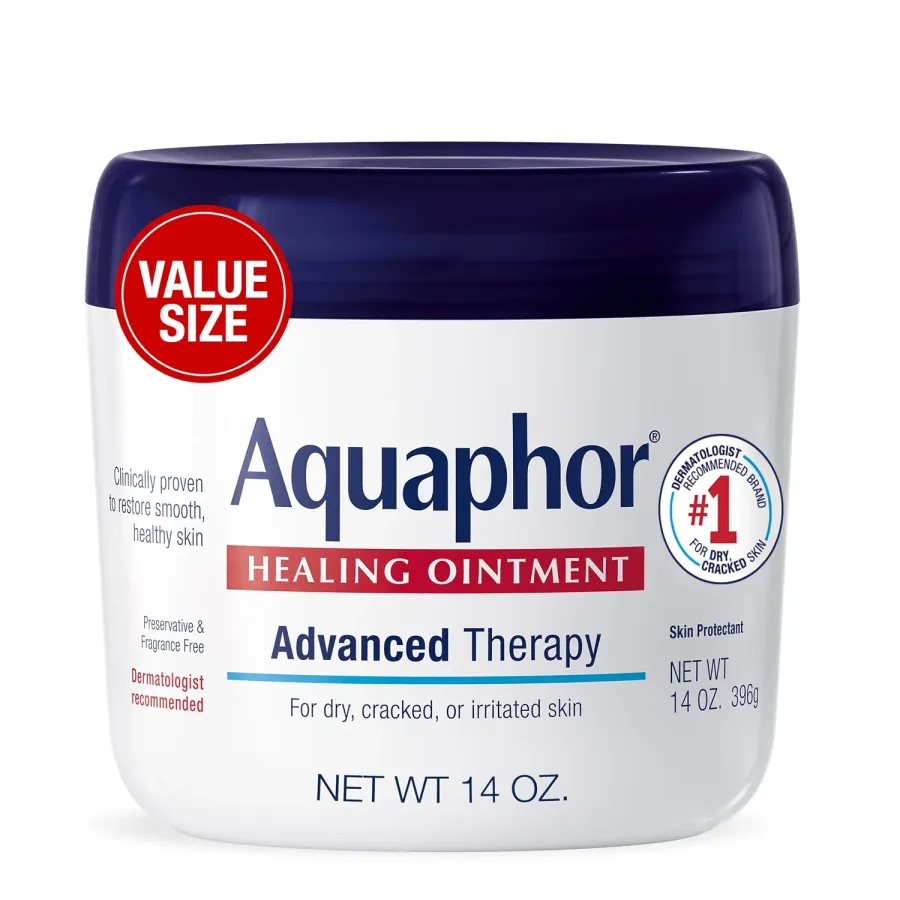
Aquaphor Advanced Therapy Healing Ointment Skin Protectant, 14 oz
9.0 / 10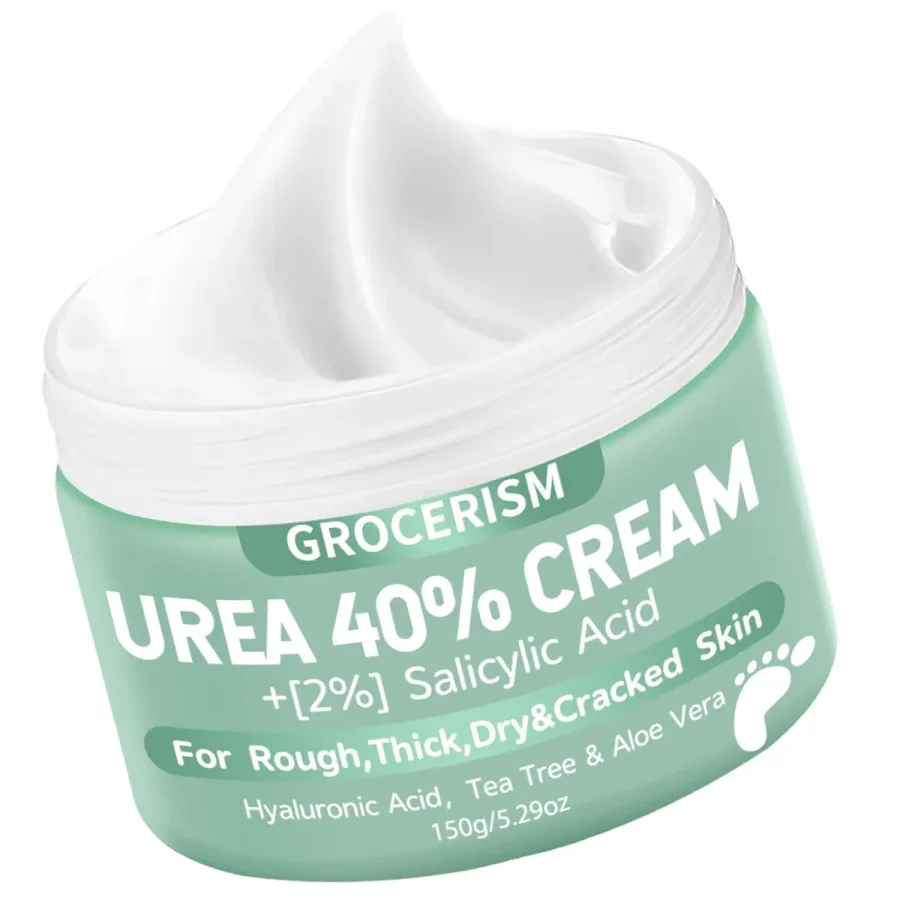
Grocerism Urea Cream 40% for Feet, Maximum Strength Hand & Foot Cream, 5.29 oz
9.0 / 10How This Score Was Earned
We Purchase
Bought at retail, anonymously, with our own funds.
We Live With It
A minimum of four weeks of daily use before a word is written.
We Measure
Weighted criteria, identical for every product in the category.
We Re-Verify
Rankings are revisited weekly; scores fall when products do.
 Verified Examiner
 The Verified Verdict
The exfoliating sibling, and the one to reach for if you hate greasy feet. Lactic acid and urea do the callus work while the cream itself sinks in fast enough to skip the socks.
Check Price on Amazon →$9–$14 · price verified today
Common Questions