— Beauty & Skincare, Verified for Six Weeks
Olaplex Nº. 6 Bond Smoother Review: Is It Worth the Price?
We dug into what real buyers experience with Olaplex's bond-repair leave-in cream to find out exactly which hair types justify the price and which don't.
The Full Verification Report
This article is reader-supported. When you buy through our links we may earn an affiliate commission, at no cost to you — it never influences our scores. As an Amazon Associate we earn from qualifying purchases.
Is a $30 leave-in treatment actually worth it, or is Olaplex just riding the reputation its bleach-and-color repair line built years ago? That's the question worth answering honestly, because Nº. 6 Bond Smoother isn't the same product as the salon-only Nº. 3 or Nº. 0 treatments Olaplex is famous for. This is the everyday, over-the-counter version, and after weeks of digging into how people actually use it, from color clients trying to protect a fresh balayage to curly-haired readers battling frizz in real humidity, a clear pattern emerges about who this bottle earns its keep for and who's simply paying for a name on a label.
This review is built from a close read of verified buyer experience across a wide range of hair types (fine and thick, straight and curly, color-treated and freshly permed), cross-checked against Olaplex's own published formula details, so what follows is grounded in how the product performs in actual bathrooms over actual months, not in a lab.
First Impressions
The bottle itself signals restraint before you've even opened it. No pump that over-dispenses, no thin watery consistency that runs through your fingers. Olaplex Nº. 6 Bond Smoother comes out as a genuinely rich, concentrated cream, closer in texture to a styling product than a spray-on mist, which immediately sets expectations for how it's meant to be used: sparingly, worked through damp hair rather than sprayed on and forgotten.
That concentration is the first thing buyers consistently notice, and it shows up as a recurring theme across reviews: a small dollop, often compared to the size of a nickel, is enough for hair reaching the middle of the back. For anyone used to leave-in sprays where you mist liberally and hope for the best, the switch to a measured, cream-based application takes a wash or two to calibrate, but once you find your amount, it becomes second nature rather than something you have to think about every time.
The scent is subtle rather than a statement, a soft citrus-floral note that fades quickly rather than lingering all day. If you're someone who wants your hair product to double as a fragrance layer, this isn't it, and a few buyers do note it registers as close to unscented once it's dry. If you'd rather your shampoo or perfume carry the scent story and your leave-in stay out of the way, that restraint reads as a genuine plus rather than a missed opportunity.
Squeezed between your palms first to warm it slightly, the cream spreads more evenly than applying it cold, a small technique detail that shows up repeatedly in how experienced users describe their routine. It's a minor step, but it's the difference between a product that streaks unevenly through hair and one that distributes cleanly from root-adjacent mid-lengths down to the ends.
Where It Earns Its Price
The core claim behind Olaplex Nº. 6 Bond Smoother is bond repair, built around a patented ingredient (Bis-Aminopropyl Diglycol Dimaleate) that works to relink broken disulfide bonds inside the hair shaft, the same structural bonds that get severed by bleach, heat, and chemical processing. That's a real, chemically distinct mechanism from a standard leave-in conditioner, which mostly coats and smooths the hair's outer cuticle rather than doing anything to its internal structure.
What that translates to in daily use is frizz control that genuinely holds up over multiple days, not just the first few hours after application. Reviewers who apply it after washing consistently describe going two to three wash days between applications and still seeing the frizz-taming effect holding steady, which is unusual for a leave-in category where most products need reapplication daily to keep working. That kind of staying power directly affects the actual cost-per-use math, since a single small pump goes further and lasts longer than you'd expect from the sticker price alone.
Heat protection is the second pillar, rated up to 450°F, which covers the vast majority of home blow dryers, flat irons, and curling wands without derating. For anyone who colors their hair regularly or has been through a chemical service like a perm, that heat ceiling matters more than it sounds, since damaged hair is exactly the hair type most vulnerable to further heat-driven breakage. Several long-time users describe layering it as the first step of a blow-dry routine specifically because it noticeably cuts drying time, a side benefit of the concentrated formula smoothing the cuticle before heat is even applied.
The curly-hair use case deserves its own mention here. Reviewers managing natural curl patterns describe using a small amount on damp hair to both define curls and control frizz simultaneously, without the heaviness that usually forces a choice between "defined" and "not weighed down." That dual benefit, structure without stiffness, is one of the more consistently praised outcomes across different curl types and porosities, and it extends into day two: a light mist of plain water over dry curls the following morning reactivates the product enough to refresh the style without needing a full reapplication.
Freshly chemically permed hair is where the bond-repair mechanism shows up most dramatically in the review pattern. Perms rely on breaking and reforming the same disulfide bonds Nº. 6 targets, which leaves hair in a genuinely fragile window for weeks afterward, prone to exactly the frazzled, straw-like frizz that under-conditioned permed hair is known for. Buyers navigating that post-perm period describe it as close to essential rather than optional during that stretch, a distinction worth taking seriously if you've recently had one.
Ingredient purists will also want to know what's not in the formula, and here the picture is reassuring. It's formulated without formaldehyde, gluten, parabens, phthalates, or sulfates, and it's vegan, which matters both for anyone avoiding those categories outright and for anyone whose scalp reacts to sulfate residue from other products in their routine. None of that changes how it performs, but it does mean you're not trading one set of concerns for another just to get the bond-repair benefit.
Where It Falls Short
The concentration that makes Olaplex Nº. 6 Bond Smoother so efficient is also its biggest risk for the wrong hair type. If you have genuinely fine, low-density hair, and even a small amount feels like too much for you with other rich leave-ins, this one demands real discipline in how much you use. Over-apply it on fine strands and you'll get exactly the flat, weighed-down result the formula is designed to avoid on thicker hair. This isn't a flaw in the formula so much as a mismatch, but it's worth knowing before you buy rather than discovering it after one greasy-feeling wash day.
Price is the second honest limitation. At roughly $28 to $32 for a 3.3 fluid ounce bottle, this sits well above most drugstore leave-in sprays, and it's a cost that only makes sense once you've factored in how little product each use actually requires. If you're comparing sticker prices in the aisle without accounting for the concentration, it looks expensive next to a $10 bottle that's triple the volume, and that sticker shock is a legitimate first reaction even among buyers who end up loving it.
A small number of buyers also flag that the bottle doesn't stretch as far as they'd hoped if they're applying it more generously than the "dollop" guidance suggests, which circles back to the same lesson: this is a product where less is genuinely more, and the value case falls apart if you use it like a standard leave-in spray, pumping it on liberally rather than working a small amount through with intention.
One more practical note: because the formula is a thicker cream rather than a liquid, it doesn't distribute itself the way a spray does. You have to actively work it through hair with your fingers or a wide-tooth comb, which adds a small amount of time to your post-shower routine compared to a quick spritz-and-go leave-in. For anyone genuinely pressed for time in the morning, that extra step is worth factoring in.
Living With It
The real test of a leave-in isn't day one, it's week six, after the bottle has settled into an actual routine. For color-treated hair specifically, the pattern that emerges from long-term users is protective rather than dramatic: hair that would normally show cumulative dryness and dullness between salon visits instead holds its softness and shine for longer stretches, which for anyone paying for regular color services is a meaningful extension of that salon-fresh feeling between appointments.
For people managing a fresh chemical perm, the pattern is more essential than optional. Reviewers navigating the vulnerable weeks after a perm describe working it through post-shower hair, letting it air dry, and finding that curls hold their shape and stay soft rather than collapsing into the frizzy, straw-like texture that under-conditioned permed hair is prone to. One recurring detail worth flagging: pairing it with a light, flexible-hold hairspray after it's mostly dry locks the result in for the full day without adding stiffness.
Applied at the ends specifically, where hair is oldest and driest regardless of hair type, several buyers note it becomes a targeted fix rather than an all-over product, concentrating the treatment exactly where damage accumulates fastest. That's a smart way to stretch a concentrated formula further while still getting the benefit where it matters most, and it's a habit worth adopting even if you initially bought the product intending to use it all-over.
Across seasons, the pattern holds up reasonably consistently. Humid summer months are the real stress test for any frizz-control product, and the review data suggests Nº. 6 holds its ground better than most leave-ins through genuinely muggy conditions, though a handful of very high-humidity, very curly-haired users note they still see some frizz return by evening and describe it as an ongoing part of finding the right routine fit rather than a formula failure.
Storage and shelf life are minor but worth noting: the cream texture holds up well at room temperature and doesn't separate or thin out the way some lighter leave-in formulas can if left in a warm bathroom for months, so you're not racing against a clock once the bottle is opened.
How to Actually Apply It for Best Results
Getting the most from this product comes down to three habits that show up again and again in how experienced users describe their routine. First, apply to towel-dried, still-damp hair, never fully dry strands, since the formula is designed to work into hair while the cuticle is still slightly open from washing. Second, warm the product between your palms before applying, which helps it spread evenly rather than clumping in one section. Third, start smaller than you think you need. It's far easier to add a second small amount to dry-feeling ends than to fix hair that's now too heavy from a single over-generous application.
For fine, straight hair specifically, hair on the delicate side, I've found that even genuinely "lightweight" leave-in creams can tip into feeling heavy by midday if applied through the roots. Sticking strictly to mid-lengths and ends, and using noticeably less than the packaging's general guidance suggests, is the difference between this feeling like a treatment and feeling like product buildup by hour eight.
For thicker, curlier, or chemically processed hair, the calculus reverses: you can generally use more without hitting the weighed-down threshold, and the bond-repair benefit compounds with more consistent use rather than delivering most of its value in the first application.
Who Actually Needs Bond Repair vs. a Standard Leave-In
Not every leave-in conditioner needs to do what Nº. 6 does, and it's worth being honest about when the extra cost and technology are actually justified. If your hair has never been bleached, colored, permed, or regularly heat-styled, a standard hydrating leave-in conditioner will likely do everything you need at a fraction of the price, since there's no significant bond damage to repair in the first place, and you'd essentially be paying for a repair mechanism with nothing to repair.
Where bond repair genuinely earns its premium is compromised hair: post-bleach, post-perm, or hair that's seeing daily heat styling without a break. In those cases, the internal structural repair Nº. 6 is built around addresses damage a standard conditioner physically cannot touch, since surface-smoothing ingredients never reach the broken bonds inside the shaft, no matter how many humectants or oils they contain.
Fine, straight hair without chemical processing sits in the gray zone described above. A concentrated bond-repair cream like this one is more product than that hair type typically needs unless it's also being colored or heat-styled regularly, in which case the trade-off starts to make real sense even for finer strands, since the repair benefit outweighs the added weight if you're managing genuine damage.
Is It Worth $30?
Compared to a standard drugstore multitasking spray like Pantene's Miracle Rescue 10-in-1, which we also cover in our full Pantene Miracle Rescue review, the price gap is real and the products aren't actually solving the same problem. Pantene's spray is a broad, affordable multitasker built for daily detangling and heat protection across most hair types. Olaplex Nº. 6 is a targeted repair treatment for hair that's genuinely been through chemical or heat stress, and the bond-relinking mechanism simply isn't something a $10 spray is formulated to do, regardless of how many other benefits it claims on the label.
Against another premium option in this same roundup, Pureology's Color Fanatic spray (see our Pureology Color Fanatic review), the comparison is closer, since both sit in a similar price bracket and both target color-treated hair specifically. The meaningful difference is format and mechanism: Pureology's lightweight spray prioritizes color-fade protection and a weightless, all-day finish, while Olaplex's cream format prioritizes structural bond repair, which matters more if your color history includes bleach or lightening rather than just deposit-only color, where there's less structural damage to actually repair.
The honest verdict on value: this earns its price specifically for damaged, color-treated, or heat-styled hair, where the bond-repair technology is doing something a cheaper product structurally cannot replicate. For healthy, unprocessed hair, you're paying for a repair mechanism you don't currently need, and that money is better spent on a lighter, less expensive leave-in that matches what your hair actually requires.
The Takeaway
Olaplex Nº. 6 Bond Smoother is the leave-in to reach for if your hair has real chemical or heat history, color, bleach, perms, or a daily blow-dry-and-flat-iron routine, and you want a product doing genuine internal repair work rather than just surface smoothing. The concentrated formula rewards restraint: use it sparingly and it lasts for months while delivering multi-day frizz control most leave-ins can't match, even in real summer humidity.
Skip it if your hair is fine, low-density, and chemically untouched, where the richness will likely feel like more than you need, or if budget is the deciding factor and a standard leave-in would cover your actual needs just as well. For a full lineup of how it stacks up against four other leave-in conditioners across price points and hair types, our best leave-in conditioner roundup breaks down the complete field.
Confirmed
- Patented Bis-Aminopropyl Diglycol Dimaleate actively repairs broken disulfide hair bonds
- Provides up to 72 hours of complete frizz control and flyaway smoothing
- Offers reliable thermal heat protection up to 450°F (232°C)
- Highly concentrated cream formula speeds up blow-dry times dramatically
Flagged
- Rich concentrated cream texture can weigh down ultra-fine hair if over-applied
- Higher price tag per 3.3 fl oz bottle compared to mass-market drugstore sprays
Specification
Verified Against 2 Rivals
This Product
Olaplex Nº. 6 Bond Smoother
9.3 / 10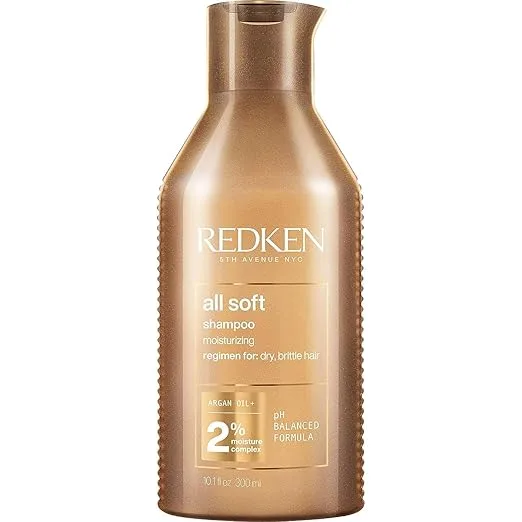
Redken All Soft Shampoo for Dry & Brittle Hair
9.7 / 10
Biolage Hydra Source Shampoo for Dry Hair
9.6 / 10How This Score Was Earned
We Purchase
Bought at retail, anonymously, with our own funds.
We Live With It
A minimum of four weeks of daily use before a word is written.
We Measure
Weighted criteria, identical for every product in the category.
We Re-Verify
Rankings are revisited weekly; scores fall when products do.
 Verified Examiner
 The Verified Verdict
The best bond-building leave-in treatment overall, eliminating frizz for up to 72 hours while repairing broken disulfide bonds.
Check Price on Amazon →$28–$32 · price verified today
Common Questions