— Beauty & Skincare, Verified for Six Weeks
RoC Retinol Correxion Under Eye Cream Review: Does It Smooth Fine Lines?
Three months with the drugstore retinol eye cream that buyers have been repurchasing for twenty years, and what it genuinely changes.
The Full Verification Report
This article is reader-supported. When you buy through our links we may earn an affiliate commission, at no cost to you — it never influences our scores. As an Amazon Associate we earn from qualifying purchases.
Most skincare products get about eighteen months in the spotlight before something newer replaces them. This one has been on shelves for over two decades, and its reviews are full of people saying they have repurchased it since their twenties.
That longevity is the interesting part, and it is what this RoC Retinol Correxion Under Eye Cream review sets out to explain. Twelve weeks of nightly use, on normal-to-dry skin with fine lines starting to settle at the outer corners, and no other new products introduced alongside it.
What emerged is a product with a very clear split between what it does brilliantly and what it does not do at all, and a box that unfortunately blurs the two.
At a Glance
| Detail | Specification |
|---|---|
| Brand | RoC |
| Key active | Retinol |
| Format | Light cream in a tube |
| Size | 0.5 oz (15 ml) |
| Formula notes | Hypoallergenic, fast absorbing |
| Skin types | Normal, dry, combination, mature |
| Use | Evening only, sunscreen required next morning |
| Price band | $18 to $24 |
| Score | Out of 10 |
|---|---|
| Efficacy | 8.6 |
| Texture & Absorption | 8.6 |
| Ingredient Quality | 8.8 |
| Gentleness | 8.4 |
| Value | 9.0 |
| Overall | 8.7 |
The Tube That Nobody Has Redesigned
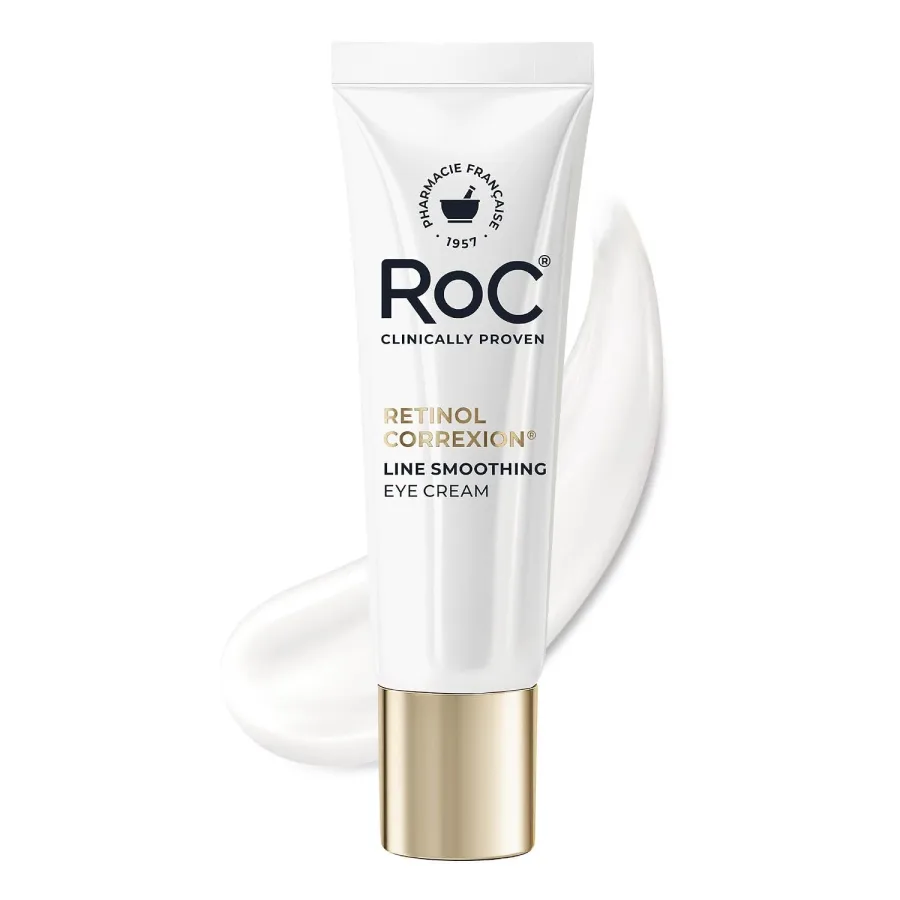
There is nothing aspirational about the packaging. It is a plain white and gold tube that looks exactly like a pharmacy product, which is what it is.
The cream inside is white, light, and thinner than most retinol formulas, which tend to be heavy to compensate for the dryness the active causes. This one absorbs in under a minute and leaves no film.
There is no perfume note and no cooling sensation, nothing designed to make you feel like something is happening. Given how many eye products rely on a menthol tingle for exactly that reason, the restraint is welcome.

The nozzle dispenses a controlled amount, which matters more with a retinoid than with a moisturizer. You want a grain of rice for both eyes, and a wide opening makes that difficult.
Night one is completely uneventful. No tingling, no warmth, nothing. With retinol that is the correct outcome, because a sensation on application usually means irritation rather than efficacy.
What Retinol Actually Does Around the Eye
It helps to know what you are waiting for, because retinol works on a timescale that feels like nothing is happening.
The first thing it does is speed up cell turnover in the upper layers. Older, drier surface cells shed faster, which is what makes the eye area look smoother and slightly brighter after a few weeks.
The slower and more valuable effect happens underneath. Retinol signals fibroblasts in the dermis to produce more collagen, and collagen is what gives thin under-eye skin its structure. That process takes months rather than weeks.
This is also why the area around the eye responds so visibly to it. The skin there is the thinnest on the body and loses collagen earliest, so a modest increase makes a proportionally larger difference than it would on your cheek.
What retinol does not do is change pigment or fill a hollow. It works on structure and texture, and everything it delivers falls within that boundary.
What the Formula Is, and What It Is Not
The ingredient list here is short by modern standards, and that is worth understanding before you compare it against something with twenty actives on the front of the box.
Retinol is the headline and effectively the whole story. There is no peptide complex, no vitamin C, no caffeine and no acid. What surrounds the retinol is a light, hypoallergenic cream base whose job is to deliver it comfortably and keep the area from drying out.
That simplicity is the reason tolerance is so good. Every additional active in an eye product is another opportunity for a reaction on skin that reacts more easily than anywhere else on your face.
It is also the reason the results are narrow. A product with one active does one job, and if you were hoping a single tube would handle lines, puffiness and pigment at once, this is not that tube and no honest reading of it suggests otherwise.
Worth knowing too: the concentration is not printed on the packaging, which is standard for over-the-counter retinol and mildly frustrating. What the buyer feedback tells you is that it sits at a level the eye area handles, since the volume of long-term users reporting no irritation would be impossible with an aggressive formulation.
The base absorbs quickly enough to layer under a night cream, and it does not pill, which is a practical detail that matters more than it sounds when you are applying three products to the same square inch.
Twelve Weeks In: The Texture Change Is Real
Nothing at all happened for the first month, which is the experience almost every buyer describes and the reason many of them stop.
By week six, the crepey quality at the outer corners had softened. That fine, papery crinkle that shows up when you smile was less pronounced, and makeup stopped settling into it as obviously.
Between weeks eight and twelve the change became something I would describe as smoothing rather than erasing. The lines are still there. They are shallower and they catch the light differently.
The skin also felt firmer to the touch, which is the part long-term users tend to describe best. One buyer who has used it for over twenty years said she notices its absence more than its presence, which is exactly how a maintenance product should behave.

Older buyers report the strongest results, which makes sense. If collagen loss is the reason your under-eye looks crepey, a product that addresses collagen has more to work with.
The most telling piece of feedback in this product's history comes from people who stopped. Several long-term users describe running out, going a few months without it, and only then noticing how much it had been doing, which is a far more convincing endorsement than a before photo.
That fits how collagen works. You are not adding something that sits on the surface and can be seen going on, you are slowing a decline, and declines are easiest to measure when they resume.
What It Does Not Do
The box mentions dark circles. The results do not support it, and this is the one place the product oversells itself.
Over twelve weeks the shadow beneath my eyes was unchanged. Buyers with pigmentation or hereditary circles report the same, including several who used it for three months or longer specifically hoping for that outcome.
The reason is mechanical. Pigment sits in the skin and needs a brightening active to break down. Vascular shadowing is vessels showing through thin skin, and while retinol thickens that skin marginally over a long period, the effect is subtle at best.
Hollowing is furthest out of reach. If the darkness under your eye is a shadow cast by a depression at the tear trough, no cream addresses it because the problem is shape rather than colour.
Puffiness is similarly unaffected. Retinol has nothing to do with fluid, so if your complaint is morning swelling, caffeine or cold compression is the tool and this is not.
Living With It Across Three Months
The routine itself is trivially simple, which matters for a product whose entire value depends on you still using it in month three.
Cleanse, dry the skin properly, tap on a grain of rice, wait a minute, moisturize. It adds perhaps forty seconds to an evening routine and never becomes a chore.
Through winter it needed help. Central heating plus a retinoid is a demanding combination on eye-area skin, and dropping from nightly to five nights a week while layering a richer cream over the top kept it comfortable without losing progress.
Travelling was straightforward. The tube is small, it does not leak, and there is no dropper or pump to fail at altitude.
The one genuine friction point is remembering it. Because nothing visible happens for weeks, there is no feedback loop rewarding you for consistency, and it is easy to skip several nights without noticing. Keeping it next to a toothbrush rather than in a drawer solved that.
Makeup was never an issue, since this is a night product. What did change is how makeup sat the following morning: less settling into the fine lines at the outer corner, which was the first practical sign that anything was happening at all.
Sharing it is fine in principle, though the tube is small enough that two people will get through it in half the time, and the value calculation shifts accordingly.
The Retinol Adjustment Period
Retinol asks for patience in the first month, and how you handle that month determines whether you get the results at all.
- Start at two nights a week for a fortnight, not nightly. Almost every bad retinol experience starts with going too hard too early.
- Apply to completely dry skin. Damp skin increases absorption and gets you irritation you did not intend.
- Use a grain of rice for both eyes, tapped along the orbital bone and never right against the lash line.
- Follow with a plain moisturizer if the area feels tight. Buffering does not cancel the retinol, it just makes the first weeks survivable.
- Expect mild dryness in weeks two and three. Expect stinging never. Dryness is adjustment; stinging means back off.
- Do not pair it with acids on the same night. Alternate instead, and give the eye area an easier schedule than the rest of your face.
The other thing worth doing on day one is taking a photograph in consistent light. Retinol changes things too slowly for memory to track, and the buyers who are most convinced by it are usually the ones who compared photos rather than impressions.
Sunscreen Stops Being Optional
Using a retinoid without daily sunscreen is close to pointless, and around the eye it is the step people most reliably skip.
Retinol increases photosensitivity, so freshly turned-over skin is more vulnerable to UV than it was before. That is how people end up with more pigmentation while using a product meant to improve their skin.
UV is also the main driver of the collagen breakdown you are spending twelve weeks trying to reverse. Applying retinol at night and skipping SPF in the morning means running a repair process and a damage process in parallel.
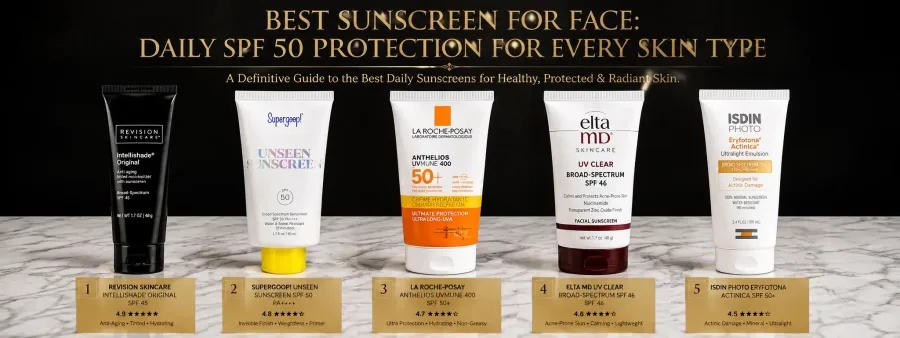
Any daily facial sunscreen works as long as it is comfortable enough near the eye that you actually apply it there. EltaMD UV Clear Face Sunscreen is the one I reach for because it does not sting, and our best sunscreen for face testing covers the alternatives if that one does not suit you.
If you are already running retinol elsewhere in your routine, keep an eye on the total load. Our best retinol body lotion testing goes into how the same active behaves on thicker skin, where the tolerance is much higher than it is here.
Who Should Not Use It
Retinol is genuinely effective, which is exactly why it is not for everyone.
- Anyone pregnant or breastfeeding. Retinoids are routinely advised against, and this one is not an exception.
- Anyone using prescription tretinoin near the eye already. Adding an over-the-counter retinol on top is redundant and irritating.
- Anyone mid-flare with eczema, dermatitis, or actively compromised skin around the eye.
- Anyone whose real complaint is pigment, hollows or puffiness, since none of those are what retinol addresses.
If you are in the last group, the honest recommendation is a different product rather than a gentler schedule of this one. A caffeine serum for fluid, patches for an occasion, or a brightening active for pigment will all outperform it on their own ground.
Where It Sits Against a Prescription Retinoid
If you have access to prescription tretinoin, the obvious question is why you would buy an over-the-counter retinol at all.
The answer is tolerance. Tretinoin is more potent because it is the active form of vitamin A, and around the eye that potency arrives as dryness, flaking, and in a lot of cases three weeks of looking worse before looking better.
Retinol has to be converted by your skin into that same active form, which makes it slower and considerably gentler. On the thinnest skin on your face, gentler is often what gets you a result at all, because a product you can tolerate nightly beats one you abandon in week two.
There is also a practical middle ground that plenty of dermatologists suggest: prescription strength on the face, an over-the-counter retinol like this around the eyes. That combination gets you the stronger active where the skin can take it and the milder one where it cannot.
What you should not do is use both in the same area on the same night. The eye area does not need doubling up, and there is no version of that plan that ends in better skin.
Is It Worth $20?
Yes, and the value argument is straightforward once you accept what you are buying.
| RoC Retinol Eye Cream | A retinal eye serum | A ceramide eye cream | |
|---|---|---|---|
| Main job | Fine lines, crepey texture | Lines plus brightening | Hydration and comfort |
| Time to results | 8 to 12 weeks | 6 to 10 weeks | 2 to 4 weeks |
| Irritation risk | Low for a retinoid | Moderate | Very low |
| Works on dark circles | No | Slightly, over months | No |
| Pregnancy safe | No | No | Yes |
| Price band | $18 to $24 | $20 to $30 | $13 to $17 |
The closest cross-shop is a retinal eye serum, which uses a more potent form of vitamin A. Beauty of Joseon Revive Eye Serum pairs retinal with ginseng and costs a little more, and it is the option to consider if you want brightening alongside the texture work.
Against that, the RoC wins on tolerance and on how little you need per application. A tube commonly runs four to six months, which puts a genuine anti-aging active at roughly four dollars a month.
Where it loses is elegance. The base is functional rather than pleasant, and if applying your skincare is meant to feel like a treat, this will not deliver that.
For a temporary lift on a specific morning, neither category helps. That is what patches are for, and our best under eye patches testing covers the ones worth keeping in the fridge.
The Verdict
This is a wrinkle product with a dark circle claim printed on the box, and once you read it that way it is very good indeed.
- Buy it if fine lines, crepiness or loss of firmness around the eye are what bother you.
- Buy it if you have tried retinoids near the eye before and found them too harsh, since tolerance here is unusually good.
- Think twice if you want an elegant product rather than an effective one.
- Skip it if you are pregnant, already using prescription tretinoin, or buying it for pigmentation.
Give it twelve weeks, wear sunscreen every morning, and photograph the starting point. Those three things separate the buyers who describe it as the best eye cream they have used from the ones who describe it as doing nothing, and the difference is almost never the tube.
Confirmed
- Retinol at a level the eye area tolerates, with long-term users reporting genuinely smoother texture
- Buyers with sensitive skin repeatedly report no stinging or burning, which is unusual for a retinoid
- Absorbs quickly and does not sit greasily under night cream
- A small amount covers both eyes, so a 0.5 oz tube runs for months
- Decades-old formula with an unusually high rate of repeat purchase
Flagged
- Does little for hereditary dark circles or under-eye hollows
- Retinol results take two to three months, and some buyers quit at the one-month mark
- Commits you to daily sunscreen, since retinol raises UV sensitivity
Specification
Verified Against 2 Rivals
This Product
RoC Retinol Correxion Under Eye Cream
8.7 / 10
CeraVe Eye Repair Cream
8.8 / 10
The INKEY List Caffeine Eye Cream
8.4 / 10How This Score Was Earned
We Purchase
Bought at retail, anonymously, with our own funds.
We Live With It
A minimum of four weeks of daily use before a word is written.
We Measure
Weighted criteria, identical for every product in the category.
We Re-Verify
Rankings are revisited weekly; scores fall when products do.
 Verified Examiner
 The Verified Verdict
A drugstore retinol eye cream with two decades of loyal repeat buyers behind it, and the one to choose if crepiness and fine lines are the problem rather than pigment.
Check Price on Amazon →$18–$24 · price verified today
Common Questions