— Beauty & Skincare, Verified for Six Weeks
The Ordinary Niacinamide 10% + Zinc 1% Review: Still the Best Cheap Serum?
66,006 ratings, under ten dollars, and one complaint that keeps coming back. What this niacinamide serum actually does for oil, pores and tone.
The Full Verification Report
This article is reader-supported. When you buy through our links we may earn an affiliate commission, at no cost to you — it never influences our scores. As an Amazon Associate we earn from qualifying purchases.
You have almost certainly seen this bottle. It is the plain white-labelled niacinamide serum that costs less than a sandwich, sits at number two in Amazon's entire facial serum category, and carries 66,006 ratings at 4.7 stars. The question is not whether people buy it. It is whether a serum this cheap can genuinely do anything for your pores, your oil, or your uneven skin tone.
That doubt is fair. Niacinamide is the most oversold ingredient in skincare right now, added to everything from primers to body lotion, and a $7 price tag invites suspicion rather than confidence.
So this review works from what 66,000 buyers actually report rather than from what the label promises. My own skin is normal-to-dry with low sensitivity, which matters here, because the most consistent complaint about this particular serum comes from people whose skin is not oily.
What You Actually Get for Under Ten Dollars
The formula is 10% niacinamide, also called vitamin B3, paired with 1% zinc PCA. It is a water-based serum in a 30 ml glass bottle with a pipette dropper, fragrance free, vegan and cruelty free, and free of silicones, sulfates and alcohol.
That is the whole proposition. There is no tranexamic acid, no arbutin, no hyaluronic acid, no marketing ingredient with a trademark symbol after it. You are buying two well-studied actives at a meaningful concentration and nothing else.
The texture is the first thing you notice. It is genuinely water-light, closer to a runny toner than the slightly viscous gel most niacinamide serums use. Buyers describe it absorbing in seconds and layering under moisturiser, sunscreen and makeup without pilling.
One buyer put it more bluntly than the brand ever would. She had researched the exact niacinamide-to-zinc ratio she wanted, at 10% to 1% by weight, and was preparing to mix it herself with powders and a kitchen scale before she found this already bottled and cheap.
The packaging is deliberately unglamorous. A clear glass bottle, a plain white label with the concentration printed on it like a lab reagent, and a standard pipette. Nothing about it is designed to sit out on a shelf.
The dropper is the one part buyers have opinions about. It works, and one reviewer specifically calls it efficient, but it is a squeeze pipette rather than a pump, which means you are estimating the dose every time and touching the bottle rim with your fingers. Rivals with a pump are noticeably easier to use consistently.
On the skin it is clear and colourless with no tint. That sounds trivial until you have used a pigment serum that leaves a faint cast under foundation, and it is part of why buyers describe this layering invisibly under makeup.
The Two Jobs This Serum Is Actually Doing
Niacinamide and zinc are not doing the same thing, and understanding the split explains who this works for.
Niacinamide is a barrier ingredient first. It supports the skin's own lipid production, which is why it tends to calm redness and improve how rough or uneven skin looks over a few weeks. It also interferes with pigment transfer, which is the slow route to fading post-inflammatory hyperpigmentation, the marks a spot leaves behind after the spot itself is gone.
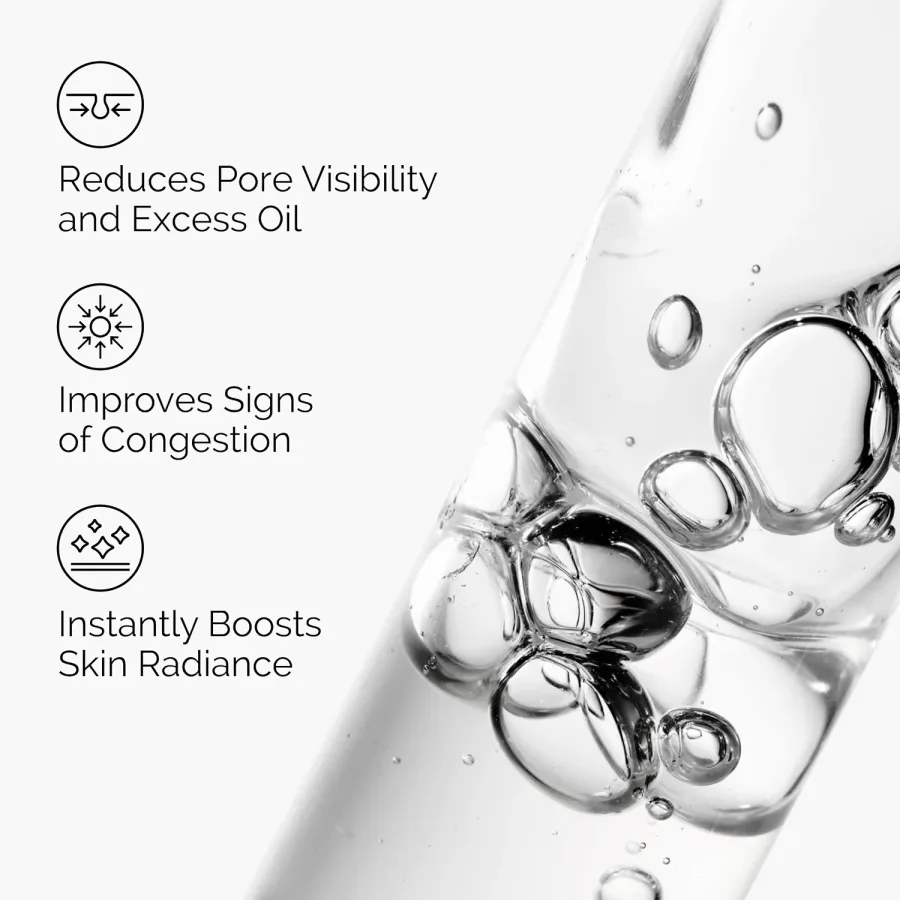
Zinc PCA is the sebum-regulating half. It is why this serum is recommended for oily and blemish-prone skin far more often than for dry skin, and why the mid-day shine reports are the single most consistent thing in its review base.
The listing is unusually honest about the boundary. It states plainly that this is not an acne treatment, only that it can be used alongside one. A buyer specifically praised that clarity, and it is worth taking at face value before you buy.
What "Pore Minimizing" Really Means Here
Worth being precise about this, because it is where most disappointment starts. Pore size is largely fixed by genetics. No serum contracts one.
What changes is how visible a pore is, and that comes down to two things a niacinamide serum can genuinely influence. The first is how much sebum is sitting in it, because a pore filled with oil catches light and reads as a dark opening.
The second is the condition of the skin immediately around it. When the surface is rough or congested, every pore is thrown into relief. Smooth that surface and the same pore becomes considerably harder to see.
That is the mechanism behind the reports you will read. One buyer with what she describes as porous, ruddy skin after a dietary change found her pores looked noticeably smaller within a week, alongside her skin calming down generally. She is not describing anatomy changing. She is describing oil coming down and texture evening out.
Set that expectation and the results hold up. Expect literal shrinkage and no niacinamide serum on the market will satisfy you.
Purging, Breaking Out, or Just Irritation
Niacinamide does not cause purging in the way an acid or a retinoid does. There is no accelerated cell turnover here pushing existing congestion to the surface faster, so a genuine purge is not the expected mechanism.
What can happen instead is irritation, and it looks different. Irritation from an active you are not tolerating tends to bring redness, stinging and small bumps in areas you do not usually break out.
The distinction matters for your next move. Purging means pushing through. Irritation means stopping, or at minimum cutting frequency in half and rebuilding slowly.
The most common cause of that irritation with niacinamide is not this serum on its own. It is the total dose, which brings us back to the most useful thing anyone said in these reviews: check how many products in your routine already contain it before you add a tenth source at 10%.
- What buyers consistently report: less shine through the day, smoother texture, pores that look smaller, fewer breakouts, and a more even overall tone after several weeks.
- What it is not: an acne treatment, a fast dark-spot corrector, or a moisturiser. Nobody who bought it as any of those three came away happy.
How Long Before Anything Changes
The honest answer is between one week and three months, depending on what you are measuring.
Oil control is the fastest. One buyer measured noticeably smaller-looking pores and calmer, less ruddy skin after about a week of use. Another reported visibly less oiliness through the day within the first fortnight.
Texture takes longer. Several buyers describe a genuinely smoother surface and a brighter complexion after consistent morning-and-night use across a month or more, and one who had been using it for three months says people comment on her skin unprompted.
Pigmentation is the slowest of all, which is true of niacinamide generally rather than of this bottle specifically. One buyer with significant discolouration and scarring on her chest reports a definite improvement in evenness, but she is measuring that across three months, not three weeks.
If you want a faster route to dark spots, this is not the serum. A formula built around tranexamic acid or a dedicated pigment ingredient will move quicker, and that is the honest reason the more expensive niacinamide serum reviews on this site exist at all.
At a Glance
| Specification | Detail |
|---|---|
| Brand | The Ordinary (DECIEM) |
| Key actives | Niacinamide 10%, Zinc PCA 1% |
| Size | 30 ml (1 fl oz), glass bottle with dropper |
| Texture | Water-based, very light, absorbs in seconds |
| Fragrance | Fragrance free (faint smell on application only) |
| Free from | Silicone, sulfate, alcohol, coal tar |
| Amazon rating | 4.7 / 5 across 66,006 ratings |
| Category rank | #2 in Facial Serums |
| Our score | 8.9 / 10 |
Where It Falls Short
The most repeated criticism has nothing to do with effectiveness. It is that this serum can leave skin feeling tight.
Two separate buyers describe it in almost the same terms. One calls it slightly drying and recommends dropping from twice daily to once while your skin adjusts. Another, who is otherwise pleased with the results, says plainly that she does not find it moisturising and that her skin feels tight afterwards.
This is the predictable consequence of a formula with no humectants or emollients in it. There is no hyaluronic acid here to hold water and no oil to seal it. If your skin runs dry, you need a moisturiser over the top rather than instead of one.
The second issue is a genuine adjustment period for some people. One acne-prone buyer reports real stinging when she started, applying morning and night, which stopped after about two weeks. Her skin then cleared over the following month.
Stinging that fades is common with a 10% active. Stinging that persists past a fortnight is not, and that is your signal to stop rather than push through.
Three smaller things worth knowing before you order:
- It has a faint odd smell on application. One buyer describes it as slightly weird out of the bottle, but says it does not stay on the skin.
- The bottle looks small. At 30 ml it is the same size as serums costing five times more, which surprises some buyers. In practice a few drops covers the face and a bottle lasts months.
- It will not clear texture on its own. One buyer who switched from a pricier clarifying serum found this kept her complexion relatively clear but did not fully resolve blemishes or texture the way the more expensive product had.
Who Should Buy It, and Who Should Look Elsewhere
The pattern in the reviews is clear enough to sort this cleanly.
- Buy it if your skin is oily or combination, you are bothered by mid-day shine and pores that look enlarged, you want to try niacinamide without committing money to it, or you want something cheap enough to use on your chest and neck as well as your face.
- Buy it if you are blemish-prone and want a supporting product alongside an actual acne treatment rather than instead of one.
- Think twice if your skin is dry or dehydrated, unless you are pairing it with a proper moisturiser every single time.
- Skip it if dark spots or melasma are your main concern and you want visible movement inside a couple of months.
- Skip it if you already use several products containing niacinamide, which is more common than most people realise.
That last point deserves its own line, because a five-bottle repeat buyer made it himself. He points out that plenty of hydrating and barrier-repair creams already contain niacinamide, and that people should check what they own before adding another source of it.
It is an unusual thing to read in a five-star review, and it is right. Stacking multiple 4% to 10% niacinamide products is one of the more common self-inflicted causes of irritation.
How It Compares to the Rest of the Niacinamide Shelf
This is the reference point everything else in the category gets measured against, which makes the comparisons genuinely useful.
Against a texture-first rival, this is the rougher option. Buyers who have used both this and the Good Molecules Niacinamide Serum tend to prefer the latter's feel, and one who moved to a 12% formula specifically praised its pump over this bottle's dropper. If tightness is your problem, a different niacinamide serum solves it.
Against a pigment-focused serum, this is the wrong tool. Formulas that add tranexamic acid or a dedicated brightening ingredient are built to shift dark spots on a timescale this cannot match, and they cost three to seven times more for that reason.
Against nothing at all, though, it wins comprehensively. At under ten dollars there is no meaningful downside to finding out whether niacinamide suits your skin, and that is the actual argument for this bottle.
One buyer summarised the whole category in a single sensible line: you should never pay more than about thirty-five dollars for a serum. Whether or not you agree, this one costs a fraction of that.
The Case for Using It Below the Chin
This is the argument nobody makes in the marketing, and it is one of the strongest reasons to own a cheap niacinamide serum rather than an expensive one.
Chest and neck skin gets the same sun exposure as your face and almost none of the attention. It is also where texture and discolouration tend to become obvious first, particularly if you have had breakouts there or, as one buyer describes, scarring left behind by an illness.
She reports using it daily across her chest for three months and seeing a definite improvement in the unevenness and discolouration she had been living with. Another buyer used a niacinamide serum specifically on her décolletage for rough texture and says the area is now smooth.
Neither would be a sensible use of a fifty-dollar bottle, because the surface area is large and the dose is not small. At this price it costs almost nothing to extend the routine downward.
The practical method most buyers land on is the same: apply to your face first, then press whatever is left on your fingers into your neck and chest before it dries. No extra product, no extra step.
Living With It: How to Use It Without Wasting It
A few drops is the whole dose. Buyers repeatedly note that a little goes a long way and that leftover product on your fingers is best pressed into your neck and chest rather than rinsed off.
Apply it to clean skin before anything heavier. Because it is water-based it belongs early in the routine, straight after cleansing or toning, and it needs no waiting time before the next step.
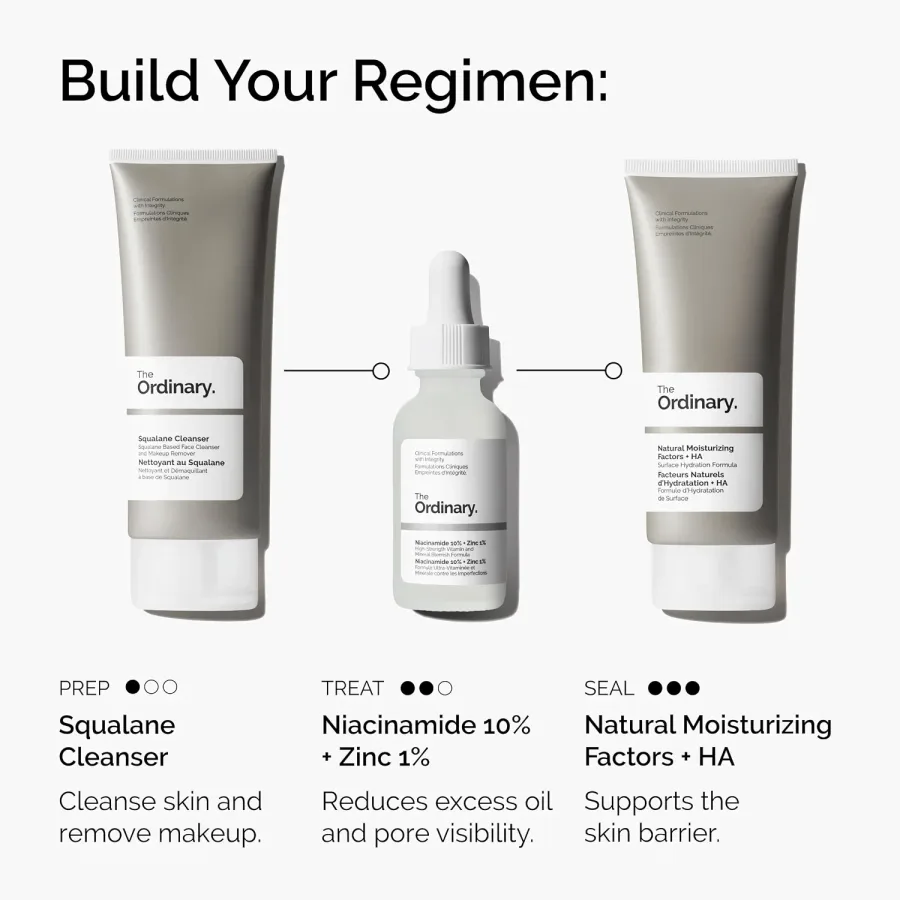
Follow it with a moisturiser. This matters more than any other instruction here, and it is the single fix for the tightness complaint. Anything from our guide to the best moisturizers for acne-prone skin works, and CeraVe PM Facial Moisturizing Lotion is the obvious low-cost partner since it is lightweight enough not to undo the oil control.
If you are also using acids, separate them. The Ordinary's own Glycolic Acid 7% Exfoliating Toner is a natural companion in the same routine, but use the acid on alternate evenings rather than layering it directly under this on the same night while your skin is still adjusting.
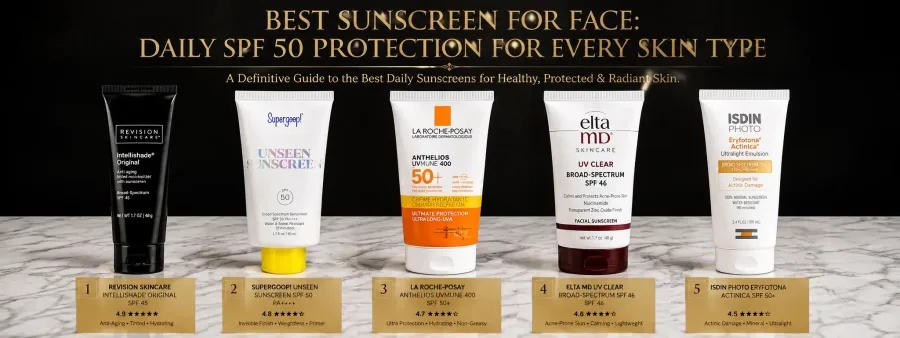
Sunscreen is non-negotiable if tone is part of why you bought this. Niacinamide slows pigment transfer, and daily UV exposure undoes that faster than the serum can build it. Our best sunscreens for face guide covers the options that layer cleanly over a water-based serum.
The Verdict on The Ordinary Niacinamide 10% + Zinc 1%
This is the default niacinamide serum for a reason, and after reading through what its buyers actually report, the reason holds up.
It does the two things it claims. Oil and shine come down, pores look smaller, and texture evens out over a few weeks. It does them at a price that makes the decision to try it almost free, and the 66,006-rating evidence base behind that is larger than anything else in the category by a factor of four.
What it does not do is moisturise, treat acne, or move dark spots quickly. Buy it understanding those three boundaries and it is close to unbeatable value. Buy it expecting a dark spot corrector and you will be disappointed in six weeks, exactly as several buyers were.
If your skin is dry, pair it with a moisturiser or choose a gentler-feeling formula instead. If your skin is oily, start here before you spend more, because there is a reasonable chance you never need to.
Confirmed
- The most-reviewed serum here by a wide margin: 4.7 stars across 66,006 ratings
- Buyers consistently report less mid-day shine and visibly smaller-looking pores
- Water-light texture that absorbs in seconds and layers under makeup without pilling
- A few drops covers the face, so a 30 ml bottle lasts months
- Fragrance free, vegan, cruelty free, and cheap enough to use on chest and neck too
Flagged
- Two buyers describe it as slightly drying, with skin feeling tight afterwards
- One acne-prone buyer reports stinging for the first fortnight before it settled
- Has a faint odd smell on application, though it does not linger on skin
- The listing itself states this is not an acne treatment, which catches buyers out
- The 30 ml bottle looks small next to serums costing four times as much
Specification
Verified Against 2 Rivals
This Product
The Ordinary Niacinamide 10% + Zinc 1% Smoothing Serum
8.9 / 10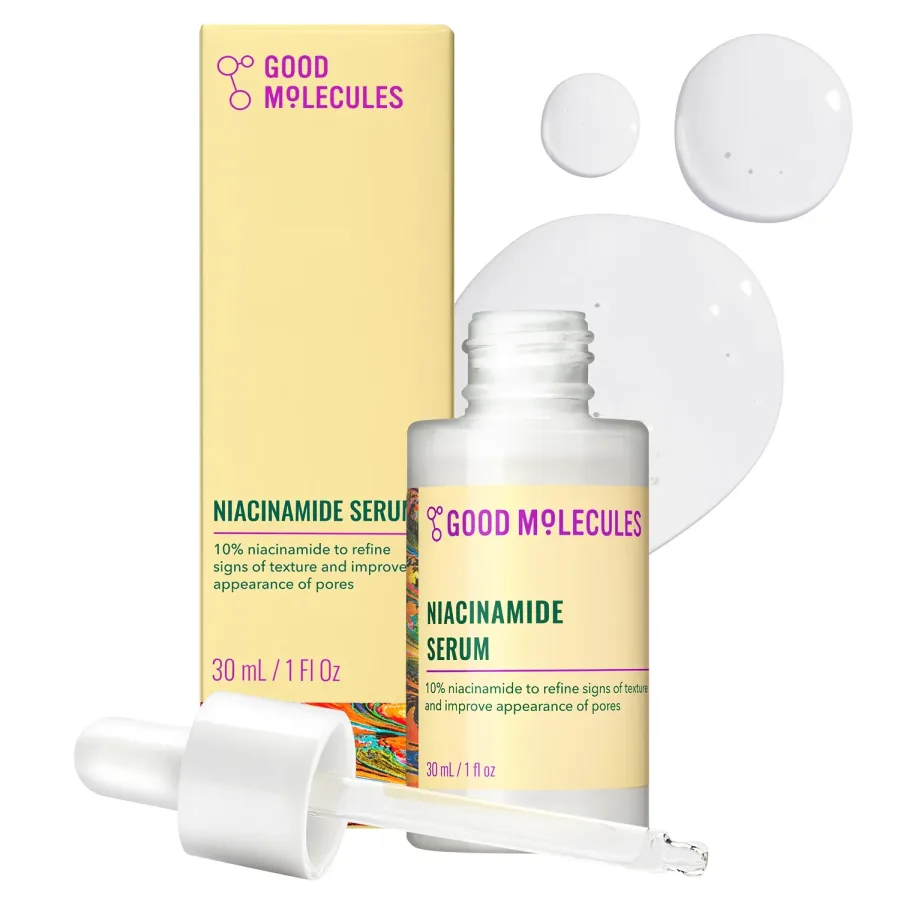
Good Molecules Niacinamide Serum 10%
8.8 / 10
Naturium Niacinamide Serum 12% Plus Zinc 2%
8.6 / 10How This Score Was Earned
We Purchase
Bought at retail, anonymously, with our own funds.
We Live With It
A minimum of four weeks of daily use before a word is written.
We Measure
Weighted criteria, identical for every product in the category.
We Re-Verify
Rankings are revisited weekly; scores fall when products do.
 Verified Examiner
 The Verified Verdict
The cheapest and most heavily reviewed niacinamide serum on Amazon, and still the one most people should buy first.
Check Price on Amazon →$6–$10 · price verified today
Common Questions