— Beauty & Skincare, Verified for Six Weeks
celimax The Vita A Retinal Shot Review: 0.1% Retinal, Printed on the Box
A Korean retinal booster that states both its actives on the packaging, works fast on pores, and leaves a shine some buyers cannot get past.
The Full Verification Report
This article is reader-supported. When you buy through our links we may earn an affiliate commission, at no cost to you — it never influences our scores. As an Amazon Associate we earn from qualifying purchases.
Almost every retinoid on a drugstore shelf hides its concentration. This one prints two numbers on the box: 0.1% retinal and 3% Matrixyl. In a category built on vagueness, that alone is worth paying attention to.
The format is unusual too. Fifteen millilitres in a tube, described as a shot rather than a serum, and priced like a full-sized product. That combination produces the most polarised reviews of anything in this group.

Two Actives, Both Declared
The formula pairs a retinoid with a peptide complex, which is a more considered combination than most products at this price attempt.
- Retinal at 0.1%. Retinaldehyde needs only one conversion inside the skin to become retinoic acid, where retinol needs two. At 0.1% this is a meaningful strength rather than a token inclusion.
- Matrixyl 3000 at 3%. A peptide complex marketed for firmness and fine lines, working on a different pathway from the retinoid.
- Niacinamide. Tone support and irritation buffering.
- Panthenol. Soothing and hydrating, and one of the reasons dryness is not the usual complaint here.
One buyer who owns both this booster and celimax's retinol counterpart singled out the disclosed strengths as the thing she most appreciated, because it let her understand what she was actually using. She is right that it is rare.
The Speed Is the Surprise
Retinoid reviews normally talk in months. This product's reviews talk in days, and consistently enough that it is not a fluke.
One buyer applied it and watched her nose pores visibly shrink, reporting them at half the size and no longer discoloured within twenty-four hours, after years of looking for something that worked on that specific problem. Another saw a noticeable difference in skin tightness within five days, with wrinkles less visible.
A third assessed it at fifteen days and described skin that looked smoother, brighter and clearer, comparing the effect to a treatment rather than a serum. A fourth, using it for wrinkles, reported visible improvement in fine lines.
Some of that early change is almost certainly hydration and light reflection rather than structural remodelling, which is true of any well-formulated serum. But the pore reports are specific and repeated, and pores are one thing a retinoid genuinely does address quickly.
Why Pores Respond Faster Than Wrinkles
The pattern in this product's reviews is unusual and worth explaining rather than just reporting. Pore results arrive in days. Firmness takes weeks. Deep lines barely move at all.
An enlarged pore is not really a hole that can shrink. What changes its appearance is what fills it and what surrounds it. A pore packed with oxidised sebum and dead cells reads as darker and wider than the same pore cleared out, which is why the buyer who watched her nose pores halve within a day also mentioned they were no longer discoloured.
A retinoid clears that congestion by accelerating turnover in the pore lining, and the visual effect of clearing it can genuinely be quick. Nothing structural has happened, but what you see in a mirror has changed.
Firmness works differently. The Matrixyl peptides and the retinal both signal for collagen production in the dermis, and collagen builds over months rather than days. The tightness buyers report inside a week is more likely hydration plumping the surface, which is real but temporary.
Understanding that split protects you from two mistakes. Do not assume fast early results mean fast structural results. And do not conclude the product has stopped working when the dramatic first fortnight settles into something slower.
The Finish Problem
Now the honest counterweight, and it comes from the most detailed review the product has.
That buyer, who uses both celimax retinoid products and clearly knows the category, listed the downsides plainly. Both products leave her face looking shiny and oily. The booster in particular does not spread easily, so she ends up using more than she needs, which probably makes the shine worse. And it produces a slightly prickly sensation on application, which she compared to spicules, though she did not find it uncomfortable.
Her overall assessment was measured: good options for someone starting with retinal, hydrating and peptide-rich, but for an experienced retinoid user looking for real anti-ageing results, there are stronger options available.
That is a fair verdict from someone with no reason to be unkind, and it is the counterweight to the enthusiastic short-term reviews.
The Numbers on the Box
| Detail | |
|---|---|
| Actives | Retinal 0.1%, Matrixyl 3000 at 3% |
| Supporting | Niacinamide, panthenol |
| Size | 15 ml / 0.51 fl oz tube |
| Colour | Bright yellow, which is normal for retinal |
| Finish | Shiny, slightly greasy until it settles |
| Scent | Unscented, described as clean |
| Origin | Korean skincare |
| Amazon rating | 4.4 / 5 across 25,151 ratings |
The Yellow, and Whether It Stains
The product comes out of the tube bright yellow, which alarms people the first time and should not.
Retinal is naturally yellow. One buyer with very pale skin was concerned about it, applied it anyway, and found the yellowness disappeared once absorbed with no tint left behind. Another mentioned some yellow that simply wiped off her face.
The more useful detail concerns bedding. The buyer who compared celimax against other retinal products specifically noted that neither of these leaves a yellow stain on her pillowcase, which she flagged as a genuine problem with some retinal formulas. That is a practical advantage worth having.
How It Feels and How to Apply It
Buyers split on texture in a way that maps closely onto their skin type.
Those with drier skin describe it as lightweight, quick to absorb and very moisturising, with one noting that retinal usually causes dryness and this did not, even living in a desert climate. Those with oilier skin describe the shine and the greasy feel that takes a while to fade.

The application advice from successful users is consistent and worth following.
- A half pea-sized amount split across nose and cheeks. Less than you think.
- Apply about an hour before bed so it fully absorbs rather than transferring to bedding.
- Introduce it gradually. Buyers who did report no significant irritation.
- Follow with a moisturiser once it has settled.
- Sunscreen every morning, without exception.
- If the prickling bothers you, apply to completely dry skin and use less.
Where Retinal Sits Against Retinol
The distinction is the reason this booster punches above a 0.1% number that sounds small.
| Form | Conversions to retinoic acid | Typical concentration | Character |
|---|---|---|---|
| Retinol | Two | 0.3% to 1% | The over-the-counter default |
| Retinal (this product) | One | 0.05% to 0.1% | Efficient, faster acting |
| Tretinoin | None | 0.025% to 0.1% | Prescription only |
At 0.1%, this sits at the upper end of what retinal products offer. Compared with the MEDITHERAPY retinal serum, where a buyer researched the strength as 0.01%, this is roughly ten times more concentrated. That is the entire difference between the two products.
The Size Question
Fifteen millilitres is half what almost every competitor offers, and buyers notice.
One rated it four stars specifically because the tube feels small for the price, while otherwise describing it as high quality and something she would buy again. Another countered that a little goes a long way and a tube should last a month with daily use in reasonable amounts.
Both are right, and the reconciliation is that dose discipline determines which experience you get. The buyer who complained about needing more product than necessary also said the booster does not spread easily, and those two things are connected. Warm it between fingertips first and it goes further.
Even at best, though, this is the most expensive product per millilitre in this group by a wide margin.
The Booster and the Serum Are Different Products
celimax sells a Vita A Retinal Shot Tightening Booster and a Vita A Retinol Shot Tightening Serum, and the names are close enough that people buy the wrong one.
This review covers the booster, which contains retinal. The serum contains retinol, which needs an extra conversion step in the skin and is therefore the milder of the two.
The buyer who owns both had a specific complaint worth passing on: she thought the retinol concentration in the serum was fairly low, particularly for anyone who has already used retinol products. She also wished celimax made a single product combining both, to cut a step out of her routine.
Her practical conclusion was that both work as a pair, both are hydrating and peptide-rich, and both suit someone getting started rather than someone experienced. If you are buying one, buy the booster. Retinal is the more efficient molecule and this is where celimax has put the higher stated strength.
Who It Suits
- Buy it if visible pores are your main complaint, where the fastest reports cluster.
- Buy it if you want a stated concentration rather than an undisclosed one.
- Buy it if you like peptides alongside a retinoid rather than a retinoid alone.
- Buy it if your skin is on the drier side, where the rich finish reads as a benefit.
- Skip it if you have oily skin and dislike shine.
- Skip it if you need to treat neck, chest or arms, where 15ml is nowhere near enough.
- Skip it if you are an experienced retinoid user chasing maximum strength.
What the 4.4 Rating Is Made Of
Four point four across 25,151 ratings puts this below both CeraVe serums and The Ordinary despite arguably the best-declared formula in the group. The written reviews explain where the gap comes from, and it is not efficacy.
Three separate complaints recur, and none of them is about whether the product works.
- Size against price. Fifteen millilitres reads as small when competitors ship thirty, and it is the single most repeated criticism.
- The finish. Shine and a greasy feel matter enormously to people with oily skin and not at all to people with dry skin, which produces genuinely split scores from a single formula.
- Expectation of transformation. A product marketed as a shot and a booster, at a premium price, sets a bar that a well-formulated but conventional retinal cannot always clear.
What is largely absent is irritation. For a 0.1% retinal, which is a real concentration, that is a strong signal about how well the niacinamide and panthenol are doing their job.
Read the rating as a comment on format and value rather than on the chemistry, because that is what the reviews behind it actually say.
One Delivery Warning
A single review in this set describes receiving an unbranded cream with no name on it rather than the celimax product pictured, and calls the listing misleading. It sits oddly as a five-star rating with entirely negative text, which suggests a rating error rather than a considered score.
One report is not a pattern and nothing else in the set suggests a widespread problem. But mismatched deliveries are a known risk when buying Korean skincare through a marketplace, so check what arrives against the listing photographs and the branding on the tube before you use it.
Building It Into a Routine
This is a booster rather than a complete routine, and it behaves best with support either side of it.
Apply it after cleansing and any watery toner, before anything richer. Seal it with a moisturiser once it has absorbed. La Roche-Posay Toleriane Double Repair Face Moisturizer at $18 to $22 is a sensible partner, since ceramides are what a retinoid depletes.
Sunscreen the following morning is not optional. A 0.1% retinal produces real turnover and photosensitivity along with it.
Do not layer an exfoliating acid on the same night. If you use a glycolic toner, alternate nights.
Getting a Small Tube to Go Further
Since volume is the main practical complaint, technique matters more here than with a larger bottle. These adjustments come from what successful buyers describe doing.
- Warm it first. Press the product between fingertips for a few seconds before applying. The spreading complaint and the using-too-much complaint are the same problem, and warming solves both.
- Treat areas, not faces. Buyers getting the best results apply it to the nose, cheeks and specific lines rather than sheeting it across everything.
- Apply to dry skin. Damp skin dilutes the product and increases both spread and prickling, so you use more and feel it more.
- Moisturise after, not before. Buffering underneath makes a product that already struggles to spread even harder to distribute.
- Do not use it every night at first. Every third night is enough while you find out how your skin responds, and it triples how long the tube lasts.
- Keep the cap on and store it cool. Retinal degrades with air and heat, and a small tube has less thermal mass to protect it.
Used this way, the month-per-tube estimate is realistic. Used as a full-face nightly serum, it is not, and the price per millilitre becomes hard to defend.
Value Against the Alternatives
At $22 to $28 for 15ml, the per-millilitre cost is roughly six times The Ordinary's 1% retinol. What you get for the difference is a more efficient retinoid form, a peptide complex, niacinamide and panthenol, and a formula that will not break you out through an oil base.
Whether that is worth it depends on your face. For dry, ageing skin around the eyes and nose, where you use small amounts precisely, this is a defensible premium. For anyone treating a whole face nightly, the maths gets uncomfortable quickly.
Where It Fits Against a Prescription
People considering a 0.1% retinal are often weighing it against asking a doctor for tretinoin, so it is worth being clear about the difference.
Tretinoin is retinoic acid itself, requiring no conversion at all. It is more powerful than any over-the-counter product and comes with a correspondingly harder adjustment period. It also comes with medical oversight, which matters if you have rosacea, are planning a pregnancy, or take medication that affects the skin.
Retinal at 0.1% is the closest an over-the-counter product realistically gets. One conversion step rather than none, a concentration at the top of its category, and peptides doing complementary work. For most people that is enough, and it removes the appointment, the prescription and the harsher first month.
Where a prescription genuinely wins is established deep lines and significant sun damage, which no over-the-counter retinoid moves much. If that is your target and you have already run six months on a product like this without the result you wanted, escalating is reasonable rather than impatient.
If your concerns are pores, texture, early lines and firmness, this is the right tier and there is no need to go further.
The Verdict on the celimax The Vita A Retinal Shot
This is the most transparent product in this group and one of the most interesting. A stated 0.1% retinal with 3% Matrixyl, niacinamide and panthenol is a genuinely well-built formula, and the pore results buyers describe are faster than anything else here produces.
Two things hold it back, and both come from the same detailed review rather than from us. The shiny, slightly greasy finish is real and it bothers people with oily skin. And an experienced retinoid user found it decent rather than exceptional, which for a product at this price per millilitre is a meaningful verdict.
Buy it for pores, for firmness, and for the transparency. Buy it if your skin is drier and the finish will not trouble you. If you want the most active for your money, or you need to cover more than a face, look elsewhere.
Confirmed
- 0.1% retinal and 3% Matrixyl 3000 both stated on the packaging, which is rare at this price
- Peptides alongside the retinoid rather than a retinoid on its own
- Buyers describe visible pore and texture change within days rather than months
- Hydrating enough that dryness is not the usual complaint, and it does not stain a pillowcase
Flagged
- Leaves a shiny, slightly oily-looking finish that one detailed reviewer disliked
- Does not spread easily, so you use more than you intend to
- A brief prickly sensation on application, described as spicule-like
- Only 15 ml, which makes it the most expensive per millilitre in this group
Specification
Verified Against 2 Rivals
This Product
celimax The Vita A Retinal Shot Tightening Booster
8.1 / 10
COSRX 6X Peptide Collagen Skin Booster Toner Serum
9.2 / 10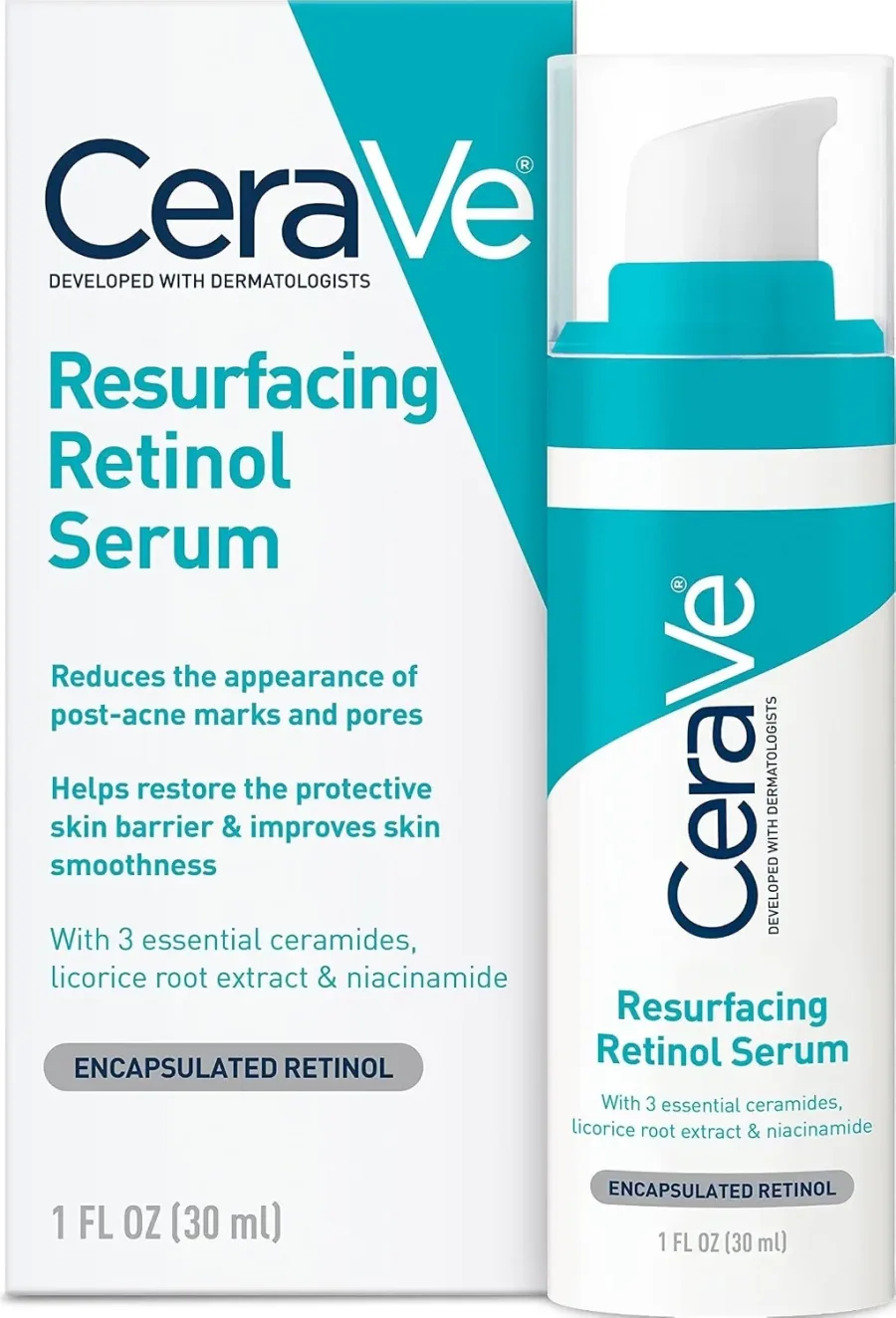
CeraVe Resurfacing Retinol Face Serum
8.9 / 10How This Score Was Earned
We Purchase
Bought at retail, anonymously, with our own funds.
We Live With It
A minimum of four weeks of daily use before a word is written.
We Measure
Weighted criteria, identical for every product in the category.
We Re-Verify
Rankings are revisited weekly; scores fall when products do.
 Verified Examiner
 The Verified Verdict
The most transparent formula in this group at 0.1% retinal with 3% Matrixyl, and the fastest to show a change in pores, but the finish is shiny and the tube is small.
Check Price on Amazon →$22–$28 · price verified today
Common Questions