— Beauty & Skincare, Verified for Six Weeks
CeraVe Retinol Serum Review: Is Gentle the Same as Ineffective?
The easiest retinol in the drugstore aisle to tolerate, and the one long-term users most often describe as doing very little. Both things are true.
The Full Verification Report
This article is reader-supported. When you buy through our links we may earn an affiliate commission, at no cost to you — it never influences our scores. As an Amazon Associate we earn from qualifying purchases.
There is a specific frustration this serum produces, and it shows up clearly in its reviews. People use it for months, sometimes a year, and report that nothing bad happened and nothing much good happened either.
That is not a failure of the product so much as a mismatch of expectation. The CeraVe Retinol Serum is engineered to be the retinoid that does not cause trouble, and the design decisions that achieve that also cap what it can deliver. Worth knowing which side of that trade you are on before you buy.

The Formula, and Why It Is So Forgiving
Four things in the tube, and every one of them is chosen to soften the retinoid experience rather than sharpen it.
- Encapsulated retinol. Released gradually rather than all at once, which lowers the peak concentration your skin meets at any moment.
- Niacinamide. Calms the surface irritation a retinoid provokes and works on tone in its own right.
- Hyaluronic acid. Holds water in the upper layers, countering the dryness retinoids are notorious for.
- Ceramides. Rebuild the barrier lipids the retinoid is thinning, which is the mechanism behind most retinol misery.
It arrives in a 30ml tube, fragrance-free and non-comedogenic. Every element is defensive. Nothing in the list is there to make the retinol hit harder.
Tolerance Is the Genuine Achievement Here
This is where the serum earns its place, and the reports are unusually consistent.
One buyer had already wrecked her moisture barrier by jumping straight into a nightly retinol cream. She set that aside, spent time repairing her skin, and came back to a gentler formula. Her skin is sensitive, on the dry side, and prone to hormonal spots along the jaw. It held.
Another with sensitive skin worked up slowly, one night in the first week and two nights a week after that, alternating with a salicylic acid serum on other nights. Occasional mild sensitivity, nothing more. A third layered it under CeraVe's own night cream and reported no irritation across weeks of use.
For a retinoid, that hit rate is genuinely good. Most people who try this serum can keep using it, and continuing to use something is the entire mechanism by which retinoids work.
The Ceiling, and Who Hits It
Now the counterweight, and it is substantial enough that you should weigh it seriously.
One buyer used this serum for about a year and reported no major change at all. Her conclusion was that it works better as maintenance than as a treatment, and that you should not expect anything dramatic. Another long-term user made effectively the same point, noting it is very gentle and may not produce the effect you would get from something stronger.
Those are not one-star reviews written in frustration. They are measured assessments from people who kept using the product and liked it. That combination is the clearest possible signal about what this serum is: a floor rather than a ceiling.
Encapsulation lowers the peak dose. Niacinamide, hyaluronic acid and ceramides all pull toward comfort. The result is a formula that almost nobody reacts to and that a fair number of people find underpowered.
What Encapsulation Costs You
Encapsulation is sold as a pure benefit and it is not. Understanding the trade explains most of what people find frustrating about this serum.
The retinol molecule sits inside a shell that breaks down slowly on the skin, releasing its contents over hours rather than minutes. That keeps the concentration your skin meets at any single moment low, which is precisely why irritation is rare here.
The cost is that a lower peak concentration is a milder biological signal. Retinoids drive change by binding receptors in skin cells and altering how quickly those cells turn over, and that response scales with how much active reaches the receptor at once. Spread the same dose thinly across a night and you get a gentler nudge rather than a firm push.
There is a real benefit alongside it. Retinol degrades fast once exposed to air and light, and a shell protects the molecule until it reaches your skin. One buyer chose this serum specifically after learning how quickly unprotected retinol breaks down in an opened bottle, which is a sound reason to prefer an encapsulated formula.
So encapsulation buys you tolerance and stability, and it costs you intensity. For a first retinoid that is the right trade. For skin that already handles retinoids it is the wrong one, and no amount of consistency closes the gap.
Reading the Two CeraVe Serums Correctly
CeraVe sells two retinol serums at almost the same price, and the packaging does little to help you choose.
| Retinol Serum (this one) | Resurfacing Retinol Serum | |
|---|---|---|
| Extra ingredient | Hyaluronic acid | Licorice root extract |
| Aimed at | Fine lines, wrinkles, dullness | Post-acne marks, dark spots, pores |
| Listed skin types | All, mature | Acne prone, mature |
| Format | Tube | Bottle |
| Shared base | Encapsulated retinol, niacinamide, ceramides, fragrance-free, 30ml | |
If acne marks are the problem, the Resurfacing version has an ingredient aimed specifically at pigment and this one does not. If you want a first retinoid for early lines and general texture, you are in the right place.
Where It Sits Among Over-the-Counter Retinoids
Vitamin A products are not interchangeable, and understanding the ladder explains why this serum feels mild.
Your skin can only use retinoic acid. Everything available without a prescription has to be converted into it, and each conversion step costs potency.
| Form | Steps to retinoic acid | Practical strength | Suits |
|---|---|---|---|
| Retinol, encapsulated (this serum) | Two, released slowly | Mild | First-time and reactive users |
| Retinol, unencapsulated | Two, all at once | Moderate to strong | Users who tolerate retinoids already |
| Retinal (retinaldehyde) | One | Stronger, faster acting | Users wanting more without a prescription |
| Tretinoin | None | Strongest | Prescription only |
This sits at the bottom of that ladder by design. If a year of it produced nothing, the next rung is a plain retinol at a stated percentage, and after that a retinal such as the MEDITHERAPY retinal serum.
Texture and Daily Use
The serum itself is a light, non-greasy fluid that sits somewhere between thin and creamy. Buyers consistently describe it as absorbing without residue and leaving skin feeling moisturised rather than stripped, which is unusual for the category.
It layers cleanly. Several buyers use it under CeraVe's own night cream or daily moisturising lotion with no pilling. Being fragrance-free removes the most common irritation variable, and one reviewer specifically noted the absence of scent as a deciding factor.
Building a Routine That Gives It a Chance
The single most useful thing you can do with a mild retinoid is remove every other variable, so that consistency rather than strength does the work.
Cleanse with something that does not strip. CeraVe Hydrating Cleanser at $15 to $19 is the obvious pairing, since a foaming gel undermines a barrier the retinoid is already thinning.
Moisturise afterwards, every time. CeraVe PM Facial Moisturizing Lotion at $12 to $17 carries the same ceramides and is what several buyers in the reviews use directly over this serum.
Wear sunscreen daily. Retinoids increase photosensitivity, and skipping SPF is the fastest way to spend a year on a retinoid and see nothing.
- Night only, always.
- Start twice a week even though this is mild, and build from there.
- A pea-sized amount for the whole face. More does nothing useful.
- Do not stack it with an exfoliating acid on the same night. Alternate.
- Give it three months before judging, and photograph your skin at the start.
How Long Before You Should Expect Anything
Retinoid timelines are the source of most disappointment in this category, and a mild formula stretches them further.
| Period | Realistic expectation |
|---|---|
| Weeks 1-4 | Nothing visible. Skin should feel comfortable, which is the point of this formula |
| Weeks 4-12 | Texture smoother, skin brighter. This is where most positive reviews land |
| Months 3-6 | Fine lines soften slightly. Deep lines will not move |
| Beyond 6 months | If nothing has changed, the formula is too mild for you rather than retinoids being ineffective |
That last row is the honest one. A year of this with no result is not evidence that retinoids do not work on your skin. It is evidence that this particular strength does not.
The Case for Buying It Anyway
Given all that, there are still three situations where this is genuinely the right purchase.
You have never used a retinoid. Starting here means you find out how your skin behaves without risking the barrier damage that sends people away from the category permanently.
You have reactive skin. If stronger retinoids have flared you before, a formula this well buffered is worth trying before concluding retinoids are not for you.
You want maintenance rather than correction. If your skin is broadly in good condition and you want to keep it that way through your thirties, mild and consistent beats strong and abandoned.
How to Tell You Have Outgrown It
Most people stay on a mild retinoid longer than they should, because nothing goes wrong and there is no obvious prompt to change. These are the signals worth acting on.
- Six months of nightly use with no irritation at all. Some sensitivity in the first fortnight is normal even on a gentle formula. If your skin never registered the product, it is probably not registering the active either.
- Texture improved and then stopped. A plateau at three or four months usually means you have collected what this strength has to give.
- You finished two tubes and cannot see a difference in photographs. Memory is unreliable about faces. Photographs under the same light are not.
- You are applying more product to compensate. Using double the amount of a mild retinoid does not equal a stronger one. It just costs more.
The next step is not a different brand at the same strength. It is either an unencapsulated retinol with a stated percentage, or a retinal, which needs only one conversion step in the skin rather than two and therefore acts faster at a lower concentration.
Retinol Beliefs That Cost People Results
Several of the disappointed reviews in this category describe a usage problem rather than a product problem. These are the ones worth correcting.
- "Stronger is better." The strongest retinoid you can tolerate every week beats the strongest one you can tolerate for a fortnight. Adherence, not concentration, is what produces results.
- "It should tingle." Tingling is irritation, not efficacy. A well-tolerated retinoid works exactly as well as an uncomfortable one at the same dose.
- "Peeling means it is working." Peeling means your barrier is struggling. It is a side effect to manage, not a progress indicator.
- "You cannot use it in summer." You can, with daily sunscreen. Stopping every summer means never completing a full course.
- "It thins your skin." Retinoids thin the outermost dead layer and thicken the living layer beneath it. The popular version of this belief has it backwards.
- "Results should show in a month." Texture at six to twelve weeks, lines at three to six months. A month is not a fair test of anything.
The Tube, Storage and Shelf Life
Format matters more with retinoids than with most skincare, because the active degrades on contact with air and light.
A tube is a better container than a jar for exactly that reason. You are not dipping fingers in, and the opening exposes only a small amount of product each time. Buyers describe the dispensing as controllable, which matters when the correct dose is pea-sized.
Store it away from a sunny windowsill and out of a steamy shower cubicle. Heat and light both accelerate breakdown, and a bathroom shelf directly above a radiator is one of the worst places in a house for an active.
Use it within six months of opening. Encapsulation buys real stability, but no retinol is indefinitely stable once a tube has been broken into, and a bottle you have been picking at for two years is not delivering what it delivered at the start.
Who Should Buy Something Else
- Anyone who has already used retinoids comfortably. You will find this underpowered and say so.
- Anyone treating established wrinkles rather than early lines.
- Anyone whose main concern is post-acne pigmentation, where the Resurfacing version has a pigment-specific ingredient this lacks.
- Anyone who wants a stated percentage on the label. This serum does not disclose its retinol concentration.
- Anyone treating neck, chest or arms as well as face, where 30ml runs out quickly.
What It Costs to Stay On It
At $16 to $21 for 30ml, this sits mid-field. Used correctly at a pea-sized amount three or four nights a week, a tube runs two to three months, so the real cost is somewhere around seven dollars a month.
That is inexpensive for a nightly active, and it is the strongest practical argument for the product. A serum you actually finish and repurchase does more over two years than a stronger one you abandon in three weeks.
The comparison worth making is against The Ordinary's 1% retinol in squalane, which costs roughly half as much and hits considerably harder. That is the better buy if your skin can take it, and a genuinely bad first move if it cannot.
Using It Around Pregnancy, Acne Medication and Procedures
Three situations come up often enough with retinoids to be worth stating plainly, because the answer in each case is not a product recommendation.
Pregnancy and breastfeeding: topical vitamin A derivatives are generally avoided, and that guidance applies to a mild encapsulated retinol as much as to a strong one. This is a conversation with a midwife or doctor rather than something to settle from a review. Niacinamide and azelaic acid are the usual substitutes suggested for texture and tone in the meantime.
Prescription acne treatment: if you are already using a prescribed topical retinoid, adding this one gives you two vitamin A products doing the same job with double the irritation risk and no additional benefit. Ask the prescriber before layering anything on top.
Peels, lasers and microneedling: stop retinoids in the run-up and wait for clearance before restarting. Timings vary by procedure and by practitioner, so follow the instructions you were given rather than a general rule.
None of this is specific to CeraVe. It applies to every retinoid on the shelf, and the mildness of this particular formula does not change any of it.
The Verdict on the CeraVe Retinol Serum
This is the most forgiving retinol serum in the drugstore aisle, and that is both the recommendation and the limitation. The encapsulation, the niacinamide, the hyaluronic acid and the ceramides all pull in the same direction, and the direction is comfort.
If you are starting retinoids, or restarting after a bad experience, buy it. The probability that you can keep using it is higher than for anything else at this price, and that probability is what determines whether a retinoid ever works for you.
If you have already tolerated a retinoid without difficulty, buy something else. The people describing a year of no visible change are not wrong, and there is no reason to spend that year finding out for yourself.
Confirmed
- Encapsulated retinol with niacinamide, hyaluronic acid and ceramides
- The most consistently well-tolerated formula in this group, including on sensitive skin
- Fragrance-free, non-comedogenic and non-greasy
- Layers cleanly under a night cream without pilling
Flagged
- Gentle to the point of being underpowered. A year-long user reported no major change
- Better described as maintenance than as a treatment, which several buyers say outright
- Priced like a stronger serum despite being the mildest here
Specification
Verified Against 2 Rivals
This Product
CeraVe Retinol Serum for Face with Niacinamide & Hyaluronic Acid
8.4 / 10
COSRX 6X Peptide Collagen Skin Booster Toner Serum
9.2 / 10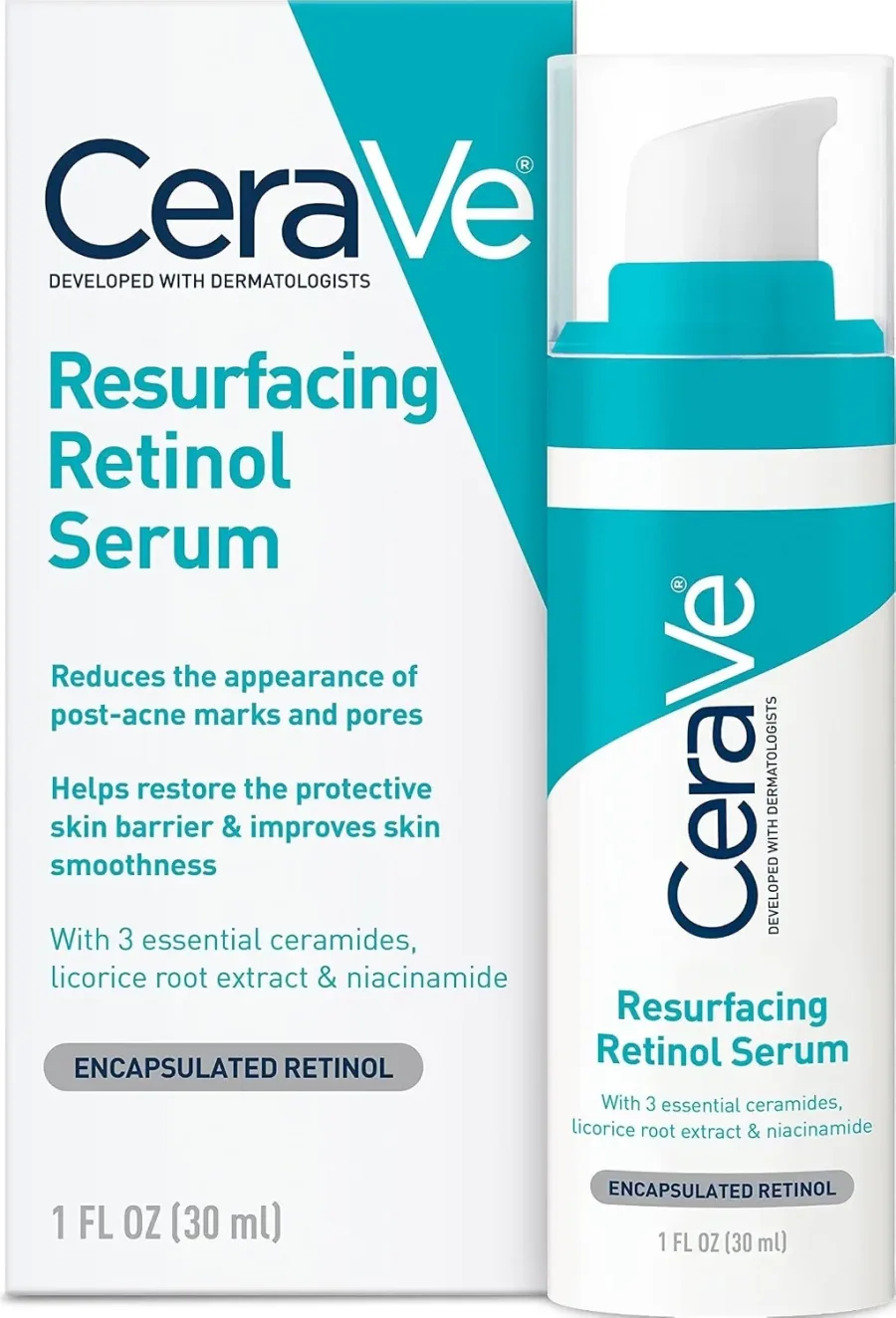
CeraVe Resurfacing Retinol Face Serum
8.9 / 10How This Score Was Earned
We Purchase
Bought at retail, anonymously, with our own funds.
We Live With It
A minimum of four weeks of daily use before a word is written.
We Measure
Weighted criteria, identical for every product in the category.
We Re-Verify
Rankings are revisited weekly; scores fall when products do.
 Verified Examiner
 The Verified Verdict
The gentlest retinol here and the easiest to tolerate, but buyers who want visible change rather than maintenance consistently say it does not deliver much.
Check Price on Amazon →$16–$21 · price verified today
Common Questions