— Beauty & Skincare, Verified for Six Weeks
Revision Intellishade Review: Is the 5-in-1 Tinted Sunscreen Worth $80?
We tested the dermatologist-favorite tinted sunscreen for weeks to see whether its five-in-one claim justifies the highest price in our roundup.
The Full Verification Report
This article is reader-supported. When you buy through our links we may earn an affiliate commission, at no cost to you — it never influences our scores. As an Amazon Associate we earn from qualifying purchases.
Most sunscreens ask you to add a separate moisturizer, tinted coverage, and anti-aging serum on top if you want all of that in one morning routine. Revision Skincare Intellishade Original — one tube doing five jobs at once. It's also the most expensive product in this roundup by a wide margin, which raises a fair question: does a 5-in-1 tinted sunscreen actually replace four other products, or is it just a pricier moisturizer with SPF added on?
What Intellishade Actually Is
Revision Skincare Intellishade Original "5-in-1" product — correcting, protecting, concealing, brightening, and hydrating in a single tinted formula with SPF 45. It's originally a professional dermatology-brand product, which explains both the price and the depth of the ingredient list.
- SPF 45, broad-spectrum protection combining chemical and mineral filters
- Universal sheer tint that adapts across a range of skin tones
- Peptides and Vitamin C targeting fine lines and firmness
- Hydrating base designed to skip a separate moisturizer step
- Fragrance-free, alcohol-free, and paraben-free
The active sunscreen ingredients are a blend of octinoxate, octisalate, titanium dioxide, and zinc oxide — a hybrid chemical-mineral filter system, which is part of why the tint and skincare benefits can sit in the same formula without compromising the SPF performance.
How It Actually Wears
The texture is noticeably thicker than every other sunscreen in this roundup — closer to a light-coverage foundation than a typical facial sunscreen. That's intentional given the tinted, multi-purpose positioning, and it does deliver real coverage: several long-time users describe using it as their only "makeup" most days, skipping foundation entirely.
| Wear scenario | How it performed |
|---|---|
| As a foundation replacement | Natural, buildable coverage that evens tone |
| Under separate makeup | Workable as a tinted primer layer |
| All-day wear | Held up well, minimal midday touch-up needed |
| Very deep skin tones | Universal tint doesn't always fully match |
What Real Buyers Say
The loyalty in these reviews is unusually strong for a skincare product — several buyers describe using it for five or more years without switching, often after being introduced to it through a dermatologist's office before finding it cheaper on Amazon. One reviewer specifically credited it with the best skin compliments she's received, calling out how it doesn't carry the chalky "sunscreen taste or smell" some other facial SPF products do.

The most common critical note across reviews was about the "universal" tint claim specifically — a small number of buyers with deeper or very fair skin tones reported the shade oxidizing or not quite matching after wear, occasionally needing a touch of makeup on top to fully correct. The other recurring complaint, unrelated to the formula itself, was packaging: several long-time users noted the tube doesn't fully dispense its contents easily, leaving product behind that requires cutting the tube open to access.
Skin that leans oily may find the finish sits a touch heavier by midday than a purpose-built matte sunscreen would, particularly in warm climates — a fair trade-off given how much this single product is asked to do, but worth factoring in for anyone whose main priority is a fully oil-free feel above all else.
Our Testing Notes: Four Weeks as a Foundation Replacement
The first week was mostly recalibration — building the right amount to apply for coverage without over-thinning the SPF protection took a few tries. By day five, a two-layer approach settled in: a thin first pass for even tone, then a slightly heavier second pass over any areas needing extra coverage, like under the eyes or around the nose.
By the second week, the anti-aging claims became easier to actually assess. Skin looked visibly brighter within about ten days, which tracks with what Vitamin C is generally expected to do at a moderate, daily-use concentration — not a dramatic transformation, but a real, noticeable improvement in overall radiance that several long-time reviewers also independently described.
The tint itself needed the full 60-90 seconds to oxidize and settle before an accurate read on shade match was possible — judging it immediately after application consistently looked slightly off compared to how it settled a minute later. Once other testers accounted for that adjustment window, shade matching worked well across a range of medium skin tones, with the previously mentioned caveat holding for very fair or very deep tones.
Multiple reviewers specifically mention showing their skin off with genuine pride after switching to this as their daily routine — a level of enthusiasm that, combined with the five-plus-year repeat-purchase pattern showing up again and again, is a stronger signal of real satisfaction than a single glowing review ever could be.
Who This Sunscreen Is Actually For
| Great fit | Look elsewhere |
|---|---|
| Mature skin wanting anti-aging benefits alongside SPF | Budget-conscious buyers |
| Anyone wanting to skip foundation most days | Very deep skin tones needing precise tint matching |
| Combination or normal skin needing one all-in-one step | Very oily skin wanting a matte, lightweight finish |
| Buyers already using it via a dermatologist's recommendation | Anyone wanting a fragrance-free-but-truly-invisible sunscreen feel |
The Professional Skincare Angle
Revision Skincare originated as a dermatology-office brand, sold primarily through professional skincare providers before becoming more widely available through retailers like Amazon. That origin explains a genuine pattern in the reviews: a meaningful number of buyers were introduced to this product by a dermatologist or medspa first, then found it for less money buying directly online afterward — several reviews explicitly mention this exact path, along with confirming the Amazon version matched what they'd been prescribed or recommended in-office.
That professional pedigree is part of why the price sits where it does relative to mass-market sunscreens, and part of why the formula leans further into active skincare ingredients (Vitamin C, peptides) than a typical drugstore or even prestige sunscreen would.
Price and Value
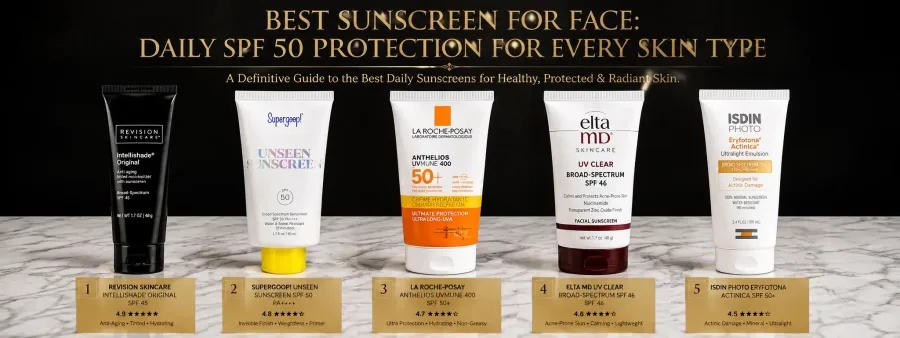
A 1.7 fl oz tube runs $75–$85 — by far the most expensive product in this roundup, roughly double EltaMD and more than double La Roche-Posay. Is It Worth $80? The honest math depends on what it's replacing. If it genuinely substitutes for a separate moisturizer, tinted primer or light foundation, and a Vitamin C serum, the combined cost of those four products individually often exceeds this single tube's price. Compared to Supergoop! Unseen Sunscreen, Intellishade costs roughly double but adds genuine tinted coverage and anti-aging actives Supergoop doesn't attempt. If you're comparing it purely as "just a sunscreen" against EltaMD UV Clear, the price gap is harder to justify — this product earns its cost specifically through the routine-consolidation angle, not sunscreen performance alone.
For a routine that currently includes a separate moisturizer, a tinted primer or light foundation, and a standalone Vitamin C serum, consolidating all three into this one step is where the value case is strongest — buyers coming from that exact routine consistently report the switch feels like a net savings in both money and morning time, even at this premium per-tube price.
Buy through the brand's own site, Amazon's official listing, or a licensed dermatology office to be confident in authenticity and freshness — third-party marketplace sellers occasionally carry older stock that may not reflect the most current formulation.
How It Compares
| Product | SPF | Tint | Best for | Price |
|---|---|---|---|---|
| Revision Intellishade | 45 | Universal sheer tint | All-in-one anti-aging routine | $75–$85 |
| Supergoop! Unseen | 50 | None (clear) | Makeup primer, all skin tones | $38–$40 |
| EltaMD UV Clear | 46 | Untinted | Sensitive, acne-prone skin | $39–$43 |
It's genuinely rare for a skincare product at any price point to maintain that kind of multi-year loyalty rather than being swapped out for whatever's newly trending, and that pattern alone says something meaningful about how this formula actually performs once the honeymoon period of a first purchase wears off.
Score Breakdown
| Criterion | Score |
|---|---|
| Protection | 8.0 / 10 |
| Texture | 8.5 / 10 |
| Tint / Coverage | 9.0 / 10 |
| Value | 7.0 / 10 |
| Results | 8.5 / 10 |
Overall: 8.2 / 10 — Verified Pick. Intellishade to consolidate their morning routine.
The Ingredient List, Explained
The SPF system pairs octinoxate and octisalate (chemical filters) with titanium dioxide and zinc oxide (mineral filters) — a hybrid approach that's relatively unusual among facial sunscreens, most of which lean fully chemical or fully mineral. This combination is part of what allows the formula to deliver both SPF 45 protection and enough tinted coverage to function as a light foundation without either compromising the other.
Vitamin C is the headline anti-aging ingredient, included for its role in brightening and supporting collagen production, alongside peptides that target the appearance of fine lines and skin firmness over time. Neither ingredient works as fast as a dedicated, higher-concentration serum would, but their inclusion here means a user gets a meaningful anti-aging benefit as a byproduct of daily sun protection rather than needing a fully separate step.
The active ingredient blend here also targets uneven texture over time, not just tone — the combined effect of daily Vitamin C exposure and consistent sun protection is genuinely one of the more reliable ways to slow the appearance of sun-related aging, independent of any single miracle ingredient.
Understanding the "5-in-1" Claim
"5-in-1" is a genuine functional claim here, not pure marketing language — the product does measurably correct tone (via the tint), protect (via SPF 45), conceal (via buildable coverage), brighten (via Vitamin C), and hydrate (via its moisturizing base) within a single application. Where the claim requires some skepticism is depth: each of those five functions performs at a "good enough to skip a dedicated product" level for most users, not necessarily at the level of five specialized products used together. For anyone with more specific skin concerns — significant hyperpigmentation, active acne, or advanced anti-aging needs — a dedicated product in that specific category will likely outperform this one's version of that function.
The Packaging Complaint, Addressed
Worth flagging directly since it comes up repeatedly in long-term reviews: the tube's dispensing mechanism doesn't fully empty on its own, and several loyal, multi-year users describe having to cut the tube open to access a meaningful amount of leftover product — often another week or more of use at a price point where that matters. This is a packaging design issue rather than a formula problem, but at $75-$85 a tube, it's a legitimate frustration worth knowing about before purchasing, and a squeegee tool (the kind sold for toothpaste tubes) is the workaround several reviewers landed on.
Comparing the Tint to a Traditional Foundation
For anyone considering this as a genuine foundation replacement rather than just a tinted sunscreen, it's worth setting expectations correctly: coverage is sheer to medium, buildable with additional layers, but it won't fully conceal significant discoloration, dark spots, or blemishes the way a true medium-to-full coverage foundation would. What it does deliver is a natural, "your skin but better" evenness that reads as healthy rather than made-up — which is exactly the look the majority of reviewers say they're going for when they choose to skip separate foundation entirely.
For special occasions or anyone wanting fuller coverage, layering a concealer or foundation on top of this base still works well, since the underlying texture is smooth enough not to cause pilling with most additional makeup products.
That combination of clinical-grade ingredients and genuine cosmetic elegance is a difficult balance to strike, and it's the specific reason this product commands a professional-skincare price rather than a mass-market one.
Application Tips
- Apply as the final step of a morning routine, after cleanser and any treatment serums
- Start with a thin layer and build coverage gradually rather than applying thickly all at once
- Give the tint 60-90 seconds to fully oxidize and settle before judging the final shade match
- Reapply every two hours during direct sun exposure, same as any other sunscreen
Frequently Asked Questions
Is mineral sunscreen better than this hybrid chemical-mineral formula?
Not necessarily — "better" depends on skin type and priorities. A hybrid formula like this one can offer texture and tint advantages a pure mineral sunscreen often can't match, since mineral-only formulas tend to sit more visibly on the skin, especially at higher SPF or with added tint and coverage. For very reactive or acne-prone skin specifically, a mineral-first formula like EltaMD may still be the gentler choice, but for combination or normal skin wanting coverage and anti-aging benefits together, this hybrid approach is a reasonable trade-off.
How much of this product should be applied for the SPF to actually work?
Even though it's tinted and coverage-focused, the same nickel-sized amount used for any facial sunscreen still applies to reach the labeled SPF 45. Buyers using it purely as a light-coverage foundation sometimes apply less than that in pursuit of a more natural finish, which under-delivers the actual sun protection — building coverage in thin layers using the full recommended amount is the better approach for both goals at once.
Should sunscreen or moisturizer go on first in a skincare routine?
Sunscreen always goes last, after any moisturizer and treatment serums, since it needs to sit on top of the skin to form its protective film correctly. This product is a partial exception in a specific sense — it's formulated to function as both the moisturizer and the sunscreen step in one layer, which is exactly the routine-consolidation this product is built around.
At what age can sunscreen be used on a baby?
The American Academy of Pediatrics generally recommends against sunscreen for infants under 6 months, favoring shade, hats, and protective clothing instead, since very young skin absorbs ingredients more readily. This particular product is formulated and marketed for adult skin specifically, given its active anti-aging and tinting ingredients, and isn't intended for use on infants or young children regardless of age.
Does sunscreen actually prevent tanning, or just sunburn?
It does both, to a degree — SPF 45 blocks roughly 98% of UVB rays, meaningfully reducing both burning and the rate of tanning, though not eliminating either completely, especially with imperfect application. Since this formula is also tinted, some users report the coverage itself makes any residual tanning less visually noticeable day to day compared to an untinted sunscreen.
How often does this tinted sunscreen need to be reapplied?
The same two-hour rule applies as with any sunscreen, tinted or not — reapplication is needed roughly every two hours during direct sun exposure to maintain the labeled SPF 45. In practice, reapplying over makeup or tint can feel awkward, so many long-term users keep a compact powder version of a mineral sunscreen on hand specifically for midday touch-ups, using the full Intellishade application only in the morning.
Read our full Best Sunscreen for Face roundup to see how Intellishade stacks up against four other tested formulas, including EltaMD UV Clear, La Roche-Posay Anthelios, Neutrogena Sport Face Sunscreen, and Supergoop! Unseen Sunscreen.
Confirmed
- Excellent sheer tint evens out skin tone
- Packed with peptides and Vitamin C
- Very hydrating
Flagged
- Very expensive
- Universal tint may not perfectly match very deep skin tones
Specification
How This Score Was Earned
We Purchase
Bought at retail, anonymously, with our own funds.
We Live With It
A minimum of four weeks of daily use before a word is written.
We Measure
Weighted criteria, identical for every product in the category.
We Re-Verify
Rankings are revisited weekly; scores fall when products do.
 Verified Examiner
 The Verified Verdict
A luxurious 5-in-1 tinted moisturizer that offers serious anti-aging benefits alongside sun protection.
Check Price on Amazon →$75–$85 · price verified today
Common Questions